Education can mean different things to different people. For some, it can feel like a box-ticking exercise or another entry on the resume. But, for others education forms but one part of the entire package of learning. So, as I now look to the job market for my first role in the field of climate action, what do I know and how can I identify that?
It appears the presentation of a certificate or qualification is but one aspect of establishing one’s knowledge. As I apply for prospective roles, it appears I must do more than just list these qualifications to sell myself as the ideal applicant. Consequently, the consideration of a portfolio is beneficial as it generally consists of both academic assignments and professional tasks to demonstrate one’s wider skills and competencies (Chetcuti et al., 2011, p. 62). In this example, portfolios support teachers in linking their educational theory and real-world competencies. Therefore, the consideration of a portfolio allows one to collect and establish one’s key learnings, experiences, and abilities beyond the title of a certification.
This way of establishing one’s knowledge also goes beyond the idea that what my instructor told me is now what I know. Boyer (1990 as cited in Lyons, 2003) argued learning is needed to reach a “scholarship of discovery” (p. 69). He pointed out that the act of teaching often begins with what the teacher knows, but that it shouldn’t just be a simple transmission of knowledge. Therefore, as a student, my knowledge shouldn’t be limited to that of my instructors either. There is then an emphasis on me to advance this knowledge through greater research, discovery, and reflection.
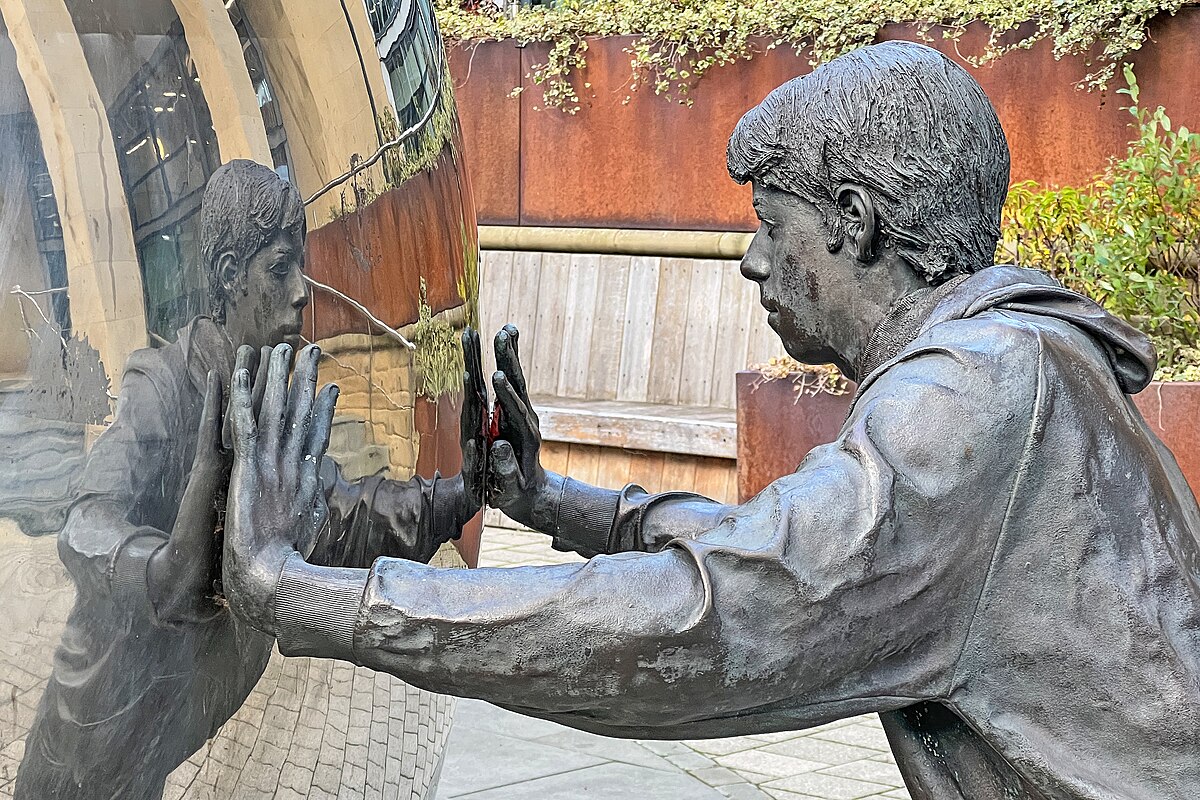
A great way to build one’s portfolio is through reflective practice. American philosopher Schön (1983) contributed greatly to professional education as he identified 2 elements of reflective practice:
- reflection-in-action
- reflection-on-action
Reflection in action refers to a consideration of one’s behavior in the moment. In other words, thinking on your feet as the situation unfolds. Whereas reflection on action is a consideration of your behavior after the fact. You could ask yourself why you behaved a certain way and whether you could have acted differently. Of course, these are just brief descriptions of his elements but knowing these helps me kickstart the process of building my practitioner portfolio.
In attaining my master’s degree in Climate Action Leadership, I hope to forge a new career pathway. However, relying on my graduation alone will not support me in achieving my climate leadership goals. Consequently, I need to recognize what my skills and competencies are beyond the classroom. Therefore, in the coming weeks, I hope to build on my practitioner portfolio as I reflect in and on my actions.
References
Chetcuti, Deborah & Buhagiar, Michael A. & Cardona, Anthony. (2011). The Professional Development Portfolio: Learning through reflection in the first year of teaching. Reflective Practice. 12. 61-72. 10.1080/14623943.2011.541095.
Lyons, N. (2003). Advancing the scholarship of teaching and learning: Reflective portfolio inquiry in higher education ‐ a case study of one institution. Irish Educational Studies, 22(1), 69–88. https://doi.org/10.1080/0332331030220108
Schön Donald A. (1983). The reflective practitioner : how professionals think in action (Ser. Harper torchbooks, tb 5126). Basic Books.