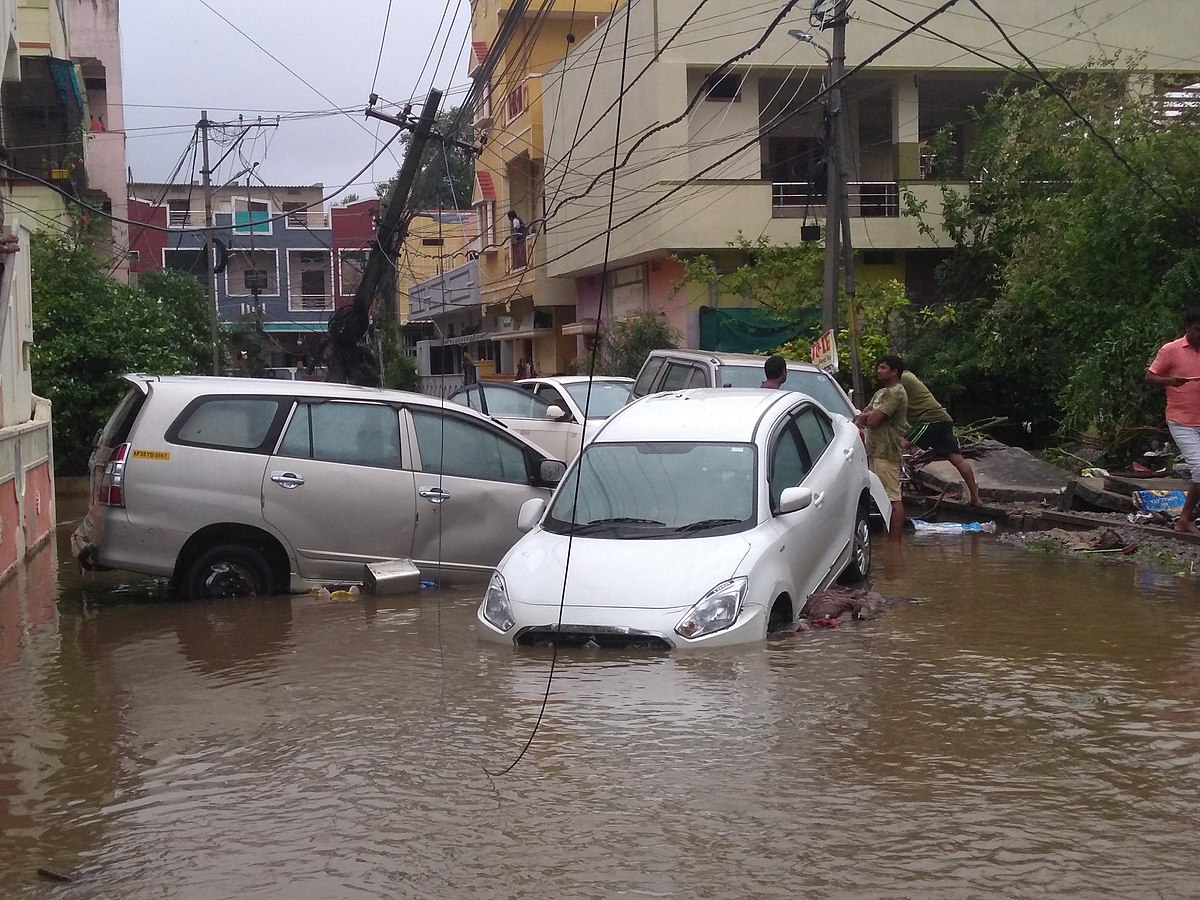
According to Bush et al. (2022), “global surface temperature will continue to increase until at least the mid-century under all emissions scenarios considered” (p.10). So, no matter how we choose to tackle the climate crisis, this continual rise in temperature will lead to further change and increasing risks (Arias et al., 2021, p. 40). However, despite considerable evidence of a warming world, proactive responses remain low (Sawyer, 2022, p. 3). Consequently, professionals now acknowledge the importance of effective communication in understanding climate risk. This involves stakeholder engagement and the consideration of audience values while also recognising the importance of education.
The accuracy of climate risk information is dependant on effective stakeholder engagement. According to Tonmoy et al. (2019, as cited in CCME, 2021), failure to involve the necessary stakeholders in risk assessment processes can lead to challenges in the long term (p. 16). For instance, due to a lack of engagement with BC First Nations, “significant shortcomings were identified in the Preliminary Strategic Climate Risk Assessment for British Columbia” (B.C. Ministry of Environment and Climate Change Strategy, 2019 as cited in Gifford et al., 2022, p. 12). Essentially, this assessment was not considered an accurate representation of climate risk in BC. Furthermore, stakeholder engagement not only benefits the qualitative accuracy of an assessment, but also the communication of the outcome. In fact, including a trusted messenger adds value to an assessment as “people believe people whom they trust, and they’re more likely to act based on the recommendation of that influential other person” (Robinson, 2019). Therefore, had the BC Government held inclusive consultations across the province, the report may have been better received. But, while effective stakeholder engagement supports the accuracy and influence of risk communication, it can be further aided by the identification of audience values.
An individual’s values and worldview may influence their decision making and response to climate risk information. For instance, researchers Bennet et al. (2021) note a disconnect in western culture where climate change is viewed as an environmental concern without being aware of its impacts on one’s health, food, and livelihood (p.2). This anthropocentric attitude or human centred bias leads to individuals valuing human life over other species and ecosystems (Gribben & Fagan, 2016, p. 1). In contrast, an Indigenous worldview stems from “a straightforward understanding that the well being of land is also the well being of humans” (Kuokkanen, 2006, p. 259). Consequently, depending on an individual’s worldview their automatic response to climate risk information will be guided by their values, or what researchers Roberts et al. (2021) consider as intuitive thinking. According to the authors, this intuition guides 95% of our thinking and is “outside of conscious control and awareness” (p. 4). Therefore, communicators need to “link the hazard or impact you research to the concerns which a particular target audience already understands” (p. 4). However, I can’t help but consider the limitations this approach has in a world so heavily influenced by anthropocentric attitudes. In this case, for all the benefits of engagement and consideration of values, the goal of communicating climate risk is dependent on education.
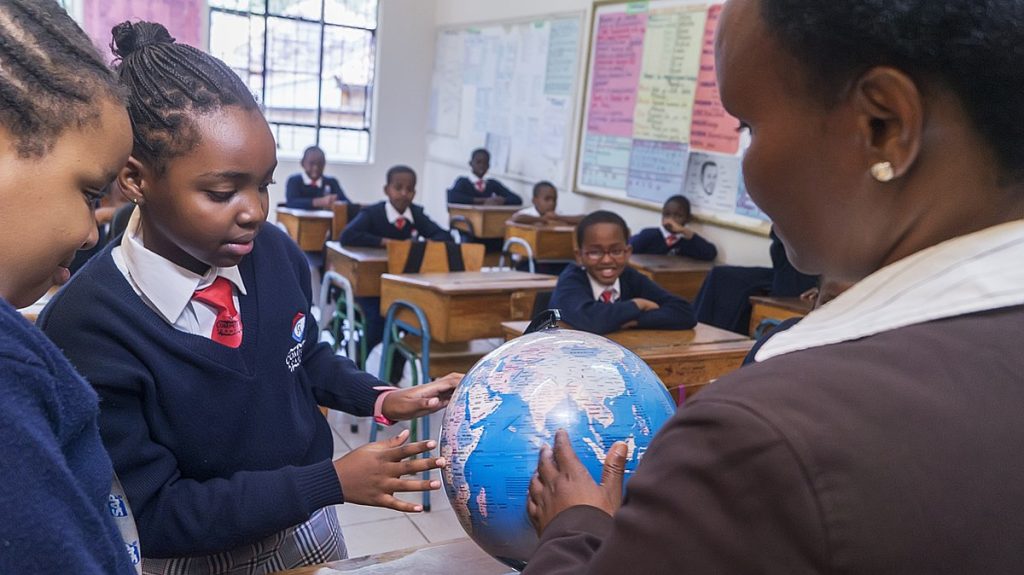
Education is the key to understanding climate change and therefore climate risk. Indeed, when writing my previous blog on Understanding the Science Behind Global Warming, it really struck me how little I knew of the climate system’s primary functions. Similarly, without knowing the basics how can I and so many others be expected to understand the risk? This gap in climate knowledge is recognised by the United Nations (UN) as it states, “education can encourage people to change their attitudes and behavior; [and help] them to make informed decisions” (UN, n.d.). Thankfully, governments and education organisations are now rising to the challenge as for instance, the BC Government announced in 2021 the introduction of climate change education to all K-12 students. Additionally, from 2024, “all students at the University of Barcelona will have to take a mandatory course on the climate crisis” (Burgen, 2022). Thus, as access to climate education improves then so too should the understanding of climate risk. This in turn takes the pressure off communicators to educate and do their job of relaying risk at the same time. Yet, until such learning is more widely accessible, the opportunity to discuss climate information will have to be coupled with education.
In summary, effective engagement compliments the accuracy of gathering climate risk information while also having a positive influence on the audience. This influence can be further aided by appealing to an individual’s values to benefit from intuitive decision making. However, in a modern world where much of society centres on anthropogenic values, changing worldviews will ultimately determine the effectiveness of these approaches. Thus, education is key to recognising humanity’s imbalanced relationship with the natural world and understanding the risks this presents us in the future.
References
Arias, P. A., Bellouin, N., Coppola, E., Jones, R. G., Krinner, G., Marotzke, J., Naik, V., Palmer, M. D., Plattner, G.-K., Rogelj, J., Rojas, M., Sillmann, J., Storelvmo, T., Thorne, P. W., Trewin, B., Achuta Rao, K., Adhikary, B., Allan, R. P., Armour, K., Bala, G., Barimalala, R., Berger, S., Canadell, J. G., Cassou, C., Cherchi, A., Collins, W., Collins, W. D., Connors, S., Corti, S. D., Cruz, F., Dentener, F. J., Dereczynski, C., Di Luca, A., Diongue Niang, A., Doblas-Reyes, F. J., Dosio, A., Douville, H., Engelbrecht, F., Eyring, V., Fischer, E., Forster, P., Fox-Kemper, B., Fuglestvedt, J. S., Fyfe, J. C., Gillett, N. P., Goldfarb, L., Gorodetskaya, I., Gutierrez, J. M., Hamdi, R., Hawkins, E., Hewitt, H. T., Hope, P., Islam, A. S., Jones, C., Kaufman, D. S., Kopp, R. E., Kosaka, Y., Kossin, J., Krakovska, S., Lee, J.-Y., Li, J., Mauritsen, T., Maycock, T. K., Meinshausen, M., Min, S. K., Monteiro, P. M. S., Ngo-Duc, T., Otto, F., Pinto, I., Pirani, A., Raghavan, K., Ranasinghe, R., Ruane, A. C., Ruiz, L., Sallée, J.-B., Samset, B. H., Sathyendranath, S., Seneviratne, S. I., Sörensson, A. A., Szopa, S., Takayabu, I., Tréguier, A.-M., van den Hurk, B., Vautard, R., von Schuckmann, K., Zaehle, S., Zhang, X., & Zickfeld, K. (2021). Technical summary. In V. Masson-Delmotte, P. Zhai, A. Pirani, S. L. Connors, C. Péan, S. Berger, N. Caud, Y. Chen, L. Goldfarb, M. I. Gomis, M. Huang, K. Leitzell, E. Lonnoy, J. B. R. Matthews, T. K. Maycock, T. Waterfield, O. Yelekçi, R. Yu, and B. Zhou (Eds.), Climate change 2021: The physical science Basis. Contribution of Working Group I to the sixth assessment report of the Intergovernmental Panel on Climate Change, (pp. 33−144). Cambridge University Press. https://www.ipcc.ch/report/ar6/wg1/
British Columbia (2021, December 10). K-12 Climate Change Education in B.C. – Province of British Columbia. Province of British Columbia. https://www2.gov.bc.ca/gov/content/education-training/k-12/administration/program-management/climatechangeeducation
Bennet, A., Hatch, C., & Pike, C. (2021). Climate messaging that works. Climate Narratives Initiative. https://climateaccess.org/sites/default/files/Climate%20Messaging%20that%20Works%20%20Talking%20Energy%20Transition%20and%20Climate%20Change%20in%20Canada.pdf
Burgen, S. (2022, November 12). Barcelona students to take mandatory climate crisis module from 2024. The Guardian. https://www.theguardian.com/world/2022/nov/12/barcelona-students-to-take-mandatory-climate-crisis-module-from-2024
Bush, E., Bonsal, B., Derksen, C., Flato, G., Fyfe, J., Gillett, N., Greenan, B. J. W., James, T. S., Kirchmeier-Young, M., Mudryk, L., & Zhang, X. (2022). Canada’s changing climate report in light of the latest global science assessment. Government of Canada. https://changingclimate.ca/site/assets/uploads/sites/2/2022/03/CCCR-2022-Supplement-Final.pdf
CCME. (2021). Guidance on Good Practices in Climate Change Risk Assessment. https://ccme.ca/en/res/riskassessmentguidancesecured.pdf
Gifford, R., Brown, C., Baron, C., Clement, D., Melnychuk, N., Nelson, H., Sales, L. and Spittlehouse, D. (2022). British Columbia Chapter in Canada in a Changing Climate: Regional Perspectives Report, (ed.) F.J. Warren, N. Lulham and D.S. Lemmen; Government of Canada, Ottawa, Ontario. https://changingclimate.ca/site/assets/uploads/sites/4/2020/11/British-Columbia-Regional-Perspective-Report-.pdf
Gribben, J., & Fagan, J. M. (2016). Anthropocentric Attitudes in Modern Society: Halting Climate Change will Require a Cultural Shift toward Eco-centrism. https://rucore.libraries.rutgers.edu/rutgers-lib/51505/PDF/1/play/
Kuokkanen, R. (2006). The logic of the gift: Reclaiming Indigenous peoples’ philosophies. In Botz-Bornstein, T., & Hengelbrock, J. (Eds.). Re-ethnicizing the minds? Cultural revival in contemporary thought. Brill Rodopi. (pp. 251 – 271). https://rauna.files.wordpress.com/2007/10/s21_sip_17_rauna-kuokkanen.pdf
Roberts, F. E., De Meyer, K., & Hubble-Rose, L. (2021). Communicating climate risk: A handbook [Preprint]. Earth and Environmental Sciences. https://doi.org/10.33774/coe-2021-kc83n
Robinson, S. F. (2019) Climate Communications 101: The Trusted Messenger. Institute for Global Sustainability. https://www.bu.edu/igs/2019/04/16/trusted-messenger/
Sawyer, D. (2022). Damage Control: Reducing the costs of climate impacts in Canada. 14. https://climateinstitute.ca/wp-content/uploads/2022/09/Damage-Control_-EN_0927.pdf
United Nations. (n.d.). Education is key to addressing climate change. United Nations; United Nations. Retrieved April 1, 2023, from https://www.un.org/en/climatechange/climate-solutions/education-key-addressing-climate-change