Apocalyptic Fear Narratives + Decolonial Practices (Tiny Ecology 4)
Introduction
The prompt that I chose for my final Tiny Ecology post explores the limits of fear narratives when framed through apocalypse and how these types of narratives relate to decolonial practices within climate change.
Apocalyptic Fear Narratives
Inducing fear in a narrative is meant to move people to action and has been studied for many years in relation to a wide variety of topics. Fear narratives that are framed through an apocalyptic narrative have become fairly standard within climate change communication. I regularly hear friends make comments such as, “we will be extinct soon anyways”, often in a joking tone. I personally see this attitude as a result of these apocalyptic fear narratives. This is harmful in many ways and as shown in this example with my friends, typically instils feelings of dread and ultimately inaction. More importantly, apocalyptic narratives are framed in a way that makes it sound new, or like it would be happening for the first time. Climate change is already disproportionately impacting marginalized communities and groups in so-called Canada. This is glazed over in a large portion of climate change communication when warnings of what the future could look like is already a reality for certain marginalized communities.
“We desperately need narratives that move past apocalypse as an endpoint, not only because there are people and societies already living in the Western world’s vision of climate apocalypse on a daily basis, but because looking at the climate crisis as an apocalypse can only inspire a helpless waiting for the post-apocalypse to arrive, suddenly, to cleave the past from the future” (Hull, 2019).
Sit Spot Connections
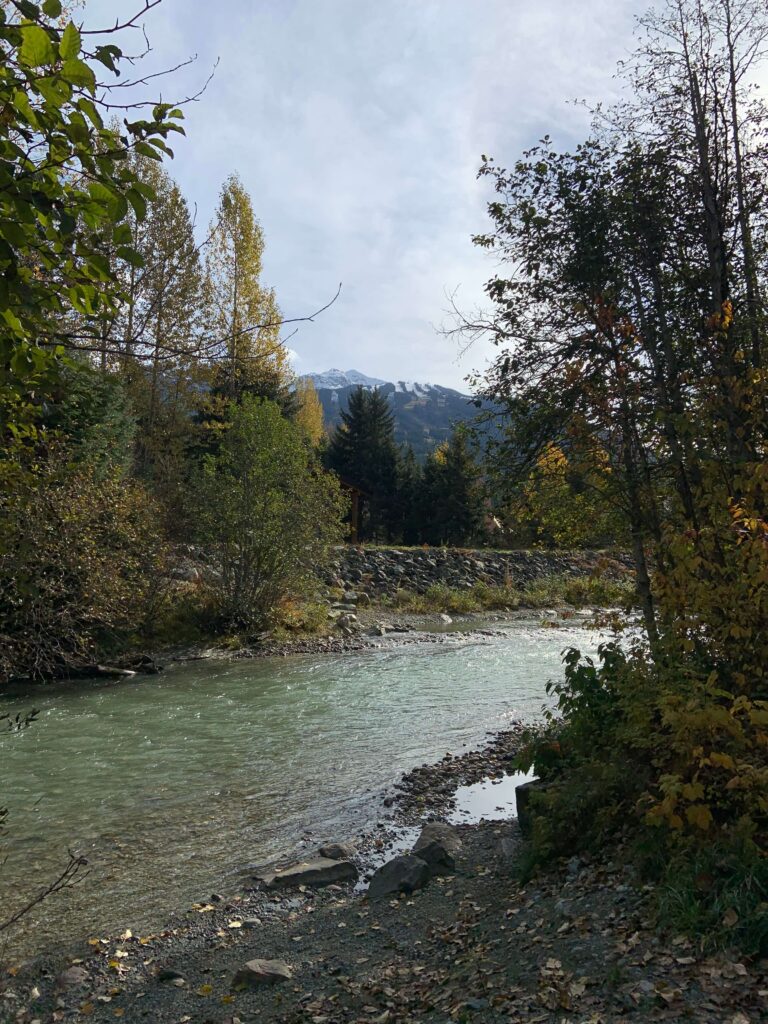
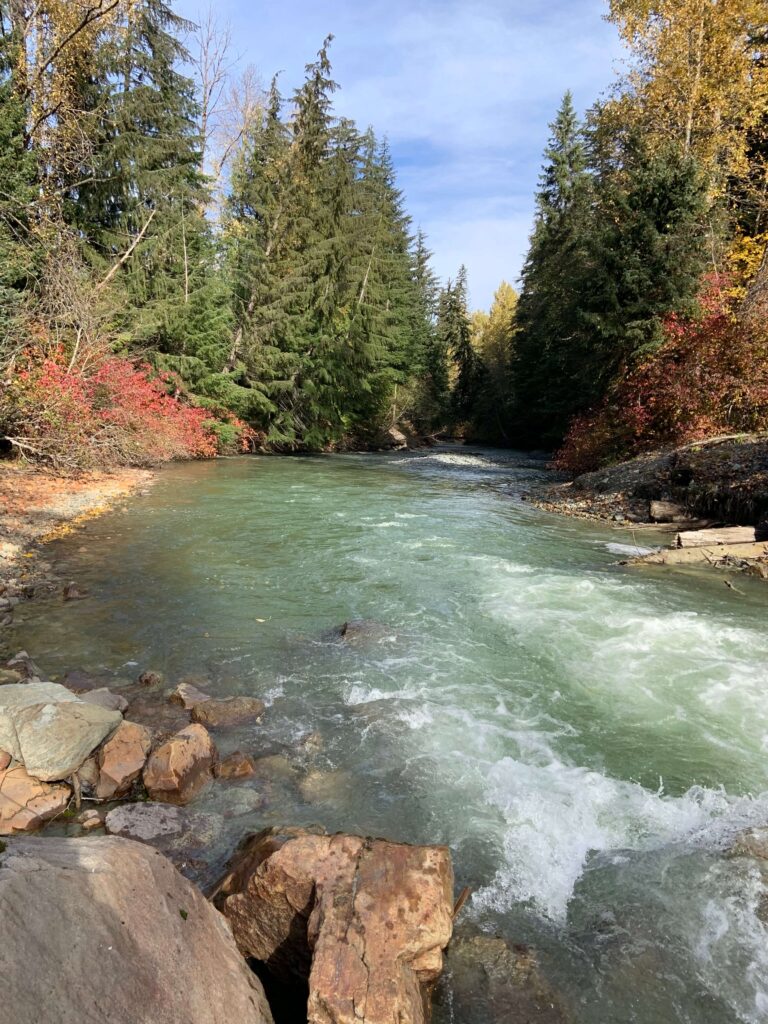
At the sit spot I have been visiting throughout the Tiny Ecology project, apocalypses have already occurred for Indigenous communities on this exact creek. “The Lil’wat Nation chose to live in this area because the land was rich in hunting, fishing, gathering, spiritual training sites and important trade and travel routes. This area was known as the Wolf Clan Territory, where the Wolf Clan (now known as the Wallace Family) resided and had their trap line along Fitzsimmons Creek” (SLCC, 2020).
There are no longer fish in this section of the creek, which shows a small glance into the apocalypse that occurred and is still occurring in this area for the Lil’wat Nation.
An apocalyptic fear narrative suggests that as settlers, we are taking a colonial stance on climate change. “Instead of dread of an impending crisis, Indigenous approaches to climate change are motivated through dialogic narratives with descendants and ancestors. In some cases, these narratives are like science fiction in which Indigenous peoples work to empower their own protagonists to address contemporary challenges. Yet within literature on climate change and the Anthropocene, Indigenous peoples often get placed in historical categories designed by non-Indigenous persons, such as the Holocene. In some cases, these categories serve as the backdrop for allies’ narratives that privilege themselves as the protagonists who will save Indigenous peoples from colonial violence and the climate crisis” (Quote, year).
In order to work towards decolonial practices in climate change, narrative and wording considerations need to be at the forefront of communication practices.
References
Ettinger, J., Walton, P., Painter, J., & DiBlasi, T. (2021, January 25). Climate of hope or doom and gloom? testing the climate change hope vs. Fear Communications debate through online videos. Climatic Change. https://link.springer.com/article/10.1007%2Fs10584-021-02975-8.
Hull, A. (2019, December 9). Hopepunk and Solarpunk: On Climate Narratives That Go Beyond the Apocalypse. Literary Hub. https://lithub.com/hopepunk-and-solarpunk-on-climate-narratives-that-go-beyond-the-apocalypse/.
Noisecat, J. B. (2020, June 2). How To Survive an Apocalypse and Keep Dreaming. The Nation. https://www.thenation.com/article/society/native-american-postapocalypse/.
The significance of the Squamish Lil’Wat Cultural Centre’s location. SLCC Squamish Lil’wat Cultural Centre. (2020, December 27). https://slcc.ca/the-significance-of-the-squamish-lilwat-cultural-centres-location/.
Whyte, K. P. (2018, May 30). Indigenous Science (fiction) for the Anthropocene: Ancestral dystopias and fantasies of climate change crises. SAGE Journals. https://journals.sagepub.com/doi/10.1177/2514848618777621.
Apocalyptic Fear Narratives + Decolonial Practices (Tiny Ecology 4) Read More »