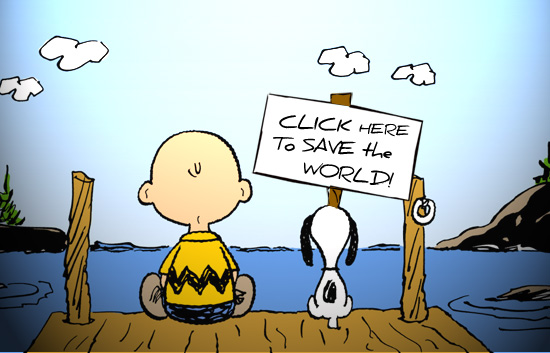

There, I said it. I’m a slacktivist. Now, let me explain.
A much-maligned form of activism, “slacktivism”has had its share of bad press, with some going so far as to say it’s “feel-good online activism that has zero political or social impact”. But I promised myself a positive post this week – some good medicine for my hurting heart after the last few weeks of deeply critical thinking – so, we’re not going to go down that path. No, instead I’m going to substantiate Clay Shirky’s belief that even small actions count, while at the same time challenging some of Malcolm Gladwell’s thoughts, articulated in Small Change.
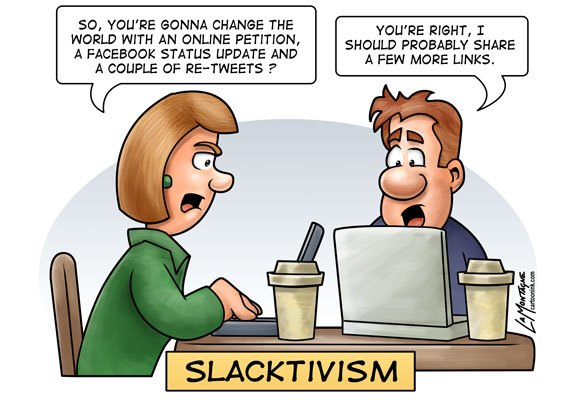
But first, what is slacktivism? It’s a not-nice label (feel the shame?) for something viewed as a bit of a brain hack. Theoretically, it makes us feel like we’re doing something meaningful to support a cause, when we actually aren’t. Wait, really? Yes, there are those, Gladwell included, who argue Facebook likes and retweets are superficial “flavour of the day” support, offered from a desire to fit in versus desire to make a meaningful difference. But there are also studies pointing to the symbiotic relationship between “armchair activists” and those on the front lines. And, in my humble opinion, there are a lot of social network users out there who are just like me.
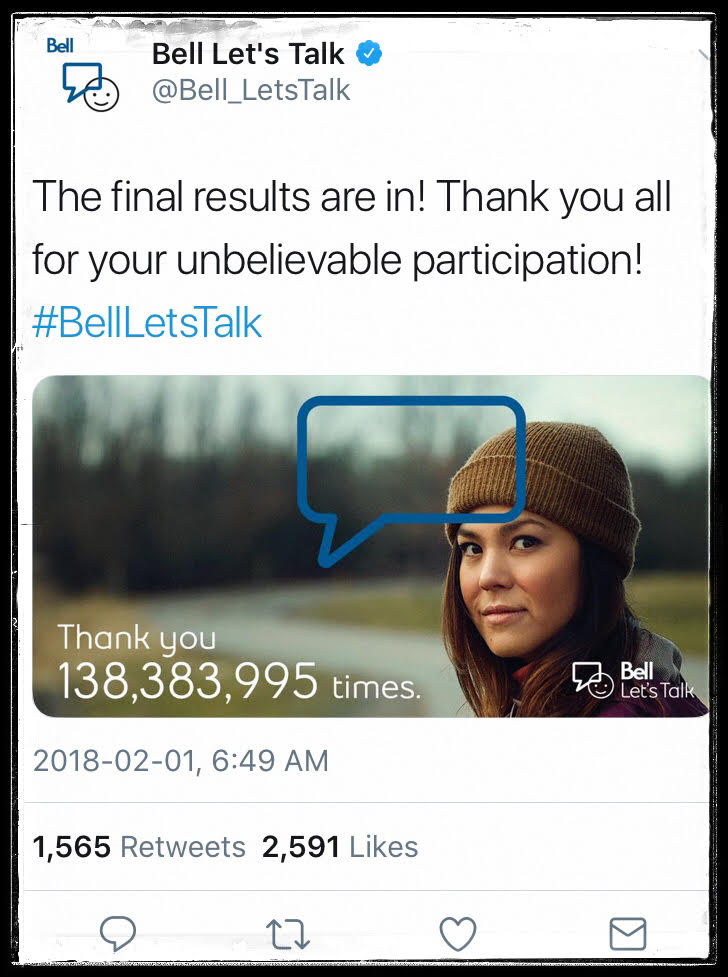
When I do my slacktivist thing, as Seth Godin shares, there are two important outcomes: I’ve helped to spread the word and to normalize charitable behaviour. This “normalizing” can include “de-stigmafying”. A perfect example: #BellLetsTalk. Every time someone shares or retweets, others see it’s okay to ask for help, to talk about it, to reach out…that no one is alone (p.s. 2018’s one-day event raised almost $7 million for mental health initiatives as a result of all that “unmeaningful” sharing and retweeting). In contrast to last week’s post, this kind of normalizing I can get behind.
Unlike Gladwell’s assertion that “real” activism must be high-risk, requiring deep, strong ties amongst those involved, I would argue that is only one (albeit essential) form of real activism. In an example of “weak ties” bridging and supporting “strong ties”, I am not in a position to fly over to Myanmar to offer aid to the Rohingya people, but I can sign a petition. I volunteer with non-profit organizations on a frequent basis, and financially our family supports a myriad of local, provincial and national causes near and dear to our hearts. True to Shirky’s concept of cognitive surplus, I know that adding social media “slacktivist” activities into the mix actually lets me do more good, not less.
Who knows, maybe being a “boots on the ground” activist is in my future, as I learn more on my research journey. If I invite you to march with me, I hope you come. But if not, can you please share with your social networks? Thanks.
‘Til next week,
DLM
P.S. This week’s musical reflection is the heart-tugging result of a Canadian father/young daughter initiative, wrapped up in a national campaign for love. Check out what #WeVow is about here.