Privilege and Gratitude
I thought a lot about my trip to the beach this morning, like how fortunate I am to have a car that gets me to the head of the trail and that I can purchase the necessary gumboots and wet weather gear that keep me dry while hiking. As I walked the path, I felt grateful for my body and its ability to navigate the tree roots, deep puddles, and slippery exposed clay. My arms kept my body safe as I lowered myself down the rope.
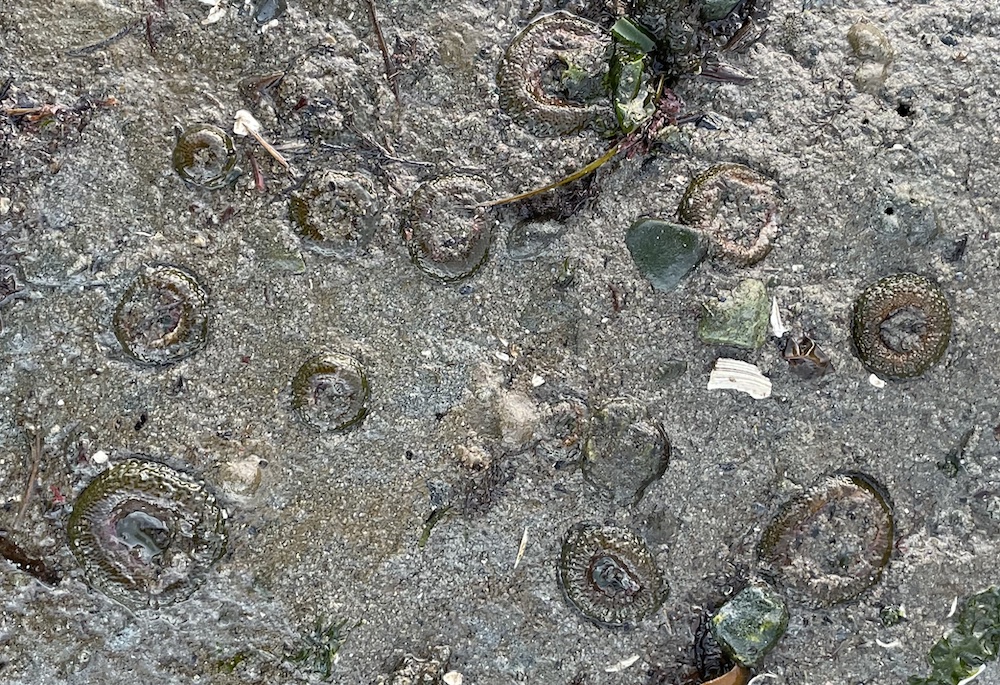
Once perched on my log, morning coffee in hand, my senses awakened to the world around me. I could hear the seagulls, eagles, and ravens create a raucous cacophony. I smelled the comforting scent of the seaweed left on the shore by the receding tide. I examined the small anemones curled up, waiting for the tide to turn and restore their underwater home where they could extend their tentacles in all their glory. I felt the smooth log beneath me, worn down after traveling from who knows where by the wind, waves, and currents. And the soft taste of salt air mixed with my coffee as I finished my first cup and poured a second.
However, the morning’s serenity was shaken when my gratitude slammed head-on into my privilege. I am blessed with a stable, safe, middle-class upbringing that set me on a path to my economic stability, made easier by the white colour of my skin. I did not experience destabilizing trauma or tragedy. I can use all five senses to experience this world. Unlike many people, I have the physical and socio-economic ability to experience this beach. Am I allowed to be grateful for what I have when so many people cannot experience this? When is gratitude just a confirmation of privilege? How do I reconcile gratitude and privilege?
According to the Harvard Medical School, gratitude is “… a thankful appreciation for what an individual receives, whether tangible or intangible”. Practicing gratitude has proven to increase personal happiness, improve relationships, and result in a more productive work environment. In short, gratitude is the appreciation for what one has (Harvard Health 2021).
Global Citizen describes privilege as “… having an unearned benefit or advantage one receives in society by nature of their identity.” (Ebbit, 2015). Privilege is not a person’s “fault” since we cannot control the world into which we are born. However, failure to recognize it can lock in the social injustices from the colonial, patriarchal, homophobic and ableist (amongst other things) worldviews that have dominated our society for hundreds of years.
As I roll this information around in my head, I realize that I want to appreciate what I have, but I do not wish to perpetuate society’s injustices. I am and should be grateful for the privileges that have shaped my life. But it is not enough to be grateful. I also need to be accountable. And to me, being accountable means helping build a more inclusive society that benefits and provides access to all, not just a few. In short, if I want to use my voice to help address the ravages of climate change, I need to check that privilege at the proverbial door.
So I look to the beach for guidance. Within reach, on the nearshore, are the things I can do right away. I need to learn and utilize more communications tools to increase access to my work. To start, here is an audio version of this post.
Further out is the intertidal zone where species, like the anemone, have perfected the ability to live both underwater and fully exposed to the air, risking the safety of one environment to benefit from the nutrient-rich waters. I want to step out of the protection of my privilege and make my world richer by understanding the systems and conditions that have created social injustices. And I want to be thoughtful, both personally and professionally, of how I can contribute to dismantling the existing systems of power.
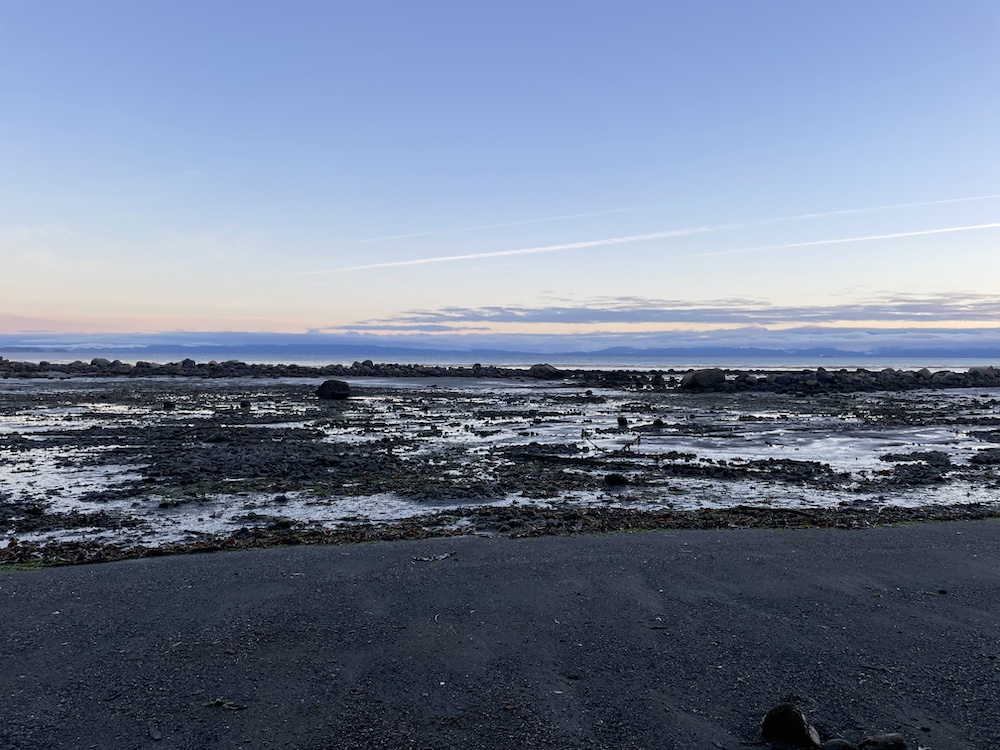
And then there is the mystery of the deep ocean and all its hidden secrets. Here are the messy unformed thoughts swirling in my head. Here lie the lessons that I have yet to learn, waiting for me to bring them to the surface. I want the courage to jump into the deep and wrestle with the unknown to continue growing and learning.
I was not expecting this flood of emotion when I came to the beach this morning, but reconciling my gratitude for what I have with the injustices that I need to be accountable for has been cathartic. However, this is the beginning of the journey, not the end. Today was the lesson, and the future is the practice, and that is where both the magic and the hard work happen.
With my coffee cup empty, I pack up my thermos and head back up the hill, taking a little bit of the beach in my heart for comfort as my journey enters a new fascinating and challenging phase.
Addendum
I was inspired to write this blog after completing the readings on Accessibility. I found Jampel (2018) to be particularly inspiring in explaining intersectionality and the need to include ableism as part of privilege. This paper got me thinking about all the things my able body allows me to do, so I set out to write about adapting new communications tools to talk about climate change and share my experiences on the beach. Little did I know that I would end up down a rabbit hole of readings on gratitude and privilege. Liz Jackson (2016) articulated the tension I was experiencing when she wrote, “Such gratitude may aid social cohesion and psychological well-being, but remain morally problematic in relation to the maintenance of unjust systems and status quos.” (pg ). Kibel (2020) also provided insights into how gratitude can become a confirmation of privilege. The use of personal stories by Dines (2020) and Wright (2020) inspired me to use the same approach.
I was unable to incorporate the teaching of gratitude from an Indigenous perspective. I went back to Robin Wall Kimmerer’s Braiding Sweetgrass, which defined gratitude as the act of thanking everything, be it rock, plant, or animal, for fulfilling the role the Creator gave it (Kimmerer 2015). This definition differs from the Harvard Health (2021) definition, which focuses more on having gratitude for the things in your life, both tangible and intangible. Diving into this would be a fascinating topic but far exceeds what I can do in this blog. I look forward to learning and writing more about these approaches and where they meet and diverge, but I want to do it when I can give the topic the attention it deserves.
References
Ebbitt, K. (2015, February 27). Why It’s Important to Think About Privilege — and Why It’s Hard. Global Citizen. Retrieved November 17, 2021, from https://www.globalcitizen.org/en/content/why-its-important-to-think-about-privilege-and-why/
Dines, H. (2021, August 25). The climate revolution must be accessible – this fight belongs to disabled people too. The Guardian. Retrieved November 17, 2021, from https://www.theguardian.com/commentisfree/2019/oct/15/climate-revolution-disabled-people-activism
Harvard Health. (2021, August 14). Giving thanks can make you happier. Retrieved November 17, 2021, from https://www.health.harvard.edu/healthbeat/giving-thanks-can-make-you-happier
Jackson, L. (2016). Why should I be grateful? The morality of gratitude in contexts marked by injustice. Journal of Moral Education, 45(3), 276–290. https://doi.org/10.1080/03057240.2016.1186612
Jampel, C. (2018). Intersections of disability justice, racial justice and environmental justice. Environmental Sociology, 4(1), 122–135. https://doi.org/10.1080/23251042.2018.1424497
Kibel, G. (2020, October 20). Why I think we need to acknowledge our privilege when practising gratitude. Fashion Journal. Retrieved November 16, 2021, from https://fashionjournal.com.au/life/gratitude-privilege-manifesting/
Wright, E. (2020, February 20). Climate Change, Disability, and Eco-Ableism: why we need to be inclusive to save the planet. Medium. Retrieved November 16, 2021, from https://uxdesign.cc/climate-change-disability-and-eco-ableism-why-we-need-to-be-inclusive-when-trying-to-save-the-88bb61e82e4e
Privilege and Gratitude Read More »