Rose Coloured Glasses
I went to the beach this afternoon seeking solace. I have been out of sorts since the atmospheric river (who knew that would become a common term) descended on the lower mainland resulting in lives lost, homes destroyed, livestock killed. The physical damages will cost more than a billion dollars, and you cannot put a price on the emotional damage. I used up all my strength to bolster hope during the heat bump and the subsequent forest fires. Now I feel despair creeping into my bones and giving me a chill. But there is something about the soothing rhythm of the ocean on a calm grey day that makes me breathe into my feet and focus, so I returned to my beach to ask the ocean to care for me. And she held me like a mother holding a child.
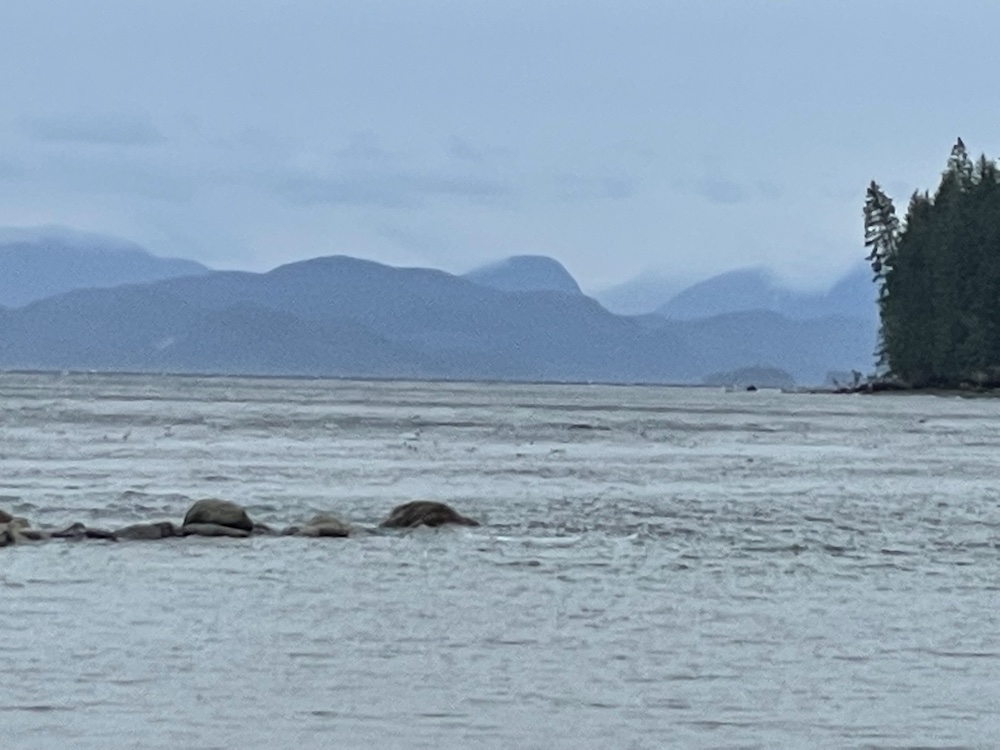
Photo by Jen LashI am not someone who lives in despair. I choose to look at the world through rose coloured glasses because it makes it easier to get out of bed in the morning. Every day I get up, have a cup of coffee, and do what I can to make the climate-safe and socially-just world that I believe is just around the corner. I believe this because I need it to keep doing the work. But this shit is getting real, and as the hillsides were washed onto the highways, roads were collapsing, fields were flooding, and homes were destroyed, those rose coloured glasses fell off, and I stared despair straight in the face.
I was driving home from moose hunting in the Caribou Region of BC when the deluge of rain hit. My partner and I were traveling with two other trucks, one with his son and girlfriend, the last one with another group of hunters from our community. We set out from Cache Creek at 5:30 am, taking the Duffey Lake highway to Horseshoe Bay. About three hours after we passed Lillooet, the hillside collapsed, sweeping cars off the highway. We did not know it at the time, but at least four people died.
Once we were on the ferry, we started to talk. Now, I am careful about how I bring up climate change within my community. Let’s just say some people have been slower to consider the possibility that humans are changing the climate. So I was surprised when others raised it. The warm weather prevented the snow that drives the moose out of the mountain tops and down into the valleys for food, so we were returning home with empty trucks. And by the time the ferry left Horseshoe Bay, Vancouver was wholly cut off from the rest of Canada. Climate was the topic of choice for these fishermen and loggers over our BC ferries breakfast.
And now, as I sit on my log on the beach and think back on this moment, I feel hope rising again. I harken back to Dr. Katherine Hayhoe, who, in her 2019 Ted talk, eloquently tells us that the best way to stop climate change is to talk about it, which can be challenging. Many people in our lives do not believe climate change is real or they believe but would prefer to ignore the looming risks. The future is scary, they feel helpless, and the conversation is fraught with emotion. Talking about climate change is hard. And yet there I was, listening to these wonderful people showing the courage to recognize the cause of the disasters and admit there is a problem.
Like an oyster building a pearl fromn a grain of sand, I am using this moment to rebuild my hope. Layer by layer I will pull myself out of despair, put those rose coloured glasses back on, get back to work. In the So Hot Right Now podcast (2020), Diplomat Christiana Figueres talks about how we need mental discipline to overcome the noise warning of a dystopian future destroyed by climate change and choose to talk about the future we can create. So with inspiration from the woman who got every country in the world to agree to battle climate change through the Paris Agreement (2015), I slide those rose coloured glasses up my nose and push on.
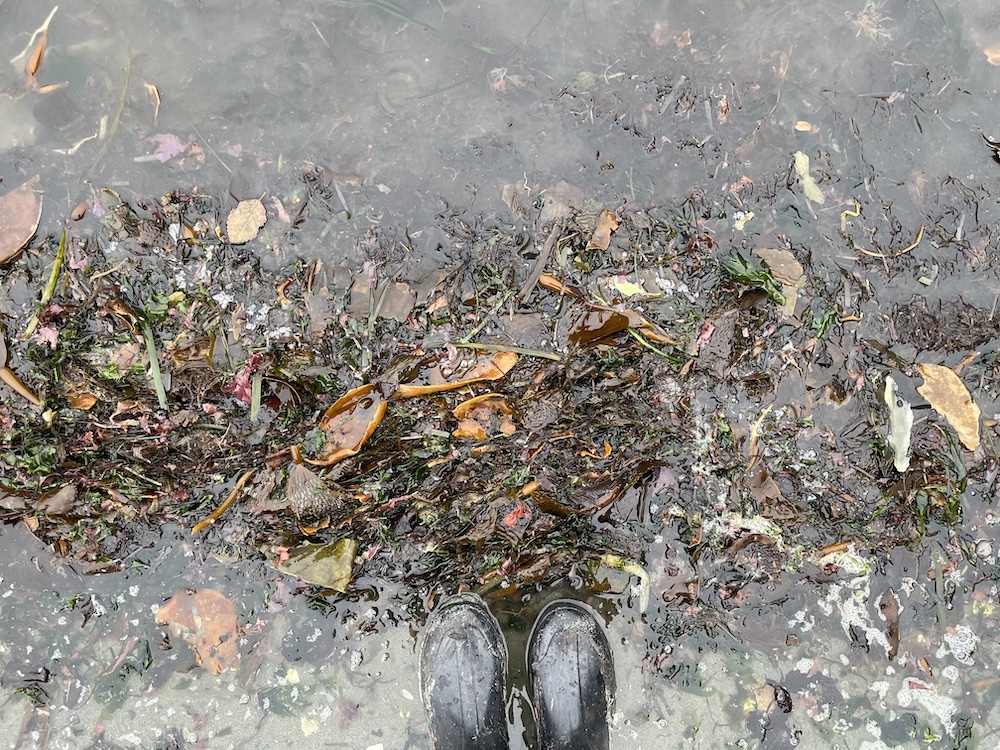
I look around me at the shoreline strewn with a mixture of kelp species that have come in on the last tide. It is messy but beautiful, like the days, months, and years that lie ahead – as we scramble to find ways to transition the world off fossil fuels. A messy future that can be made beautiful with love, kindness, and hope. The choice is ours to make.
This is my last Tiny Ecology post, but I will continue to come to this beach. I will come when I need solitude, inspiration, comfort, and solace. I will come because I have developed a deeper relationship with this place throughout these past few months, and I cannot imagine living without it. I will come because the ocean that nestles up against the sandy shore holds me when I need to be held, like a mother holding a child.
Addendum
I set out to write a blog post that used a narrative of hope in light of the climate disasters we have been experiencing. I initially chose this based on Ettinger et al. to show that messages of hope result in a more significant emotional response than a narrative of doom and gloom. While this research did not result in a person’s willingness to take action, it did mean that using hope is more effective than fear. But I found it hard to force a blog post that I was not feeling, so I chose to write about my journey of moving from despair back to hope because, well, you never can predict what will happen when you go to the beach.
References
Ettinger, J., Walton, P., Painter, J. & DiBlasi, T. (2021). Climate of hope or doom and gloom? Testing the climate change hope vs. fear communications debate through online videos. Climatic Change 164, 1-19.
Hayhoe, K. (2019). “The most important thing you can do to fight climate change: talk about it.” TED. https://www.ted.com/talks/katharine_hayhoe_the_most_important_thing_you_can_do_to_fight_climate_change_talk_about_it?language=en
Paris Agreement to the United Nations Framework Convention on Climate Change, Dec. 12, 2015, T.I.A.S. No. 16-1104.
Siegle, L. & Mustil, T. (2020). Episode 2: An optimism workout with Christiane Figueres. So hot right now. [Podcast]. (49 min.). https://podtail.com/en/podcast/so-hot-right-now/an-optimism-workout-with-christiana-figueres/
Rose Coloured Glasses Read More »