The Value of Getting Back 2 Nature
The seditionists in the streets of Ottawa have my blood boiling. I save the title of “protester” for those who fight for justice, an honourific these people have not earned. While there are many concerns I have with their actions, there is one message in particular that I see ripping at the fabric of society. Supporters of the seditionists, found in our families, communities, and social media threads, use tones of innocence and feigned inclusion to request that we “agree to disagree” on the demands and actions of the convoy.
We can “agree to disagree” on many things. Raisins or no raisins in butter tarts. Skiing or snowboarding. Bieber or Bublé.
We cannot “agree to disagree” on the choice to walk beneath a flag that symbolises racism, call for actions that exacerbate injustices to marginalised communities, or advocate for the firing of all democratically elected representatives. Racism. Injustice. Fascism. These are values, not opinions, and our values define who we are as a person, community, and country.
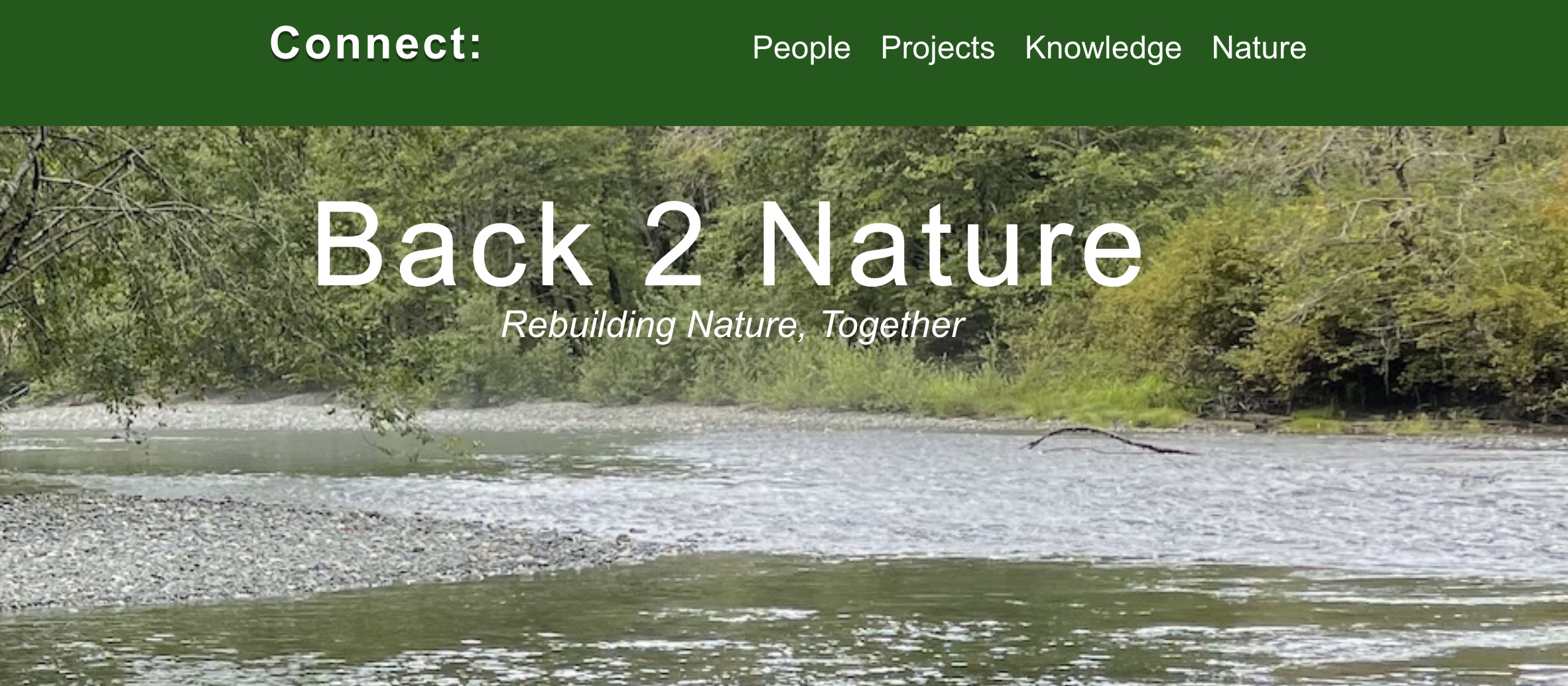
This fire was burning in my belly when I turned my attention to Team Two’s Design Thinking assignment and our project Back 2 Nature. I asked myself, what are the values we are trying to impart through this program, and is the current design doing this effectively?
My team’s intention, from the beginning, was to build a program that centred on indigenous knowledge to avoid perpetuating colonisation. However, the work of Professor Linda Tuhiwai Smith (2012) revealed that teaching indigenous knowledge through the “knowledge and systems, rules and values” (p.93) of western research results in tokenization, not decolonization. Tuhiwai Smith dismantles the myth that the western research system is objective, benign, and universal and argues that decolonization requires constructing research that centres indigenous knowledge systems, not just indigenous knowledge.
During the interview stage, I reached out to Graeme Reed, Policy Advisor at the Assembly of First Nations and a Ph.D. candidate at the University of Guelph, focusing on decolonization and nature-based solutions. I briefly explained Back 2 Nature and asked how, as settlers, we could build a program informed equally by indigenous and western worldviews. According to Reed, dividing climate action into mitigation and adaptation perpetuates the western system of knowledge (personal communications, February 9, 2022). From an indigenous perspective, climate change is a problem of values, not technology. He argued that programs such as Back 2 Nature need to focus less directly on climate change and more on rebuilding our relationship with nature and, through that process, “rebuild ourselves – physically, mentally, spiritually, and emotionally”. Ultimately, says Reed, reconnecting with nature and each other is climate action, shifting society’s view of what is worth protecting and changing behaviour. As a result of this advice, we have adjusted our explanation of Back 2 Nature, citing “Rebuilding our Relationship with Nature” as the primary goal.
This new approach also helps us reach our original goal to increase public engagement in climate change, based on the supposition that engaging citizens on the issue of climate change increases risk salience and translates to support for increased government action (Carrico et al. 2015). According to Kraußa and Bremer (2020), we are on the right track but how we talk about climate change is critical. Their research reveals that complex scientific information fails to resonate because, for many people, it is abstract. However, narratives reflecting the local changing climate and impacts give meaning to climate risk and legitimise governance (Kraußa and Bremer, 2020). For Back 2 Nature, this means the program should avoid focusing on climate science and instead help build local climate narratives as the best way to increase government action.
The scope of Back 2 Nature has shifted from rural to urban, regional to national, school programs to community projects in our attempts to include as many people as possible. Eventually, we began to understand this as equity – how could we ensure that this program was accessible to and inclusive of everyone regardless of colour, income, education, or ability.
Addressing equity in adaptation strategies can correct underlying systemic policies and conditions perpetuating inequities; however, the ability for regions and sectors of society to adapt is also based, in part, on values, perceptions, and power structures (Wolf, 2011). While Back 2 Nature does not facilitate the development of adaptation strategies, if we can engage people from all sectors of society, we can rekindle participants’ relationship with nature and foster an understanding of adaptation. Knock-on effects could include increased engagement in government and community-led adaptation strategies.
During the interview stage, teammate Nancy Prevost received feedback to apply the equity lens during the design stage of the program, not at the end (G. Hill, personal communications, February 8, 2022). One way to operationalize this is through outreach to leaders. According to Nature Canada Executive Director Graham Saul, distributed programs such as ours require sustained leadership and Nature Canada engages the existing network of nature groups in their programs (personal communication, February 10, 2022). This network potentially reflects a predominantly white, middle-class demographic, so we must expand to include others. Reaching out to community groups and schools, particularly in historically marginalised communities, could increase the accessibility and inclusivity of the program.
Justice. Equity. Democracy.
Back 2 Nature sits on a set of solid values. As we empower people to plant a butterfly garden, restore a wetland, or eliminate invasive species, we strive to promote justice through decolonization, equity through inclusion, and democracy that reflects climate governance.
There is a difference between “freedom to” and “freedom for”. While the seditionists scream for freedom to exert their privilege whatever the cost to others, Back 2 Nature will strive to impart values that advance freedom for everyone.
References
Carrico, A. R., Truelove, H. B., Vandenbergh, M. P., & Dana, D. (2015). Does learning about climate change adaptation change support for mitigation? Journal of Environmental Psychology, 41, 19–29. https://doi.org/10.1016/j.jenvp.2014.10.009
Krauß, W., & Bremer, S. (2020). The role of place-based narratives of change in climate risk governance. Climate Risk Management, 28, 100221. https://doi.org/10.1016/j.crm.2020.100221
Tuhiwai Smith, L. T. (2012). Decolonizing Methodologies: Research and Indigenous Peoples (2nd ed.), 92-116, Zed Books.
Wolf J. (2011) Climate Change Adaptation as a Social Process. In: Ford J., Berrang-Ford L. (eds) Climate Change Adaptation in Developed Nations. Advances in Global Change Research, vol 42. Springer, Dordrecht. https://doi.org/10.1007/978-94-007-0567-8_2
The Value of Getting Back 2 Nature Read More »