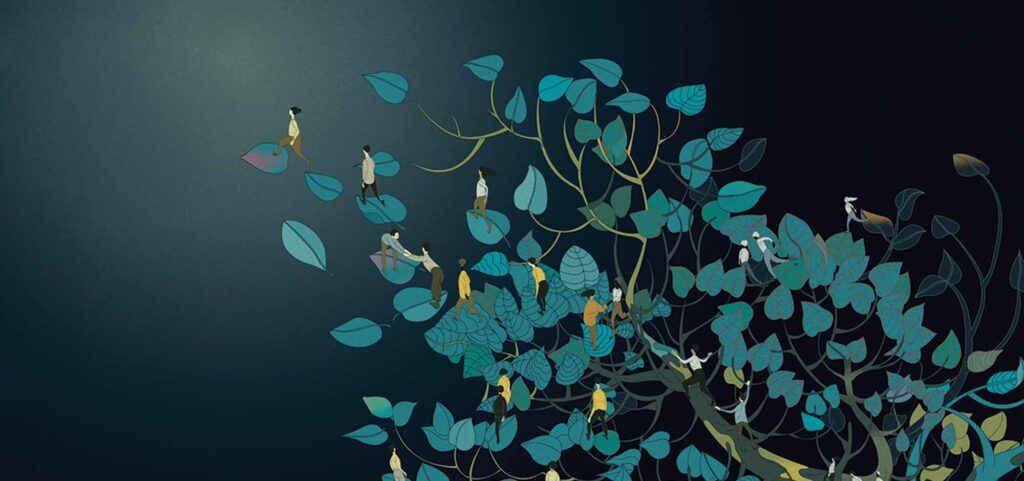
Climate change is a complex problem that requires a deep, comprehensive exploration across social and physical science disciplines, multiple worldviews, and lived experiences, in order to integrate multiple knowledge systems, generate new insights and knowledge, and develop a deeper understanding of the roots of the problem (Corman & Cox, 2020; Gram-Hanssen, 2021). These deep understandings can help generate new ways of thinking and doing that might address the sometimes cavernous gaps between specialist knowledge, local/stakeholder/Indigenous rights holder knowledge and lived histories, and the range of real-world social and economic conditions people are currently experiencing (Gram-Hanssen, 2021; Whyte, 2017). All of these perspectives are complex and layered in and of themselves and need to be considered holistically to examine the deep issues and potential solutions to the wicked problem of climate change.

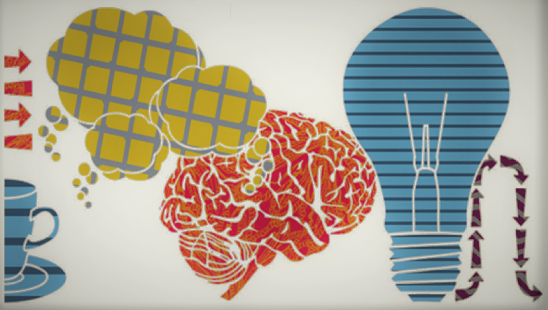
This brings me to the lens of transdisciplinary thinking. Transdisciplinarity is a concept that helped me understand both complexity and integration in a whole new way. Walker (n.d) uses the metaphor of a cake to explain transdisciplinary thinking by representing disciplines as individual ingredients, that are mixed together and then baked, which transforms the ingredients into something entirely different. The ingredients, or disciplines, are then no longer distinguishable as what they once were in their original form (Choi & Pak, 2006, as cited in Walker, n.d.). As such, the outputs of transdisciplinary thinking can provide entirely new ways of thinking and doing things that wouldn’t otherwise be possible. Corman & Cox (2020) further describe transdisciplinarity as a process of inquiry and reflection; of relating deeply with others through dialogue, and of having a mindset and orientation to blurring boundaries between, across, inside and outside disciplines and worldviews to generate new knowledge and possibilities of solutions to wicked problems. Similarly, transdisciplinary practice echoes characteristics related to the Indigenous conceptualization of relationality, or ‘right relations’, defined by Gram-Hanssen (2021) as a continuous process of reciprocity and responsibility toward other humans, other species, land, and water, etc. Right relations and relational systems thinking include acts of deep listening, the creation of space for different knowledge systems to co-exist while remaining intact, reflective practice, and collaborative dialogue (Goodchild, 2021; Gram-Hanssen, 2021).
Over the past 2 weeks of the MACAL intensive, we’ve essentially been in transdisciplinary boot camp. Not only have we been exposed to multiple ways of thinking about climate change and different worldviews through readings and lectures, but we’ve also been utterly immersed in the experience of transdisciplinarity through daily community-building activities with our instructors and cohort members, engaging activities and assignments, cohort-wide discussions, and discussion and reflection in the context of our design thinking challenge project within our teams. We dove into the theories, backgrounds, and methods of complex systems thinking and design thinking through presentations/lectures by experts, and webinars with climate action leaders and policymakers. Then we explored those methods for ourselves over the course of the intensive in the form of sharing/debriefs within teams and among the entire cohort, establishing reflective writing rituals (like this blog post, along with discussion forum posts), and doing independent research summaries to support our design challenge. Now that I’ve emerged from those two weeks, I can see how this exposure to a number of key ingredients and practices has supported us in starting to bake our complex, emergent transdisciplinary “cakes”.
In addition to learning and experiencing these methods and ways of thinking about the challenge of addressing climate change, we also had the opportunity to play with them and integrate them as part of our design challenge process. Systems thinking is a holistic approach to analysis that looks at how the individual parts of a system relate to one another within the context of other systems, some of which are complex and adaptive, meaning they are dynamic and evolving, with unpredictable emergent features that are difficult to understand and control (Holland, 1992; Homer-Dixon, 2011). Gaining a better understanding of how social systems and physical systems interact, inform, change and affect each other, really helped me connect the dots toward defining the deep problems underpinning the climate crisis we find ourselves in.
Our design thinking challenge followed the process of first exploring and defining the problem we wanted to try and solve, which involved a deep dive into the structures of the complex adaptive systems that are giving rise to these “wicked” problems in the first place, namely the socio-economic, colonial and political systems that dominate our global societies (Gram-Hanssen, 2021; Homer-Dixon, 2011; Whyte 2017). The design thinking challenge work we experienced in our teams and the Cascade Institute’s cognitive affective mapping (CAM) tool provided us with ways to explore the practical application of the theoretical concepts of systems thinking and transdisciplinarity (Homer-Dixon, et al., 2014). These applied processes and tools provided a means for us to see ourselves within the context of complex adaptive systems, and develop an appreciation of other perspectives, including worldviews, institutions, and technologies that influence how we think about things, which in turn influences how we do things (Ross & Piereder, 2021). The design thinking approach of involving and empathizing with the people most affected by a particular problem like climate change reinforces and provides a means of practicing transdisciplinarity; ensuring stakeholder involvement from the beginning of the process to explore and define the problem and be co-creators of potential solutions.
The Climate Action Leadership program has us students building a practice of transdisciplinary thinking by baking in the support structures of open learning practices through the crafting of blogs, digital identities, and development of a web presence that supports participatory culture; a space for us to gather our ingredients, practice the art of dialogue, crack open and expand our minds, and be co-creators of content in the climate action space…and then iterate.
REFERENCES
Corman, I. & Cox, R. (2020). Transdisciplinarity: A primer. Royal Roads University. https://commons.royalroads.ca/macal/wp-content/uploads/sites/88/2021/04/MACAL_Transdisciplinary_Thinking03-31-21-3.pdf
Goodchild, M. (2021). Relational systems thinking: That’s how change is going to come, from our earth mother. Journal of Awareness-Based Systems Change, 1(1), 75-103. https://doi.org/10.47061/jabsc.v1i1.577
Holland, J. (1992). Complex adaptive systems. Daedalus, 121(1), 17-30. http://www.jstor.org/stable/20025416
Homer-Dixon, T. (2011). Complexity science. Oxford Leadership Journal, 2(1), 1-15. http://homerdixon.com/wp-content/uploads/2017/05/Homer-Dixon-Oxford-Leadership-Journal-Manion-lecture.pdf
Homer-Dixon, T., Milkoreit, M., Mock, S. J., Schröder, T., & Thagard, P. (2014). The conceptual structure of social disputes: Cognitive affective maps as a tool for conflict analysis and resolution. SAGE Open, 4(1). DOI:10.1177/2158244014526210 sgo.sagepub.com
Ross, H. & Piereder, J. (2021, June 10). Belief systems in a complex world: A cognitive-affective mapping tutorial [Lecture recording]. Cascade Institute.
Walker, S. (n.d.). Transdisciplinary learning: all mixed up!. PYP in Practice. https://sites.google.com/isparis.net/conceptualinquiry/transdisciplinary-learning-all-mixed-up