There is so much to think about when learning about stories and language. It feels like we are re-learning what seems to be controlled already. Learning about communication techniques can be compared to breathing techniques in yoga. We all know how to do it but when you pay attention and deepen your understanding amazing changes happen.
In general, I know what sparks my attention and my enthusiasm. But I never reflected on why! There are some ads or articles or even words from someone that will create big impacts in my life, but again, I just never ask myself why! Melanie C. Green -a social psychologist – mentions in the Not So Smart podcast how arguments with the typical “top 5 reasons why you should do something” will make our thinking more critical than narratives will. With the straightforward messages, an audience might feel engaged or not based on their beliefs and interests on the topic. For example, I have been involved for 20 years in the importance of protecting the environment. Most messages that I hear about reducing my waste make sense because they are related to what I am concerned about. On the other hand, my boyfriend, who was not raised with the same values, will not engage with “what we should do to save the planet”. He thinks that it’s pointless. Green’s explanations reveal what we observe in society: we feel divided on so many topics. It must be related to the same argumentative messages being shared over and over. They don’t consider how everyone is different so the message continues to divide instead of unifying.
The actual leaders still use terms such as climate crisis and climate emergency; I am unsure if the impact they try to create works. If someone is not interested in the topic, then we use words like those when we communicate there is a risk for this person to unplug. A solution might be that “narratives are good at helping us step into somebody else’s shoes” (McRaney, 2017). They can change the world if they allow people to use compassion and empathy. A feeling of disconnection is often cited as a problem in our society. I believe that if we start seeing more stories about others’ accomplishments, attitudes can change and actions can happen.
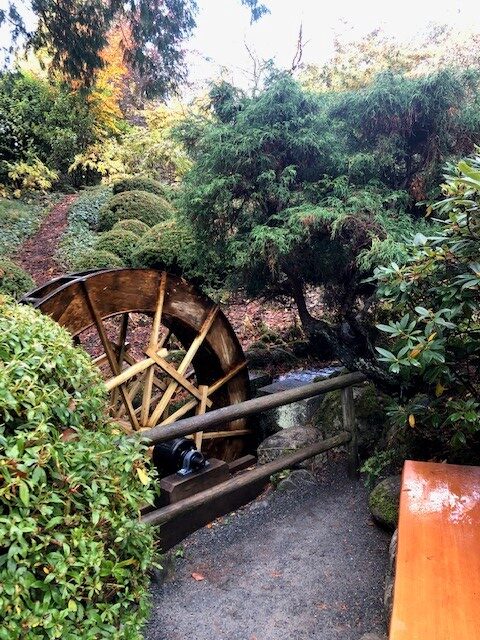
Sit Spot
When sitting at my sit spot this week, I thought of the motto “invite in, venture out”. I wonder how can I encourage my entourage to sit in silence from time to time. I already notice that recommending it as a form of “you should” – most likely because of Green’s theory. Here is some prose that help me relate to what O’Hara (2014) mentions about “sticky” memories. It bridges others’ emotions to my experience.
I had a big week.
Things were not flowing for me.
The feeling of being weak.
I listen to my little voice and went outside to find my quiet sit spot. It makes me happy.
Things around it look like they don’t change. They stay still. It feels good.
I breathe and look around in appreciation- nothing else to do.
I notice a trail that I have never seen. Venture out I hear.
I start walking through the little forest around my sit spot. To end to a fence that was unlocked.
Thanks, life!
I go in – getting into a garden. The roses garden. The one I have seen hundreds of times before.
But I never entered that way.
Nothing crazy you would say!
It is just the use of a different trail to enter a familiar place.
I can’t explain why but it makes me feel strong, at peace and connected.
Ready to go back to the world with a smile on my face!
McRaney, D. (2017-present). YANSS 113: Narrative persuasion. You Are Not So Smart. [Podcast]. https://youarenotsosmart.com/2017/10/24/yanss-113-the-power-of-fiction-to-change-peoples-minds/
O’Hara, C. (2014). How to tell a great story. Harvard Business Review Digital Articles, 2–6. http://search.ebscohost.com/login.aspx?direct=true&AuthType=sso&db=bth&AN=118647556&custid=s5672143
November 8, 2021 at 6:46 am
This is really beautiful Nancy, and I appreciate the little prose poem at the end! There’s a deep metaphor in arriving at a place you love (the rose garden) through a different approach. One of the practices I’ve been taught about sit spot is to approach it from as many avenues as you can, really get to know the land around it so that you understand and witness the subtleties there.
I’m curious how seeing others’ accomplishments might help with climate action. I suspect that what you are talking about is that it offers hope, which we will be discussing next week, so stay tuned for that!
November 10, 2021 at 4:25 pm
Nancy, I loved the reading the prose (what I read as a poem) at the end of your blog. It’s a beautiful way to communicate what you were feeling while in your sit spot. I also liked what you said about noticing stories is like noticing breathing during yoga. It seems like such a simple concept, and yet it can be transformative.
November 18, 2021 at 8:06 am
I love this tiny ecology post Nancy! And appreciate the narrative very much. Thank you for sharing!