Tiny Ecology

Flower fields, place attachment, and maybe something about a dinosaur (if you’re lucky)
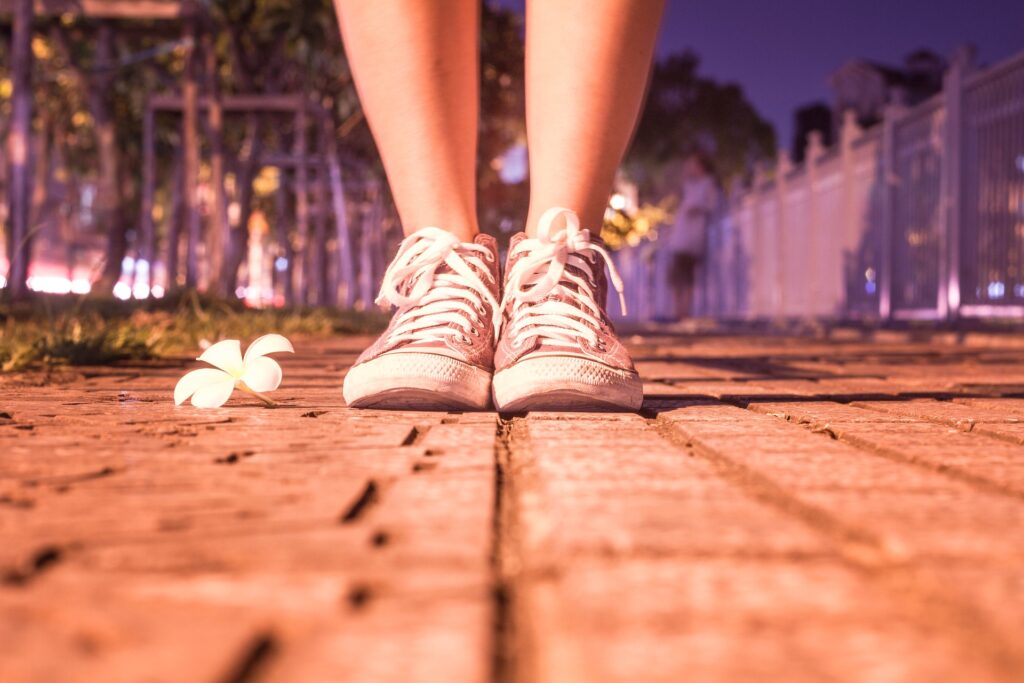
My sitting spot is not far from a main road. What this means is that it is incredibly noisy. As we are nestled in a burgeoning metropolis, my sit spot, as well, is surrounded by cement buildings, paved streets, metal signs. It is such a wonderful combination of my urban reality and wilderness. As wild as a few boulevard trees, some grass, and a bunch of bushes can get, at least! However, over the last few months, I have become accustomed to the noise of this place. I have grown a somewhat new or unused sense to what wild-ness resides around here (whether that be a noisy gull or an unbothered squirrel). Life unfolds around me here. The thing about a sit spot is it absolutely demands a slower pace. Even my breathing slows down. As I sit and observe, the cares of that day shed off my back like a snake sheds its skin (at least for a time) and I can view the world in a Spielberg-kind of slow-motion. People walk and carry on about their day, others meander out onto the decks for a quick smoke, and I sit—or stand—and take everything in. It is a rather wild experience. And although shared with a whole world of other beings, it is not a shared experience in the way that a rave may be considered one. It is so distinctive to me. To the point where, I could take a thousand pictures of this space, but to my understanding it will not take with it my experiences gained during this activity. It would not carry “the complexity” of the experience (Schroth, et. al., 2014, p. 416).

Herein, I believe, lies the problem. Visual local framing, although potentially, an effective method for communicating about the environment, relies heavily on how it is digested by each individual audience member. This is not to say, that local framing is not worth exploring, along with place attachment, which is what I will be getting a bit more into in this blog post.

A little bit more about local framing and place attachment

Local framing, according to Altinay (2017), “has been found to increase cognitive and emotional engagement in environmental issues by situating consequences in a local context to which the public can relate” (p. 295). In other words, local framing, brings the climate crisis home. I can see how framing the climate crisis through a local lens would be an effective form of engagement. Instead of climate change being this seemingly global and far-off issue (intangible, in fact), by using a local frame, you bring the problem home. For example, the heat wave that British Columbian’s experienced this last summer (2021) is a shared experienced. No matter who you talk to, everyone has a story to tell about that time. So, if we were to tie climate change and an increase in local temperatures (as opposed to global temperatures) to the heat dome, this could become a more significant approach to communicating about the environment. At least, to a local audience. I believe that the downside to this form of framing is that it is incredibly specific to location. So, not easily transmittable to a larger and more broad audience.

On the other hand (or perhaps the same hand, but a different finger), we have place attachment. This is a far more intangible concept as it is tied to a personal’s emotional attachment to a place. It is “defined as the bond between a person and a place” (Altinay, 2017, p. 296). I do, indeed, see how this is an impactful tool for communicating about the environment. If someone is attached, on a personal level, to place, they are going to have an invested interest in what happens or what is happening to that place or location. However, I struggle with this one simply because I do not fully understand if this is something that is easily communicable. Are we not, in some ways, preaching to the converted if we are targeting an audience that is open to the idea of place attachment? Let’s worry this idea for a little bit longer…

A sticky thought

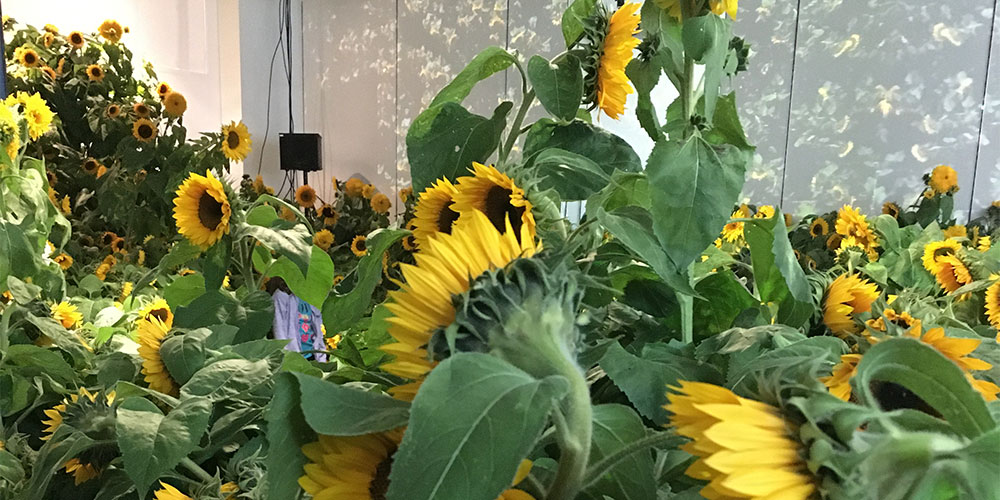
A few months ago, in September of this year, I—with a little bit of extra time on my hands—took a few moments to check out a local attraction at Willowbrook Mall in Langley, BC. The attraction was, aptly, called Flower Field. And, true to its name, the experience was quite literally a room full of sunflowers. It was an immersive, multimedia display that utilized not only live flowers, but also a projection of more sunflowers in a field, which was accompanied by relaxing spa-type music mingled with outdoor-themed white noise (e.g. birdsong). All-in-all, a completely immersive experience that transported me to a magical realm. As if I had accidently (or completely on-purpose) taken a bite out of an “eat-me” cookie that transformed me to no larger than the size of thimble.

Willowbrook Mall describes this manufactured experience as “an immersive floral experience…that will transport you into an oasis of sunflowers. Designed to spark joy for our guests, the surprise and delight floral moment will provide a unique picture-perfect experience for the whole family” (Willowbrook, 2021, November 13). Was this effective? For me, absolutely. I walked through the pathway of flowers as if I had just been confronted with a living and breathing dinosaur; mouth hung open, slight smile tugging at the corner of my lips. For those few moments, I was naturally able to suspend my disbelief enough to take from it what the experience offered. However, was that true for every person that walked into that Flower Field? Certainly not. Indeed, my rather dorky reverie was completely interrupted by a young couple walking in some minutes after I had. What they got from the experience was incredibly different from my own. They laughed and jeered at the overall display, finding (from their very vocal and, not to mention, colourful remarks) no satisfaction in the experience. Except, maybe, at the joy of making fun of it (along with people, like myself, for finding enjoyment in it).

This moment—a gift—was incredibly educational for me. I’m sure we have all, at one point, heard the proverb “you can take a horse to water, but you can’t make it drink.” I was able to see, firsthand, how applicable this is to all areas of life (not just your stubborn horse). My sitting spot is meaningful to me and in ways that I cannot even fully verbalise. However, that is because I consciously made the choice to have this experience; to be open to whatever experiences may arise within the time I spend in it. I believe that it is something that cannot be manufactured.

So, what does this do to my understanding of environmental communication?

Personally, I think that it is important to understand how local framing can help in the transmission of climate change messaging. If it is applied to the right situation. Do I believe that this will be effective in all situations? No. Purely based on my experience in the Flower Field, I can see how everyone is different. Here is a situation where a group of people were gifted with a visual and immersive experience, yet because each individual was different, what they got out of that experience was different. Therefore, this type of framing (making the problem local) will only be effective if someone is able to accept the information being offered.

Along that same thread, place attachment is something that is incredibly meaningful to me. However, if I invited someone new to my sit spot, there is no guarantee that they would have the same wild and magical experiences that I have had (no matter how visual it becomes).

I feel that I just need to be open to utilizing different methods of communication to educate others about the environment. Whether that be focusing on gain or loss frames, online and informal platforms, visual local framing or encouraging place attachment. It is my job, as a communicator, to be open and understanding. To accept that not everyone is going to walk into a field of flowers and imagine themselves in Wonderland.

References

Altinay, Z. (2017). Visual communication of climate change: Local framing and place attachment. Coastal Management 45(4), 293-309. https://doi.org/10.1080/08920753.2017.1327344

Schroth, O., Angel, J., Sheppard, S., Dulic, A. (2014). Visual climate change communication: From iconography to locally framed 3D visualization. Environmental Communication 8(4), 413-432. https://doi.org/10.1080/17524032.2014.906478

Willowbrook. (2021, November 13). Flower field. Willowbrook. https://www.shopwillowbrook.com/flowerfield/

Flower fields and place attachment Read More »
A moment in my sit spot: A season of grief

Photo credit: Pixabay

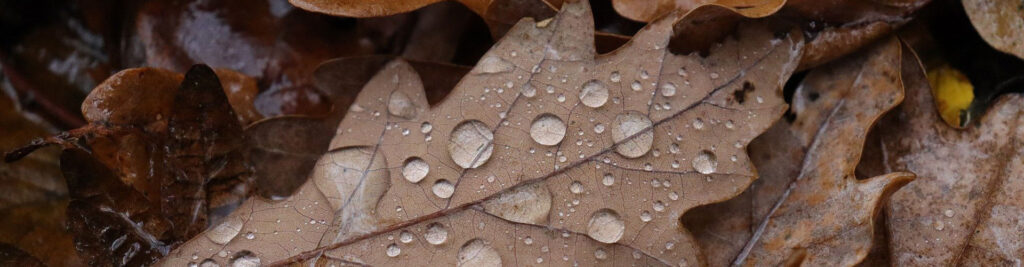
It is cold and damp today. Much the same as every day this week, really. The difference is, although there is certainly the promise of rain (with a sky that looks like a jar full of cotton balls), it is not currently raining. Instead, the city is glazed in ambient light delivered by a muted sun.

For some moments, I watch in fascination as bronzed leaves dance lethargically in a seemingly careless breeze. They flit this way and that and I find myself envious of their experience. This sort of synchronous gliding, as if the air was textured enough to walk on—and wouldn’t I love to, with the grace of a ballet dancer, pas de chat through the sky on my toes!

Now, when I look over the world of my sit spot, I see more than just leaves dancing. Like an ensemble cast, the local environment moves to some unknown (at least to me) symphony. The wind, the conductor, instructs not only leaves, but branches, blades of grass, bushes, the water that makes up puddles in the street. Indeed, not even I am exempt from this. My hair, a nest of brown waves and twists, is also swept up in this music. It is a reminder to me that I am a part of, not separate, from this world. It is a grateful reminder—just like these moments are bathed in gratitude. It is a prompt to take a moment and pause; to breathe. And these beings—the more than human—are just as much teachers as my human ones.

So, what did they have to teach me today? An age-old lesson, for sure. One, that, I require constant reminders of. Especially around this time of year.

Regarding the world through the eyes of other.

It is such an interesting time of year. When I say this, what I mean is, just as Spring is somewhat the herald of new life and growth, I feel the fall to be a celebration of death. A reminder of the impermanence of life or the cyclical nature of all things. So, I take a moment to see it mirrored in my natural surroundings.

The sidewalks remain splattered with leaves. Now, their colour is closer to a reddish-brown rather than the vibrancy often seen at the beginning of fall. The tree directly in front of me resembles ground zero of some sort of explosion, as leaves are haloed around the base of the trunk. Yet, there remains a handful of leaves continuing to cling on to their branches. Not quite ready for change. Not quite ready to let go and free fall. I can relate to this. There is no telling where they will end up if they let go.

The wind is up, it brushes through branches like the teeth of a fine-toothed comb. It whispers a promise to each leaf in turn. A promise of adventure. One final adventure before it finds its final resting place. This could mean falling straight to the ground and nestling amongst hundreds of other fallen brethren. Or, somewhere entirely different. Somewhere far off. Far away. Somewhere new. The trick is the choice of the two is not open for discussion. Such is the spontaneity of life. What choice is available is simple, however. You (in this case the leaves), can choose to stay in the world that you know by continuing to cling on to the branch that grew you. Or you can choose to leave it. Jump into the void of the unknown. Only one way—like those leaves—will lead to new growth.

Let me gather my thoughts.

So, in this case, loss, although sad and worthy of tears and sadness, also leads to growth and new life. These leaves will die, but the memory of them will encourage new growth. There is praise in that, which is why grief and praise go hand in hand.

To further dismantle this thought, loved ones that I have lost are gone, and my sorrow—like the fall—requires space to reflect. I am allowed a season of grief, just as all the seasonal life around me requires this transitory time.

To deconstruct again further, these thoughts, as environmental communicators, it is not about turning away from the sorrows of our world (loss of habitat, excessive deforestation etc.). It is actually about looking at and acknowledging those losses—mourning them. Using the above as an example, acknowledging and making space for what we have lost is really the only way that we can turn a loss-frame into a grain-frame. Like yin and yang, we must accept the darkness to fully enjoy the light or, as Marilyn Krysl said, “The moon knowns that if you deny the dark, you make a mockery of the light.”

Not bad insight for a handful of leaves, eh?

A moment in my sit spot: A season of grief Read More »

Let's Talk About Eco-Ableism

Photo courtesy of Pixabay

Not far from my sit spot, seemingly nestled away from the rest of the busy and raucous world of a city (that, indeed, never truly sleeps) is a wondrous and large plot of green space. This discovery—gift, really! —means that I have the ability to, with the help of the ol’ pied-mobile, venture into nearby nature and escape from the urban environment my home is huddled in. This translates to me, like Lucy Pevensie in C.S. Lewis’ The Lion the Witch and the Wardrobe, slipping into a green and enchanted world that, for a time, can give the impression of being completely separate and untouched from urban development. Winding trails, rugged stairways, and quaint bridges provide the perfect backdrop to unwind and slow my pace—to just simply breathe.

However, lately—and thanks to some recent course readings—I have been looking around my sit spot (and walking trail) through a new lens. Firstly, I note how fortunate I am to be able to have these shared experiences with the more-than-human world, and second, I have come to understand that these trails and locations are not always accessible to all members of my new community.

Indeed, from my sitting spot I see leaves scattering the ground like a handful a skittles. On the one hand, it is beautiful, but on the other, it is a terrible tripping hazard that is only amplified for someone the requires devices to help them travel. I also see a sidewalk that is in need of repair, jagged sections of pavement and upturned ground make the road uneven. 

As previously mentioned, the pathways along my walking tail are not designed for the use of such devices either, as they are incredibly narrow and uneven. So, where I have admittedly viewed paved roads as being a disruption of the natural world, others would view this as improved accessibility. And so, who am I, to fight or argue against making a world more equitable and accessible for all?

Not to Get Personal, but...

Just recently, I accompanied two of my family members on an outing to the local shopping centre. Both have mobility difficulties (short term/long term) that require them to use wheelchairs for extended distances (in deference to them, I will not share their personal stories). What I noticed (and have noticed) is that my local environment is incredibly inaccessible to some members of society. From spatial factors in stores and restaurants and illegible topography of signs and menus, to the height of counters at tills and blaring ambient music, it takes very little time to see how most settings and situations are geared toward non-disabled people. For example, when someone lives with chronic pain, every single groove in an aesthetically pleasing tiled floor becomes, for them, an agonizing journey that must be endured to complete day-to-day tasks. So, from my experience (or the experiences from those around me), I can agree that a lack of accessibility affects people in my community. It affects a disabled person’s ability to, not only, complete necessary tasks within their lives (and subsequently within a society geared towards non-disabled people), but also to interact with the more-than-human world.

I am not only privileged to be able to make space to discuss and ponder these issues, but I am also privileged by the fact that my relationship to the more-than-human world was developed by my access to these green spaces. An access that is not afforded to everyone in my community. 

Use Your Words, and Use Them Well!

Elizabeth Wright’s (2020) article, “Climate change, disability, and eco-ableism: Why we need to be inclusive to save the planet” was incredibly enlightening on how important it is to consider all perspectives when talking about eco or climate justice. Furthermore, eco-ableism (“ableism” from “environmental activists who fail to take into account those that are less able or privileged then them” (Wright, 2020)), which is something that I am certainly guilty of, is yet another indication that causes, such as climate justice, should not be pigeonholed.

We cannot move forward in our journey towards sustainability until everyone has a seat at the table. Whether this involves adjusting the table or removing the table altogether, it is important to be open to any change that will make this world equitable and inclusive for all.

I am, unfortunately, unable to offer any solutions to these issues. All that I can do is make note of areas where I see room for improvement (within myself and my community). I can acknowledge, once again, my own privilege and open myself up for all or any changes that will make this world more accessible. I can, as a communicator, continue to highlight stories, like Wright’s (2020), in the public sphere. As climate scientist Katharine Hayhoe says, “the most important thing you can do to fight climate change [, and in this case, eco-ableism, is to] talk about it” (TED, 2019). And so I would like to encourage myself (as well as others) to do just that: Talk. Tell stories that matter. 

References

TED. (2019, January 11). The most important thing you can do to fight climate change: Talk about it | Katharine Hayhoe. [Video]. YouTube. https://youtu.be/-BvcToPZCLI

Wright, E. (2020). Climate Change, Disability, and Eco-Ableism: Why we need to be inclusive to save the planet. UX Collective.

Let’s Talk About Eco-Ableism Read More »

A Little Thing Called Framing

I’ve recently moved. In a similar fashion to Margaret Hale in North & South, I moved from the country to the city. Although many positives have been attached to this move, the one drawback is my separation from the nearby nature that I had grown accustomed to enjoying on a daily basis. In my original sit spot, I was surrounded by what I understood to be an oasis of the natural world. I woke every day to birds chirping. Now, however, in the city, I no longer wake up to bird song (unless you can consider the cacophonous chirping of sirens and crescendo of horns or over-zealous mufflers bird song). This has been a theme that I have reflected on in my new (and subsequently indoor) sit spot. I do, indeed, have my plants to keep me company as well as an expansive window with a view of ever-changing trees. Yet, no wildlife sounds. No birds.

The Long Spiral of Doubt

My thoughts—on the loss of these great natural experiences—does bring to mind the Conner et. al. (2016) paper, “Interpersonal communication about climate change: How messages change when communicated through simulated online social networks.” Specifically, the development content domain that relates “climate change to the economy and technology” (p. 465). I am reflecting on this loss of bird calls as a loss-frame. As a result of deforestation, poor city planning, and infringement on ecosystems, we are losing pieces of the natural world that are, in my opinion, sacred. Irreplaceable, in fact. In short, I am focusing on the negative effects of not mitigating climate change (p. 465). When my reflections take me down this line of thought, I am filled with a deep helplessness. I can never replace and fix what has been lost in such a way. Furthermore, will there be a time where no one wakes up to the sound of birdsong? How can I, one person, living in a consumer culture as a consumer (an enabler of an economy that seems to encourage this kind of rapid and un-mitigated growth and excess) do something about it? I am, thanks to my education, equipped with knowledge, yes, and awareness. Yet, how does this help? What can I actually do?

It is in the Hine et. al. (2015) paper, “Preaching to different choirs: How to motivate dismissive, uncommitted, and alarmed audiences to adapt to climate change?” that says that “messages framed in terms of negative outcomes and high uncertainty decreased participants’ intentions to engage in pro-environmental behavior” (p. 2). The negative associations I made between a lack of bird song quickly had me spiralling into uncertainty. Indeed, I believe that there are larger implications tied to how loss-frame messaging can discourage action. If someone is uncertain about a topic, hearing negative (or worse, incriminating messaging) may push them further away from making steps toward, in this case, climate action. That is why I believe it is necessary to have positive (or gain-frame) narratives. “Framing climate change outcomes in terms of gains (relative to losses) was [in a 2010 study) associated with increased perceived severity of climate change impacts” (Hine et. al., 2016, p. 2). People that were presented with gain-frame narratives feel a larger sense of agency to create positive change.

Flipping The Coin

Based on this narrative, I present to you another observation taken a few weeks after my initial observation. As I was in my new sit spot, with a veritable deluge happening outside my window. Trees battening down the hatches, a misty haze over the horizon, I was visited by not one, but five pigeons right outside my door. Each one plumper than the other, they preened on the banister of my balcony taking shelter from the said downpour. This moment filled me with such joy and contentment. As if the universe had heard and answered my silent plea; here I was, accompanied by nature in the most unexpected way. It was a reminder, to me, that—perhaps—all I need to do is listen a little bit more intently for those bird calls in the morning. Take more moments—like this one—to really look outside of myself. Because, nature is still there, all around me. It’s just challenging me to be more in tune. To continue advocating. All I needed, was a little gain to change my whole frame around.
References

Hine, W. D., Phillips, W. J., Cooksey, R., Reser, J. P., Nunn, P., Marks, A. D. G., Loi, N. M, Watt, E. S. (2015).  Preaching to different choicrs: How to motivate dismissive, uncommited, and alarmed audiences to adapt to climate change? Global Environmental Change, 36, 1-11. http://dx.doi.org/10.1016/j.gloenvcha.2015.11.002

Conner, P., Harris, E., Guy, S., Fernando, J., Shank, D. B., Kurz, T., Bain, P. G., Kashima, Y. (2016). Interpersonal communication about climate change: How messages change when communicated through simulated online social networks. Climate Change, 136, 463-476. https://doi.org/10.1007/s10584-016-1643-z

A Little Thing Called Framing Read More »