Endless traffic. Constant construction. Sirens at every hour of the day. Escaping the loud noise of Vancouver is almost impossible. But deep within the vast greyness of the city is a small peaceful neighbourhood that provides refuge from all that chaos. Walking into this neighbourhood feels like entering a different planet. Suddenly the wind blows softer and the smell of pollution is overpowered by the scent of fresh-cut grass. As you get deeper into the neighbourhood, the loud city noise simply fades away and is replaced by the sounds of birds chirping, kids laughing and the occasional bike bell passing by. The grey sidewalks are coloured by flower beds and vegetable gardens; and unlike most streets in the city, there are more people walking than driving. Right at the centre of the neighbourhood is Douglas Park; the heart of this community. Everything happens in and around this park. The large open field provides a space where people can fly kites, walk their dogs, and play baseball, volleyball or even cricket. The tranquility of Douglas Park makes this neighbourhood an urban sanctuary where families can enjoy the outdoors.
On a regular summer day, neighbours were warned to prepare as a severe heatwave was set to strike the city in the coming days. News of the heatwave spread fast across the neighbourhood, but most neighbours dismissed the warning, as the ‘hot sunny weather’ seemed like an invitation to spend the day at the park. When heatwave arrived, most neighbours quickly realized the weather was simply too hot to be outside. While some people were able to escape the heat by staying in their air-conditioned homes, others did not have that luxury. Without air-conditioning, the inside of homes got even hotter than outside, and some neighbours were forced to leave their home in search of a cooler space. As the heatwave continued for days, the health and safety of the community was threatened, and at the same time, Douglas Park began showing symptoms of decline. The birds and squirrels that used to roamed the park had disappeared. The few dogs walking around did so by hopping due to the burning temperature of the sidewalk. And for the first time, the characteristic green grass of Douglas Park had turned yellow. The once popular park became a deserted, almost unrecognizable place. The heatwave had changed the landscape of the park and affected every inch of the neighbourhood; everywhere except the Weeping Willow tree.
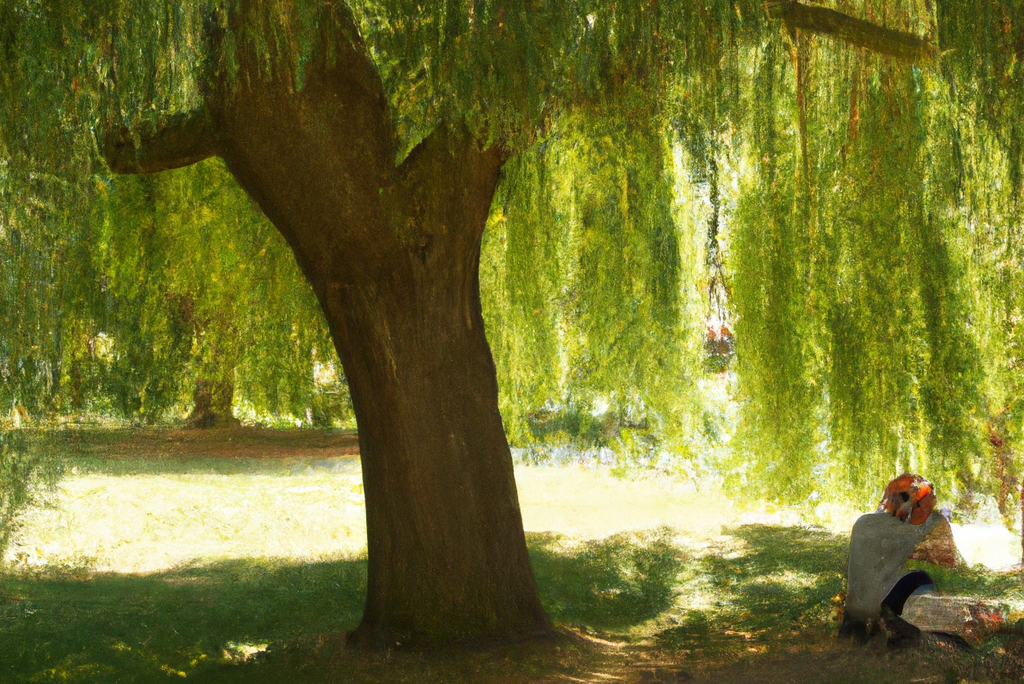
The Weeping Willow tree stood tall at the edge of the park and the grass underneath it remained as bright green as ever. Protected by the tree’s hanging branches and bulky canopy, the shaded area underneath created an almost isolated climate. Under its shade, the temperature was surprisingly refreshing, even cooler than indoor places without air-conditioning. The soft breeze blowing through the curtain of hanging branches made one forget about the scorching heat taking place just beyond it. For the few neighbours walking by, the Weeping Willow provided the only space nearby to escape the heat; and only those who stood under the tree would realize that the birds and squirrels that disappeared from the park had simply congregated under the tree. As the heat continued through the week, crowds of neighbours, dogs, bird and squirrels sheltered from the heat under the Weeping Willow. The shaded area under the tree had become the only usable outdoor space in the entire park, and after a few days, the neighbourhood began to unwillingly accept this as ‘the new normal.’
One sizzling hot day, the neighbourhood woke up to a fallen branch from the Weeping Willow. The heat from the previous days had caused one of the tree’s old branches to dry up and snap, taking away a large area of its shade. For many who depended on the Weeping Willow’s shade to protect them from the heat, this news came with terror. Without another safe spot to turn to, many neighbours succumbed to the heat, and the once quiet neighbourhood was soon flooded with the loud noises of the city. Sirens at every hour of the day rescuing the ill. Constant construction cleaning up fallen branches. Endless traffic of cars leaving and entering the neighbourhood. No one had realized that the health of Douglas Park kept the neighbourhood in balance, and without it, the dangers of the city would simply occupy the peaceful neighbourhood people came to escape them.
After a few more days, the heatwave eventually passed, but it didn’t do so without leaving a trail of damage. The neighbourhood’s sidewalks had turned grey as flower beds and vegetable gardens died from the heat. The park’s grass had burnt and many of its inhabitants did not return, as birds and squirrels left the neighbourhood in search of food and cooler climate. And even though the Weeping Willow remained an iconic feature of the park, its bushy, bulky canopy had been largely reduced by fallen branches. As many neighbours emerged from their homes for the first time in days, others were still recovering from the heatwave, with older members of the community hospitalized due to heat related injuries. The hopeless attempts of neighbours watering their dead front lawns perfectly illustrate the pain lived by the community. Everyone was exhausted; everything had changed; and hope was absent.
As the neighbourhood started realizing the full extent of the heatwave’s impacts, a large truck suddenly came rumbling down the street, piercing through the thick silence left by the damage. The truck was headed straight to Douglas Park, carrying a small tree wrapped on the bed of the truck. The loud sound of the unusual situation caught the attention of many neighbours, who followed the truck to the park. There, a man emerged from the driver’s seat and began offloading the tree at the edge of the park. The man was well known in the community, a father of two young boys, who appeared from behind the truck and did their best in helping with the tree. The three of them carried the small tree into the park, as more neighbours continued gathering around it. From the edge of the park, the tree looked like a small green spec in a vast yellow ocean. Whispers of confusion echoes through the park until the young dad returned to his truck and picked up a shovel. As the family began digging, some neighbours returned from their homes with shovels, ready to help; while others got into their cars and headed straight to the nearest garden centre. Within a few hours, the dead open field of the park soon became surrounded by small specs of green that provided a glimpse into a promising future and returned hope to the community of Douglas Park.