When asking about the risks of climate change, you will most certainly receive different answers, depending on who you ask. Although it is widely accepted that climate change will bring risks that affect our current way of life, the specific risks associated to a changing climate are still debated by many; particularly by those who work in different disciplines or sectors (CCME, 2021; Roberts, De Meyer & Hubble-Rose, 2021). That is because our understanding of risk is shaped by our personal and professional experiences (Roberts, et al., 2021). We tend to be more concerned about risks that are more closely related to our particular lived experiences (Roberts, et al., 2021; Stoknes, 2015). This means that the risks I care about may be different than the risks you care about because we work in different sectors, live in different places or simply have different perspectives on how climate change will affect us. The problem here is not that different people care about different risks, but rather how to communicate climate risks to people with different priorities. In order to understand how to communicate climate risk, one must first understand how our brains think about risk.
Because of the enormous amount of information that we process each day, our brains are designed to think in two different, but simultaneous ways of thinking. One way of thinking is intuitive thinking, which functions as an automatic way to process information, while the second way of thinking is deliberative reasoning, which involves conscious thoughts and deliberation (Roberts, et al., 2021). Although both ways of thinking can coexist, oftentimes one of them takes the lead when processing information, depending on the circumstance (Roberts, et al., 2021).
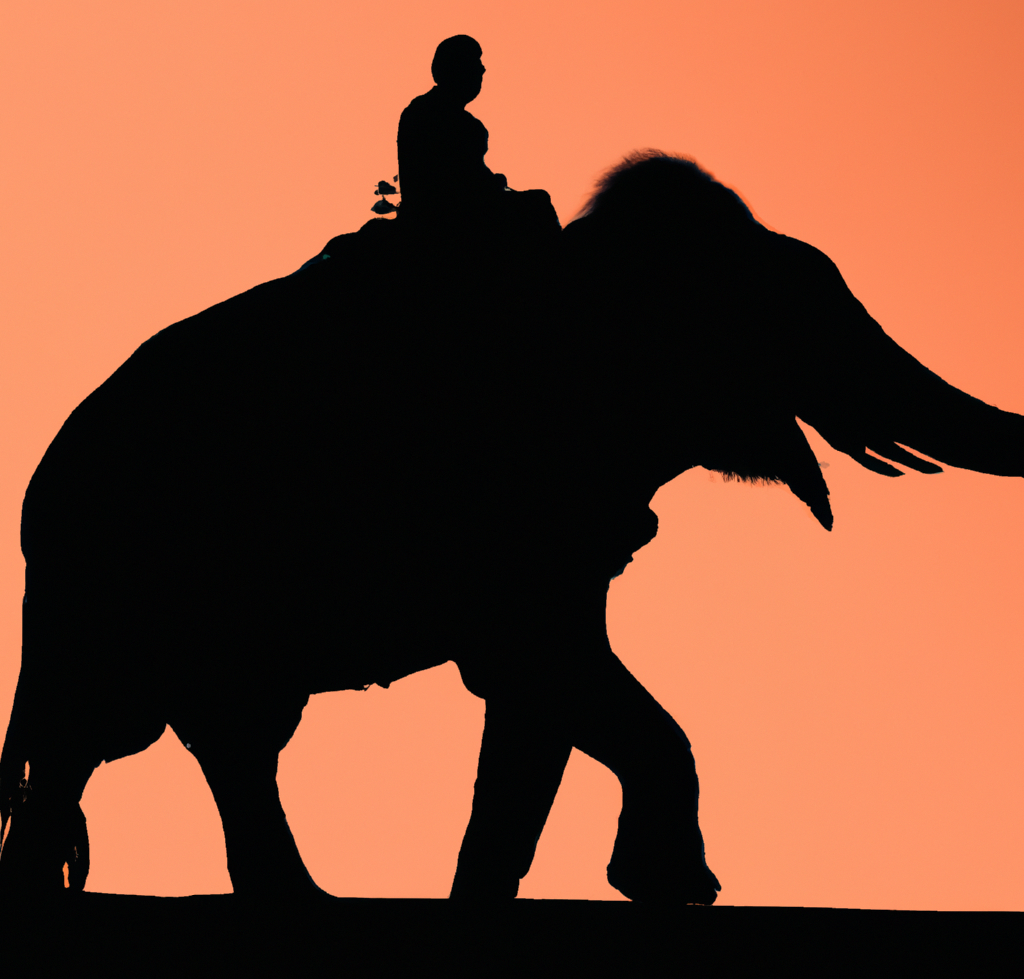
To understand how the two ways of thinking interact with each other, it is useful to think about intuitive thinking as an elephant, and deliberative reasoning as a person riding the elephant (Haidt, 2012). Most of what our brains do (approximately 95%) is situated within the intuitive side of our brain, which is outside the control of our conscious thoughts (Roberts, et al., 2021). This mean that most of what our brains do is under the control of our intuitive thinking, that is, the elephant. Contrary to popular believe, deliberate reasoning, or the rider, is most often not in control of what we think about (Roberts, et al., 2021). Instead, in most cases the elephant determines the direction of our thoughts and assumptions, while the rider simply goes along trying to justify or rationalize wherever the elephant goes (Haidt, 2012; Roberts, et al., 2021).
When faced with a potential risk, the elephant and the rider work together to evaluate the situation. The elephant steers our thinking in a given direction shaped by our previous experiences and professional expertise, while the rider rationalizes our thoughts and assumptions, making us feel in control. In order to understand a potential risk, our brains need to evaluate the problem intuitively (Roberts, et al., 2021). The issue emerges when the elephant does not have sufficient experience or exposure to properly evaluate the problem. This often happens with abstract problems, such as climate change. Climate risks may stand out to individuals who have the right experience, but elicit no risk response from those who lack exposure (Roberts, et al., 2021).
In order for people to truly understand climate risks, communication efforts must elicit a response from the audience’s elephant (Roberts, et al., 2021). This idea expands on the popular strategy of “tailoring communication to specific audiences” (Howarth, Parsons, & Thew, 2020, p. 332) by identifying the specific stage of the thinking process that must be targeted to produce effective messaging. Targeting the particular framework of the intended audience can help simplify complex or abstract problems to enable the audience to evaluate risks intuitively (CCME, 2021; Roberts, et al., 2021). By connecting climate-related risks to the elephant of individuals, communicators can steer the conversation towards managing climate risks, rather than debating their existence or importance.
References
CCME. (2021). Guidance on Good Practices in Climate Change Risk Assessment. Canadian Council of Ministers of the Environment. https://ccme.ca/en/res/riskassessmentguidancesecured.pdf
Haidt, J. (2012). The Righteous Mind. Random House of Canada Limited.
Howarth, C., Parsons, L., & Thew, H. (2020). Effectively Communicating Climate Science beyond Academia: Harnessing the Heterogeneity of Climate Knowledge. One Earth, 2(4), 320–324. https://doi.org/10.1016/j.oneear.2020.04.001
Roberts, F. E., De Meyer, K., & Hubble-Rose, L. (2021). Communicating climate risk: A handbook [Preprint]. Earth and Environmental Sciences. https://doi.org/10.33774/coe-2021-kc83n
Stoknes, P., E. (2015). What We Think About When We Try Not to Think About Global Warming: Toward a New Psychology of Climate Action. Chelsea Green Publishing.