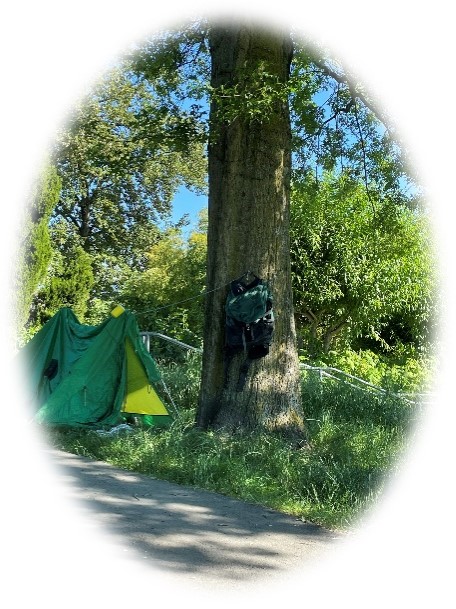
Integrating ideas across industry and cultural practices

I’m designing a project to implement a Climate Futures Design Team to both support sustainability reporting and to develop ideas for potential transformative climate solutions as an evolution from incrementally responding and  adapting to climate change.
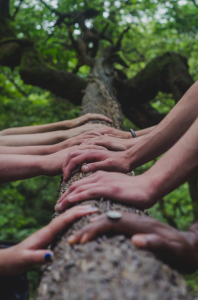
multicultural hands on a tree representing cross cultural team work

This is the final project for the course, Leading Change in the Context of Climate Change.

The goal of the project is to develop idea propositions for equitable, transformative change which requires the team leader to consider approaches that help the team to act responsibly to all other beings, in other words, to do the work to ‘right relations’ (Gram-Hanssen, 2021). The biggest challenge that I see emerging out of this is with integrating ideas across industry and cultural boundaries.

For lessons learned in cross cultural practices I looked to research conducted, in part, by Albert Marshall, a Mi’kmaw elder, who introduced the concept of Two-Eyed seeing in 2004. Since its introduction, there has been a strengthening consensus across Western and Indigenous researchers that successful integration of Western Science and Traditional Knowledge is fundamental to getting to equitable, transformative solutions (Hathaway, 2020, Bartlett & Marshall & Marshall, 2012).

Two-Eyed Seeing is the gift of multiple perspective treasured by many aboriginal peoples and explains that it refers to learning to see from one eye with the strengths of Indigenous knowledges and ways of knowing, and from the other eye with the strengths of Western knowledges and ways of knowing, and to using both these eyes together, for the benefit of all

Bartlett 2012, citing citing Bartlett 2006, 2011, 2012, Bartlett et al. 2012; Hatcher et al. 2009, Iwama et al. 2009; Hatcher and Barlett 2010; Marshall et al. 2010, IISH website,  P.335

To achieve this objective the leader will need to include Indigenous representation to co-design potential future solutions in a way that helps weave ideas across western and Indigenous worldviews. This is a challenging objective for a couple reasons. First, this project has a strong information systems foundation and Indigenous people are under-represented in STEM education so getting Indigenous team members could be challenging (IndigeSTEAM. ND). Second, the demands on Indigenous community member’s time are many and are increasing. A couple of examples are the time demands related to changes on the regulatory front in B.C., such as the implementation of UNDRIP and the Modernization of the Emergency Management Act.

Given the time constraints, one option that might work would be to create, or to connect with, an Indigenous advisory council. This idea of bringing together a knowledgeable group of stakeholders across Western and Indigenous communities was presented by Bartlett et al. as a lesson learned from decades of research into integrating western science and Indigenous knowledge (Bartlett et al., 2012). Their lesson is based on academic research, which could be tested in an Industry environment to determine viability.

Finding or establishing such a council would take time and could be done in parallel with establishing the organization’s internal team. Keeping Indigenous principles in mind, Bartlett et al. extend the principle of two eyed seeing to multiple eyed seeing, explaining the belief that no one person has more than a small piece of knowledge and that we need to tap into the collective consciousness (2012). This concept aligns to what in Western research is referred to as Transdisciplinarity (Corman & Cox, 2020). Bartlett et al. describe how their research maps to transdisciplinary research, describing the key characteristics of relating to social issues, integrating across disciplines, and participatory research (Bartlett et al., 2012).

My project is also embedded in the renewable energy industry as a response to the challenges emerging from the broader societal energy transition. Research into iterative risk management within the electricity sector has identified the value of integrating transdisciplinary knowledge into the process to meet the demands of climate change impacts, both for the Utility and the population it serves (Gerlack et al., 2018).  Research in this area has been unable to find examples of cross sectoral collaboration (Gerlack et al., 2018), which means that this challenge will continue as transdisciplinary approaches are tried and tested. While this research was centered in risk management practices, the researchers have made a case to shift away from what they refer to as a fragmented approach, to consider greater collaboration beyond the utility sector (Gerlack et al., 2018). This shift would not only open the opportunity for new perspectives but would allow for a shift from risk at the center to one of uncertainty at the center. This would support designing for the uncertainty inherent to Climate Change projections and open space for collaborations around scenario-based analysis, leading to the benefits that come with developing strategic foresight.

However, there are benefits with starting with a small and agile team which can be done by starting in the center of climate risk management and at the intersection of the common interests of Disaster Risk Management and Climate Change Adaptation practices. This would provide the leader with an opportunity to start from practical, established business functions, centered in managing risks, before creating a bridge to broader objectives, once trust in the leader, the team, and the outcomes that they achieve, is further established.

References

Bartlett, C., Marshall, M., & Marshall, A. (2012). Two-Eyed Seeing and other lessons learned within a co-learning journey of bringing together indigenous and mainstream knowledges and ways of knowing. Journal of Environmental Studies and Sciences, 2(4), 331–340. https://doi.org/10.1007/s13412-012-0086-8

Corman, I. & Cox, R. (2020). Transdisciplinarity: A Primer. Royal Roads University. https://commons.royalroads.ca/macal/wp-content/uploads/sites/88/2021/04/MACAL_Transdisciplinary_Thinking03-31-21-3.pdf

Environment and Climate Change Canada (ECCC). (2022, Oct. 18). Indigenous science. https://www.canada.ca/en/environment-climate-change/services/science-technology/indigenous-science.html

Gerlak, A. K., Weston, J., McMahan, B., Murray, R. L., & Mills-Novoa, M. (2018). Climate risk management and the electricity sector. Climate Risk Management19, 12–22. https://doi.org/10.1016/j.crm.2017.12.003

Gram-Hanssen, I., Schafenacker, N., & Bentz, J. (2021). Decolonizing transformations through ‘right relations.’ Sustainability Science, 17(2), 673-685. Retrieved 10 May. 2022, from https://doi.org/10.1007/s11625-021-00960-9   

IndigeSTEAM. (ND). Indigenous perspectives in STEM & STEAM opening doors for all. https://www.indigesteam.ca/

Institute for Integrative Science and Health. (ND). Two-Eyed Seeing. http://www.integrativescience.ca/Principles/TwoEyedSeeing/

Irwin, T. (2021). Transition Design: Design for systems-level change. American Institute of Graphic Arts (AIGA) National Conference. Terry Irwin [Presenter]. https://www.youtube.com/watch?app=desktop&v=KEzrqICi7hI

OECD. (ND). Strategic Foresight. Web Page. https://www.oecd.org/strategic-foresight
Equitable Climate Resilience

After a few weeks of studying reports from the Intergovernmental Panel on Climate Change (IPCC) , I’m taking on the challenge of writing about Climate Change, in plain language, which is harder than one might think. I’m reflecting about the challenges of climate change adaptation and mitigation related to permafrost thaw and whether we’re making progress towards equitable climate resilience.

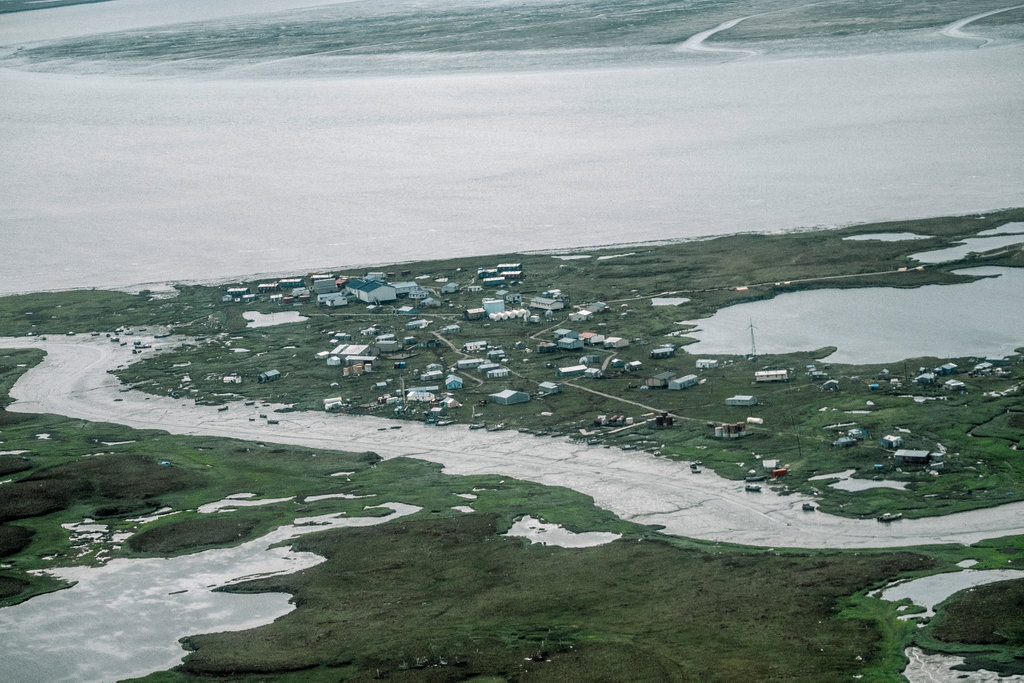
An aerial view of Newtok village [Alaska]. Surrounded by water, the village is under imminent threat from climate change. Permafrost thaw, regular floods and coastal erosion make it dangerous for people of Newtok to remain there. It is estimated that in the next ten years nearly a 1/3 of the village’s area will become uninhabitable due to erosion.
Image: Climate Visual Countdown, Vlad Sokhin / Panos Pictures

Meeting Canada’s pledge of Net-Zero Emissions by 2050 requires that everyone is engaged, all levels of Government (Federal, Provincial, Municipal), small communities, businesses, and Indigenous Peoples (ECCC, 2022). While Canada’s Net-Zero Emissions plan works to reduce GHG emissions from the economy, we also need to be concerned about emissions that are not a direct result of economic activity. Canada is warming on average at double the global rate (Bush et al., 2022, P.7) in addition to human influence, there is an amplification of warming in northern regions (Bush et al., 2021, P.6).

Canada’s geographic location means that we need to pay close attention to changes in the cryosphere. The cryosphere includes land and ocean surfaces that are frozen, including permafrost (IPCC, 2022: Annex II: Glossary, P.2905). Permafrost is defined as ground that has remained below 0°C for at least two consecutive years (Sawyer et al., 2022, P. 82). Thawing permafrost is a Climatic Impact Driver (CID) which means that it can affect an element of society or ecosystem (Ranasinghe et al., 2021, P.1871).

Thawing permafrost releases methane, contributing to the accumulation of Greenhouse Gas (GHG) in the atmosphere, which then increases global warming, which is followed by further thaw, creating a positive feedback loop (IPCC, 2021, P.20 B. 4.3). Warming presents unprecedented challenges for Northern regions and requires a consideration of both mitigation and adaptation to become climate resilient (Constable, et al., 2022, P. 2354).

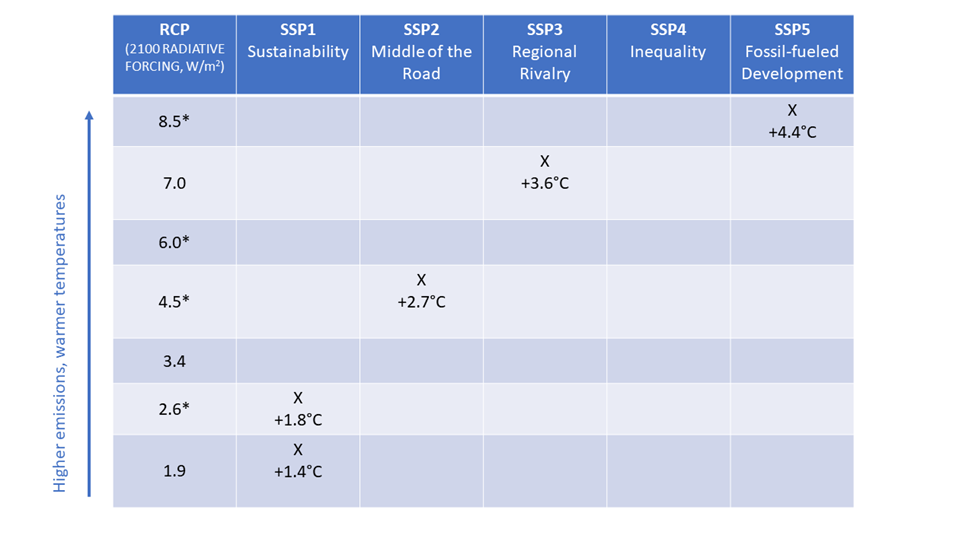
The IPCC report (AR6) uses the latest generation of climate models that project future climate based on emission scenarios which include Shared Socio Economic Pathways (SSPs), as shown in table 1 below. SSPs consider factors linked to climate change such as population growth and advances in climate mitigation technologies, making it easier to understand climate impacts from different actions (Gannon & Boonvanich, 2021). 

Table 1 Adapted from Table 1 SSP-RCP combinations used in CMIP6, with “best estimate” 2081-21-00 end-of-century temperature anomaly

Mitigation and adaptation policy decisions are based on SSP projections, that are interrelated with climate models, so it’s important that the models are as accurate as possible. Assuring the reliability of model projections is done by testing its ability to reproduce reality accurately (Yokohata et al., 2020, P.9). Yokohata et al. conducted a study that improved accuracy for permafrost projections by incorporating additional observational data and improved calculations of thermal conductivity for ice and water, thus contributing to improved reliability of future permafrost thaw projections (Yokohata et al., 2020, P.6).

The combination of damages resulting from permafrost thaw and sea level rise may also result in tipping points leading to inhospitable environments which have already caused some communities to engage in relocation planning (Constable et al., 2021, Ch.6, P. 2339).

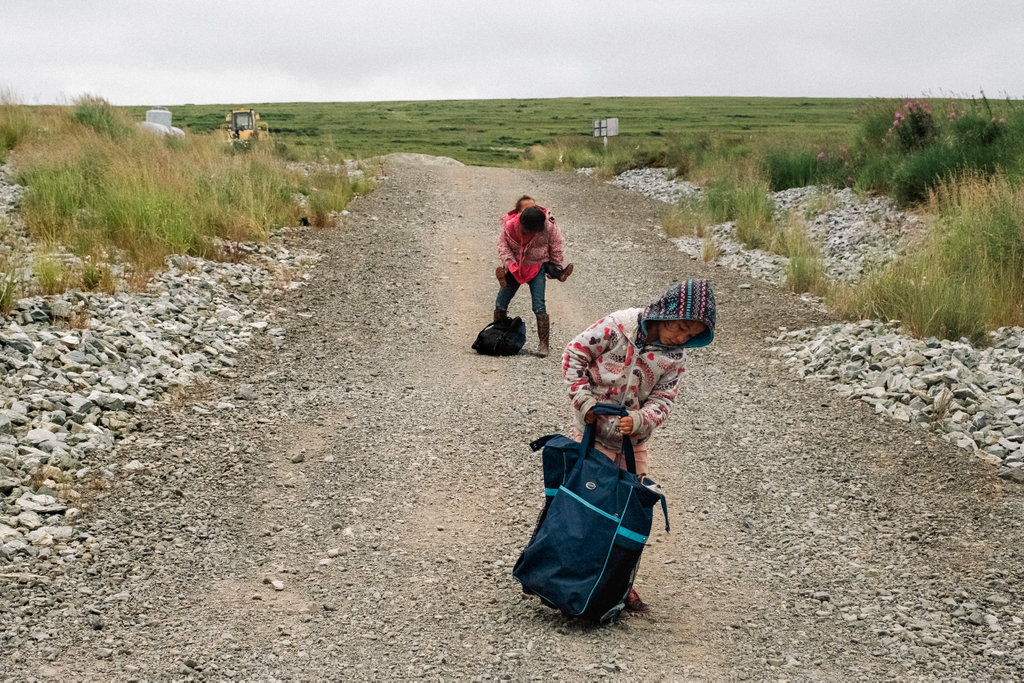
Children relocating with their grandparents because their house in Newtok will soon be not suitable for living due to coastal erosion that severely impacts the village. 
Image: Climate Visuals Countdown, Vlad Sokhin / Panos Pictures

Adhering to SSP1, the sustainability pathway, projects that the temperature rise will be held below 2° C from post industrial levels, and is the best chance to prevent reaching a tipping point that could trigger an abrupt thaw of the Boreal Permafrost which, according to the best estimates reported by Armstrong et al. (2022, P.5), is between 1 to 2.3°C. Thawing permafrost has already caused extensive infrastructure damages and the Canadian Government has focused on infrastructure adaptations in the North where annual repair costs for roads, buildings and airport runways are exceeding $400 million (Sawyer et al., 2022, P. 32).

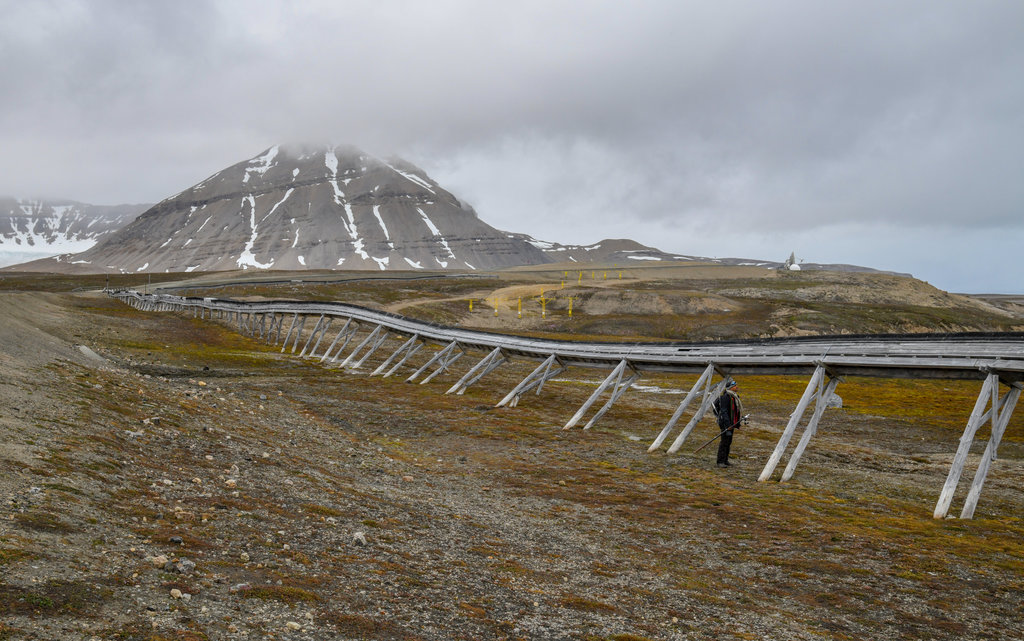
Water pipeline at Ny-Ålesund that had to be abandoned, as the ground on which it was installed thawed, disrupting the supply. Image: Rakesh Rao / Climate Visuals Countdown

Adaptation responses range along a continuum of rapid and incremental to the more transformative. In the polar regions this can be as small as an alternative harvest or as big as changing a communities livelihood (Constable, et al., 2021, P.2344). Indigenous Peoples are joining together and identifying broader regional adaptation strategies that consider common themes in addition to infrastructure, like species, subsistence practices, environment, and culture (Inuvialuit, 2016). Through community data collection they are also identifying changes in species as well as the appearance of zoonotic diseases (Inuvialuit, 2016). Incorporating Indigenous Knowledge, like that found in the Inuvialuit Strategy, is important because it acknowledges the related interconnectedness of human activity and biodiversity loss to ensure biodiversity is protected during restoration and rehabilitation (Gorman et al, 2022).

The IPCC Working Group II argues for an approach to climate resilient development centered on the co-location of people and ecosystems, to protect and maintain ecosystem function across the planet (IPCC Summary for Policymakers, 2022, P.28). This climate resilient development requires partnerships and meaningful engagement with Indigenous Peoples to ensure risk reduction, equity, and justice are prioritized  (IPCC Summary for Policymakers, 2022, P.28). Indigenous Knowledge has been incorporated into the latest assessment led by Indigenous authors who assessed impacts, adaptation and governance of climate change, which they consider an important step towards self-determination in the international assessment process (Constable et al., 2021, P.2325). The advancements by Indigenous Peoples to be included and leading the incorporation of Indigenous Knowledge, both locally and internationally, is a good indicator that we’re on the right path in making progress towards equitable climate resilience.

References

Armstrong McKay, D. I., Staal, A., Abrams, J. F., Winkelmann, R., Sakschewski, B., Loriani, S., Fetzer, I., Cornell, S. E., Rockström, J., Lenton, T. M. (2022). Exceeding 1.5C global warming could trigger multiple climate tipping points. Science 377(6611) https://doi.org/10.1126/science.abn7950

Bush, E., Bonsal, B., Derksen, C., Flato, G., Fyfe, J., Gillett, N., Greenan, B.J.W., James, T.S., Kirchmeier-Young, M., Murdyk, L., Zhang, X. (2022): Canada’s Changing Climate Report in Light of the Latest Global Science Assessment. Government of Canada. Ottawa. ON. 37p. https://changingclimate.ca/site/assets/uploads/sites/2/2022/03/CCCR-2022-Supplement-Final.pdf

Constable, A.J., S. Harper, J. Dawson, K. Holsman, T. Mustonen, D. Piepenburg, and B. Rost, 2022: Cross-Chapter Paper 6: Polar Regions. In: Climate Change 2022: Impacts, Adaptation and Vulnerability. Contribution of Working Group II to the Sixth Assessment Report of the Intergovernmental Panel on Climate Change [H.-O. Pörtner, D.C. Roberts, M. Tignor, E.S. Poloczanska, K. Mintenbeck, A. Alegría, M. Craig, S. Langsdorf, S. Löschke, V. Möller, A. Okem, B. Rama (eds.)]. Cambridge University Press, Cambridge, UK and New York, NY, USA, pp. 2319–2368, doi:10.1017/9781009325844.023. https://www.ipcc.ch/report/ar6/wg2/downloads/report/IPCC_AR6_WGII_CCP6.pdf

Environment and Climate Change Canada. (No Date). The Map of Adaptation Actions. [Web Page]. Retrieved online Oct. 29, 2022 from https://changingclimate.ca/map#z=4&lat=58.42862399306741

Environment Climate Change Canada (ECCC). (2022, Aug. 26). Net Zero Emissions 2050. https://www.canada.ca/en/services/environment/weather/climatechange/climate-plan/net-zero-emissions-2050.html

Environment and Climate Change Canada. (DATE). Inuvialuit on the Frontline of Climate Change Development of a Regional Climate Change Adaptation Strategy. https://changingclimate.ca/case-study/inuvialuit-on-the-frontline-of-climate-change-development-of-a-regional-climate-change-adaptation-strategy/

Gannon, C. & Boonvanich, G. (2021, Sept. 1). IPCC’s use of latest generation models will help better assess real-world impacts of climate change. [Web Page]. Retrieved online Oct. 29, 2022 from https://esg.moodys.io/insights-analysis-reports/ipccs-use-of-latest-generation-models-will-help-better-assess-real-world-impact-of-climate-change

Gorman, C. E., Torsney, A., Gaughran, A., McKeon, C. M., Farrell, C. A., White, C., Donohue, I., Stout, J. C., & Buckley, Y. M. (2022). Reconciling climate action with the need for biodiversity protection, restoration and rehabilitation. Science of The Total Environment, 857, 159316. https://doi.org/10.1016/j.scitotenv.2022.159316

Inuvialuit. (2016). On the front line of climate change: Development of a Regional Climate Change Adaptation Strategy. https://www.irc.inuvialuit.com/system/files/Inuvialuit%20on%20the%20Frontline%20of%20Climate%20Change-Final-Feb2018%20%28SMALL%29.pdf

IPCC, 2022: Summary for Policymakers [H.-O. Pörtner, D.C. Roberts, E.S. Poloczanska, K. Mintenbeck, M. Tignor, A. Alegría, M. Craig, S. Langsdorf, S. Löschke, V. Möller, A. Okem (eds.)]. In: Climate Change 2022: Impacts, Adaptation and Vulnerability. Contribution of Working Group II to the Sixth Assessment Report of the Intergovernmental Panel on Climate Change [H.-O. Pörtner, D.C. Roberts, M. Tignor, E.S. Poloczanska, K. Mintenbeck, A. Alegría, M. Craig, S. Langsdorf, S. Löschke, V. Möller, A. Okem, B. Rama (eds.)]. Cambridge University Press, Cambridge, UK and New York, NY, USA, pp. 3–33, doi:10.1017/9781009325844.001. https://www.ipcc.ch/report/ar6/wg2/downloads/report/IPCC_AR6_WGII_SummaryForPolicymakers.pdf

IPCC (2021). Summary for Policymakers. In: Climate Change 2021: The Physical Science Basis. Contribution of Working Group I to the Sixth Assessment Report of the Intergovernmental Panel on Climate Change [Masson-Delmotte, V., P. Zhai, A. Pirani, S.L. Connors, C. Péan, S. Berger, N. Caud, Y. Chen, L. Goldfarb, M.I. Gomis, M. Huang, K. Leitzell, E. Lonnoy, J.B.R. Matthews, T.K. Maycock, T. Waterfield, O. Yelekçi, R. Yu, and B. Zhou (eds.)]. Cambridge University Press, Cambridge, United Kingdom and New York, NY, USA, pp. 3−32, doi:10.1017/9781009157896.001. https://www.ipcc.ch/report/ar6/wg1/downloads/report/IPCC_AR6_WGI_SPM.pdf

IPCC, 2022: Annex II: Glossary [Möller, V., R. van Diemen, J.B.R. Matthews, C. Méndez, S. Semenov, J.S. Fuglestvedt, A. Reisinger (eds.)]. In: Climate Change 2022: Impacts, Adaptation and Vulnerability. Contribution of Working Group II to the Sixth Assessment Report of the Intergovernmental Panel on Climate Change [H.-O. Pörtner, D.C. Roberts, M. Tignor, E.S. Poloczanska, K. Mintenbeck, A. Alegría, M. Craig, S. Langsdorf, S. Löschke, V. Möller, A. Okem, B. Rama (eds.)]. Cambridge University Press, Cambridge, UK and New York, NY, USA, pp. 2897–2930, doi:10.1017/9781009325844.029. https://www.ipcc.ch/report/ar6/wg2/downloads/report/IPCC_AR6_WGII_Annex-II.pdf

Ranasinghe, R., A.C. Ruane, R. Vautard, N. Arnell, E. Coppola, F.A. Cruz, S. Dessai, A.S. Islam, M. Rahimi, D. Ruiz Carrascal, J. Sillmann, M.B. Sylla, C. Tebaldi, W. Wang, and R. Zaaboul, 2021: Climate Change Information for Regional Impact and for Risk Assessment. In Climate Change 2021: The Physical Science Basis. Contribution of Working Group I to the Sixth Assessment Report of the Intergovernmental Panel on Climate Change [Masson-Delmotte, V., P. Zhai, A. Pirani, S.L. Connors, C. Péan, S. Berger, N. Caud, Y. Chen, L. Goldfarb, M.I. Gomis, M. Huang, K. Leitzell, E. Lonnoy, J.B.R. Matthews, T.K. Maycock, T. Waterfield, O. Yelekçi, R. Yu, and B. Zhou (eds.)]. Cambridge University Press, Cambridge, United Kingdom and New York, NY, USA, pp. 1767–1926, doi:10.1017/9781009157896.014. https://www.ipcc.ch/report/ar6/wg1/downloads/report/IPCC_AR6_WGI_Chapter12.pdf

Schaefer, K., Lantuit, H., Romanovsky, V. E., Schuur, E. A. G., Witt, R. (2014). The impact of the permafrost carbon feedback on global climate. Environmental Research Letters, 9(8). doi:10.1088/1748-9326/9/8/085003

Sawyer, Dave, Ness, Ryan, Lee, Caroline, and Miller, Sarah. (2022). Damage Control: Reducing the costs of climate impacts in Canada. Canadian Climate Institute. https://climateinstitute.ca/wp-content/uploads/2022/09/Damage-Control_-EN_0927.pdf

Yokohata, T., Saito, K., Takata, K., Nitta, T., Satoh, Y., Hajima, T., Sueyoshi, T., & Iwahana, G. (2020). Model improvement and future projection of permafrost processes in a global land surface model. Progress in Earth and Planetary Science7(1), 69. https://doi.org/10.1186/s40645-020-00380-w 

The Center of Resilience

This short climate fiction story was written in response to prompts about envisioning my local sit spot twenty years from now and to demonstrate the craft of story. It grew quickly out of a few lines using a story spine from Curiographic.

 There’s only one standout winner in the dozens of proposals that came through for the redesign of China Creek North Park. I’m an old timer, a long-time community member, and someone with a self inflated sense of power over the outcome of this process. I’m the president of the local community group and our objective is to see to it that whoever wins the bid for the redesign respects and maintains the history of our place. In ‘The Center of Resilience’ I felt an immediate visceral connection not only to my past park experiences but to much further back to when it had been a gathering place for the Indigenous community. It made me realize that it has always been, and will always be, a center of resilience. Although it sure hasn’t felt that way for some time now, this proposal with the concept of merging community park, health refuge, and Indigenous education centre into one, could change all that.

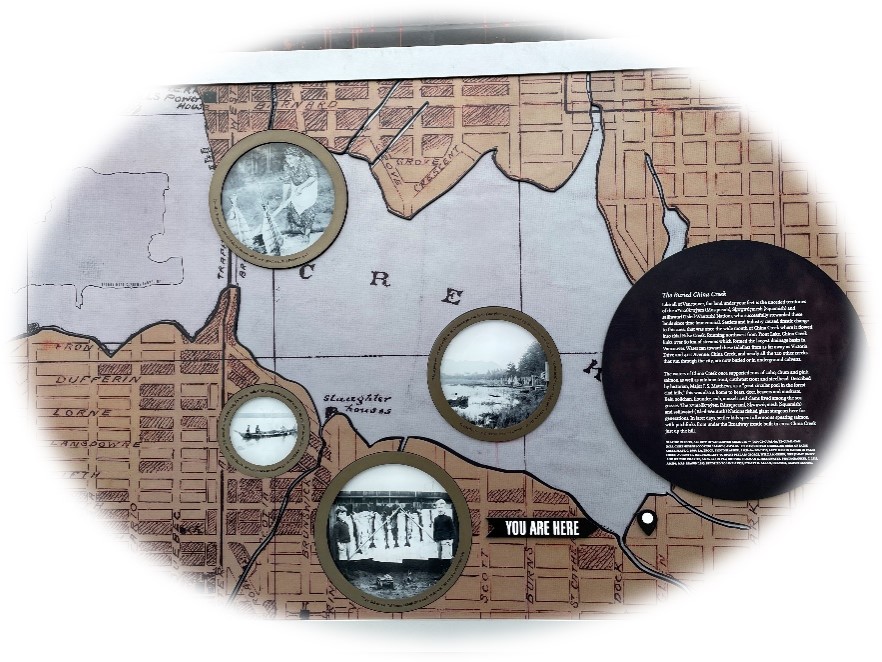
The historical picture in the proposal transported me back in time to the summer of ’22 when I started my climate change studies. I used to spend so much time just sitting and ruminating during my Tiny Ecology exercises. I remember being asked about this exercise by colleagues at work and how they rolled their eyes and asked how sitting around would help to solve the planetary crisis. This made me feel a bit insecure and I wasn’t quite sure how to respond. But it was during one of those sitting sessions that I finally figured out the fundamental point. It was if one of Huxley’s birds suddenly called out to me: Attention!

“That’s what you always forget, isn’t it? I mean, you forget to pay attention to what’s happening. And that’s the same as not being here and now.”

Island, Aldous Huxley, Ch. 2, 1962

At the time I had no idea just how bad it would get and how fast things would change. We had been looking without seeing for too long already. The course, Communication for Climate Action, helped me to connect with community, nature, and history in ways that I hadn’t anticipated. It had only been a couple of years since the park was redeveloped with pollinator meadows, a nature themed play area for children without destroying the beautiful shade trees along the perimeter.

Families brought their children, young adults brought their dogs, teams came to play their games and there was a walking path with a fitness circuit. They had put in a water fountain and washroom facility at the southeast corner. The City of Vancouver archival photo on the side of the building, the same one used in the proposal, was how I first learned about the indigenous connection.

The Means of Production community garden was located on the Northwest corner at the top of the hill where weavings of willow bordered a well maintained walking path through the various trees and plants that were lovingly cared for by the EartHand Gleaners Society. Intermittently someone living in their van or a tent would show up and camp out for a night or two and strike up a conversation with the locals meandering through on their daily walks.

Then things began to change, and we couldn’t stop the dying. Summer days kept getting hotter and winter days wetter. The pandemics, they kept coming in waves, more and more people were too vulnerable to face the elements of the real world. What was once a vibrant community gathering place became barren. Students young and old stayed home and exercised and played in virtual reality educational regimes.

Not the First Nations communities though. They had resilience, they thrived and grew from the wealth of Indigenous knowledge that they continued to cultivate. This kept them strong and the success of the early reconciliation programs brought them into the realm of consulting to community planners. One of the contributors to the proposal was one of these small consulting groups who claimed affiliation with the Musqueam, Squamish, and Tsleil-Waututh peoples and, they had experienced some recent successes of their work with the MST Development Corporation.

The proposal was unique in that apparently it was dreamt up by a few local employees from the businesses located on the north side of the park. I guess they started to get together in the evenings to hatch a plan. Because they also live in the neighborhood, and everyone’s been affected by what’s been happening. They used their inside knowledge of their companies to draft a proposal, connected with the local Indigenous groups, and held several participatory design sessions. A few of them had enough power in their company positions that they were able to call a meeting of the minds with the Indigenous groups and the Corporate CEOs, and the proposal turned out to solve some of their problems too.

Let’s face it. This proposal is radical with a capital R. The environmental, security, and educational systems are to be controlled by a state-of-the-art Artificial Intelligence (AI) that will be trained by an Indigenous Intelligence Collective. That’s a lot of trust to put into one autonomous AI. Maybe I’m cynical but I’ve seen what Meta, and the Internet, and a steady diet of Capitalism, has done to the typical AI autonomous units. They are mostly mean.

Just look at this picture of the concept for the exoskeleton though! Some crazy design that builds on the parametric design of the Morpheus Hotel by the Zaha Hadid Architects, morphed with the concept of the willow weaving that used to be in the park, but with the strength of bamboo.

That’s not all. There are plans for a synthetic apiary where honeybees will be able to live year-round. Apparently, there’s been a lot of progress since the Neri Oxman synthetic Bee Cube project. There will be education sessions on beekeeping and honey sold at a re-imagining of the neighborhood ‘Farmer’s Market’. So, if we can’t move past our mistrust in autonomous AI then what are we to do with the loss of community? What are we to do with the loss of safe places to go outside the home? How will we afford the cooling and warming centres that we so desperately need now? The proposal describes how, when needed, the park becomes a warming\cooling centre, with first aid available and high speed electric underground transit that connects directly to St. Paul’s Hospital.

The workers behind this proposal really did their homework. That’s why the CEOs are so excited. It’s a state-of-the-art showcase for their technologies and at the same time it allows them to demonstrate their respect for the Indigenous Communities.

It’s hard to believe all these companies exist along the north and east sides of the park but its true. The proposal team included Engineers from the Tesla delivery center, Human Resource Managers from Lululemon, directors from Electronic Arts, Professors and students from both the Vancouver Community College and the Emily Carr University of Art + Design and even some Doctors and Nurses from the new St. Paul’s Hospital down the way. It’s an impressive proposal arising from employee network members who did the first draft on their own time on evenings and weekends.

They held fundraisers so they could hire the indigenous community planning consultants who then agreed to partner on the proposal if their conditions were met. They wanted full control over training the AI and would own the data collected through the operation of the center. Particularly the data collected as the AI interacted with community members as this would form part of the AI’s continuous learning. They also requested that an education program designed around salmon spawning reintroduction programs be included. Maybe we do have an opportunity to break the kids out of their bonds with Meta’s AI.

This proposal brings with it a promise that in our future the community will have the refuge they need, they will have programs to help them become more empathic, and right relations will be restored, in their dealings with one another, and the natural elements around them. A level of empathy and understanding can be awoken and restored from a time before now. They have my vote.

Influences & References

Bridle, J. (2022). Wired – Backchannel. Can Democracy Include a World Beyond Humans? A truly planetary politics would extend decision making to animals, ecosystems, and potentially AI. Wired Backchannel.

Cunningham Bigler, K. 2017. Jumpstart your story with the story spine. Curiographic.

Hayhoe, K. (2018). The most important thing you can do to fight climate change: Talk about it [Video]. TED.

Huxley, Aldous (1962). Island. Aldous Huxley Island. Chapter 2. https://gutenberg.ca/ebooks/huxleya-island/huxleya-island-00-h.html

Kimmerer, R. W. (2014). “Returning the Gift.” Center for Humans and Nature.   (Short web piece)

Segel, M. (2019). To fix the climate movement, tell better stories: The missing climate change narrativeNautilus.

Storytelling. (2009). First Nations Pedagogy.
Withers, D. (2022). Story design: Where storytelling meets design thinking. Narrative Intelligence.

Vancouver Art Gallery. 2022. Imitation Game Exhibition. 14-Zaha-Hadid-Architects-Morpheus-Hotel.

Vancouver Art Gallery. 2022. Imitation Game Exhibition. Neri Oxman and The Mediated Matter Group. Bee-Cubes.