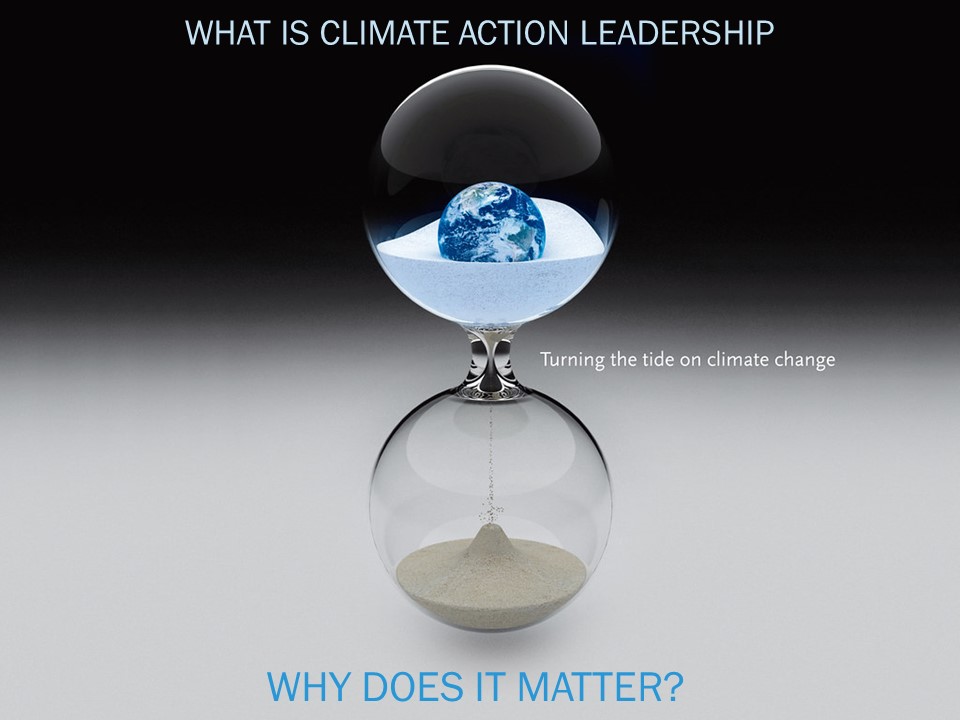
This post is a reflection of my experience so far of CALS501: Leading Climate Action in Society – Part 1, a two week Learning Intensive, where I ponder the question: What is Climate Action Leadership and why does it matter? I’ll start with the why by starting with the science and then review the professional competencies and wrap up with skills and traits that combine to help form a leadership identity.
The Intergovernmental Panel on Climate Change (IPCC) 2022: Impacts, Adaptation and Vulnerability Summary for Policymakers (2022) provides evidence that the observed impacts and risks from climate change are already being experienced. This is a clear statement that the climate change crisis demands immediate action. In BC we are seeing a significant increase in awareness and dialogue resulting from the climate related events of 2021 (heat dome, wildfires, atmospheric rivers). These events have had catastrophic impacts to infrastructure, the environment, and people’s lives. With the news that Canada is warming on average at double the global rate (Bush & Lemmen, 2019) and a new study reporting estimates that the cost in Canada of non-action being up to $45.5 billion more than it would be for the required investment into Greenhouse Gas reductions (The Tyee, 2022), the time is now for Climate Action Leaders to step forward.
Given that climate change is an outcome of multiple interrelated systems with reinforcing feedback loops, taking the lead in climate action necessarily means understanding the foundations of complex systems theory.
With the impacts becoming increasingly difficult to ignore it appears that we are starting to see a paradigm shift towards increasing renewable energy and Greenhouse Gas mitigations and away from reliance on fossil fuels. According to Donella Meadows in Thinking in Systems, a paradigm shift can be one of the most influential levers for systems change (Meadows, 2008). Citing Thomas Kuhn, Meadows argues that using this lever means:
“In a nutshell, you keep pointing at the anomalies and failures in the old paradigm, you keep speaking louder and with assurance from the new one, you insert people with the new paradigm in places of public visibility and power”
(Meadows, 2008, p.20)
However, to be an effective climate action leader, one needs more than to be in a place of visibility and power, they need to be competent in the skills to drive the necessary actions.
The Adaptation Learning Network has developed a Competency Framework that describes climate adaptation competency domains (Cox et al, 2021). The breadth of the framework highlights the need for transdisciplinary leaders who can work across disciplines on complex systemic problems. Here are three examples:
- The Iterative Risk Management competency, where research into the electricity sector has identified the need to integrate transdisciplinary knowledge into the processes to meet the needs of Climate Change due to the extent this sector and the population it serves will be impacted (Gerlack et al, 2018).
- The Climate Adaptation Leadership domain, where soft skills, such as cultural and emotional intelligence, are crucial.
- The Working Together in Climate Adaptation domain. Here we can see that a good leader needs to build community and to be able to act in just ways, to embody ‘right relations’ meaning to act responsibly towards all other beings (Gram-Hanssen, 2021).
While climate action leadership does not require one to be an expert in climate science, it does benefit from leaders who are creative, transdisciplinary, and who can engage in design thinking, a method well suited for working across disciplines on complex problems (Cormon & Cox, 2020). Finally, and perhaps as important as the competencies described, is the identity and vision that the leader projects. In a world filled with dystopic stories and seemingly little hope, an effective leader needs the confidence to stand up and share a positive vision to inspire and guide others to act along with them. Perhaps this might come from their ability to transcend the paradigm of the moment, as Meadows (2008) suggests, and through their own enlightenment inspire others to join with them in action.
If you’re new to this Climate Action Leadership realm and this post made you feel a little anxious that this is all a bit too big and complicated, then why not give @EcoAnxious.ca a follow on Twitter and if you’re feeling ready to take a step forward yourself, then check out their site EcoAnxious.ca for lots of great ideas – thanks to Kari Tyler from the Pacific Climate Impacts Consortium for the recommendation.
References
Bush, E. & Lemmen, D.S. editors (2019): Canada’s Changing Climate Report; Government of Canada, Ottawa, ON. 444 p. https://changingclimate.ca/CCCR2019/
Corman, I. & Cox, R. (2020). Transdisciplinarity: A Primer. Royal Roads University. https://commons.royalroads.ca/macal/wp-content/uploads/sites/88/2021/04/MACAL_Transdisciplinary_Thinking03-31-21-3.pdf
Cox, R., Niederer, S, Forssman, V, Sikorski, L. (2021). Climate Adaptation Competency Framework. https://adaptationlearningnetwork.com/sites/weadapt.org/files/aln-competencyframework_2021_1.pdf
Gram-Hanssen, I., Schafenacker, N., & Bentz, J. (2021). Decolonizing transformations through ‘right relations.’ Sustainability Science, 17(2), 673-685. Retrieved 10 May. 2022, from https://doi.org/10.1007/s11625-021-00960-9
Gerlak, A. K., Weston, J., McMahan, B., Murray, R. L., & Mills-Novoa, M. (2018). Climate risk management and the electricity sector. Climate Risk Management, 19, 12–22. https://doi.org/10.1016/j.crm.2017.12.003
Meadows, D.H. (2008). Leverage Points – Places to Intervene. In D. Wright (ed.), Thinking in Systems: A Primer. London and Sterling, VA: Earthscan.
Willcott, N., & Cleary, S. (2022, May 24). ‘The Business Case for Net Zero’: Cutting emissions is costly. But far less expensive than doing nothing and facing economic consequences. The Tyee. https://thetyee.ca/Analysis/2022/05/23/Business-Case-Net-Zero/