You wake up in the morning, and what’s the first thing you do? If you’re like most people, you roll over and check your phone. When you look, you see that cheerful little dot on your social media, messaging, and email app icons – 10 new emails, 4 new social media comments, 3 new text messages. For a moment you feel popular, and maybe a little stressed out and compelled to respond. So, before even getting out of bed, you’ve answered some emails, sent back a few emoji’s via text, and looked at your Facebook and Instagram comments, and those little red notification dots are cleared from your apps. You breathe a sigh of relief, and feel the stress reside… for a while… until it starts all over again, with your phone vibrating, interrupting your train of thought or whatever you’re doing with a red notification dot on your various apps. The notification dot is feeling less and less cheerful and more and more like a burden every time it lights up on your phone, and you feel your stress mounting as you are compelled to deal with the interruption. Then you deal with it and feel relief again… until the cycle continues.
Why do we feel enslaved by our notifications in this way? How can a small red dot and a vibration arise such strong feelings of responsibility? And why does it feel so good to clear the notifications from our phone? The answer lies in how our brains respond to feedback. Companies like Facebook and Twitter depend on notifications to drive user engagement – they need to give people a reason to keep returning to the site. Techno-ethicist Tristan Harris describes notifications as a “slot machine” since he thinks they have the same impact on our brain as the one-eyed bandit. He says:
“Every time I check my phone, I’m playing the slot machine to see, ‘What did I get?'”
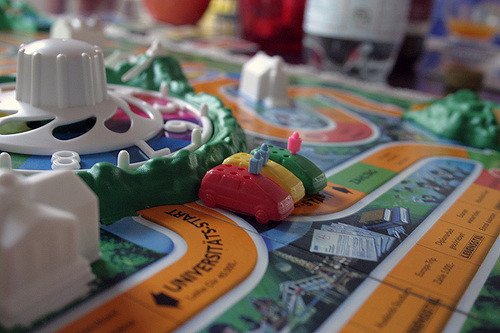
In that sense, notifications from the apps on our phone have gamified most of our waking lives. They offer us almost constant feedback that provides us a dopamine hit to our brains. The feeling of stress that builds and then is released when we check our messages, email or social updates? That’s when we feel the dopamine rush. But the positive feelings dissipate relatively quickly, and then we’re looking for our next hit. The unfortunate part of this brain hacking is that we are primarily compelled to check for updates in a way that serves the advertising goals of sites like Twitter and Facebook. In other words, we could hack our brains in ways that make our lives better – gamifying a new workout or healthy eating program for example. But instead our brains are being hacked by others in service of selling us more stuff.
So what do we do about it? Well we can start by turning off our notifications, so we’re not compelled to check them all the time. Then use notifications and gamification in general to achieve the goals YOU want to set for yourself. This technology can be a really powerful tool that can help us each achieve our most important goals. For that to be a reality though, we have to take charge of how we use it. As much as we can, anyway.