We know it happens, because it’s influenced elections.
We know it happens, because it’s impacted people’s careers.
We know it happens, because it’s spawned effective protest movements, and even encouraged people to take up knitting and crocheting.
Communication, via popular social media platforms CAN create social change.
But HOW?
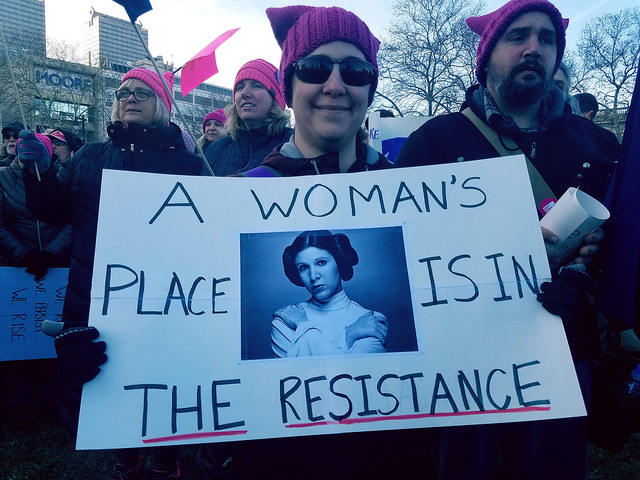
While Facebook has an opaque algorithmic formula that learns from the inputs we give to the social network, the mechanism by which some initiatives succeed and some do not is still relatively elusive to social science researchers. What is the magic formula? Is there a recipe to follow? As someone who is a social media researcher and ALSO used to work in professional communication trying to change both public perception and behavior, I would say that while there isn’t a foolproof recipe to follow, there are guidelines, that can help us target the right population with the right message to increase our chances at communicating for social change. Further, information design principles may be able to help us do this better and more thoughtfully.
A research team led by Bernd Ploderer at the University of Melbourne, looked at this issue through the lens of information design a few years ago. They found that social traces, social support, collective use, and two types of reflection: reflection-in-action, and reflection-on-action are needed for an initiative to produce social change. What do they mean by this? Let’s break it down.
Social traces occur when people encounter the behavior of other people (or evidence of that behavior), creating a type of normalization of that behavior. This type of mechanism could occur in a Twitter stream or Facebook news feed, if curated correctly.
Social support refers to the direct exchanges between people that enhance their well being – this can occur in messaging between different users, or in responses to user-posts, again, assuming platform affordances encourage this.
Collective use refers to systems that are designed for a collective of users. Social media, by definition is designed this way, but for change at the community level, platform filters and algorithmic curation may be important. Here, the important question to ask is: how can we be exposed to others in our community to enhance community bonds? What does a news feed look like which is designed in this way.
Reflection needs to occur in two ways to enhance social change: Reflection-in-action, and reflection-on-action. Reflection-in-action is reflection that occurs in the moment of an action. This type of reflection may be encouraged by platforms like instagram or snapchat which capture a moment in time. For this to occur though, people need to be encouraged to capture the moments in their lives where they are aiming for a change in behavior. The question here is – how to motivate the end user, or audience to engage in reflection. Reflection-on-action occurs later, when a person looks back at their behavior and reflects. Here Facebook may be useful, again if it can be engineered to encourage personal reflection, which it currently is not.
What does this mean in practice? This means that all the pieces are available in social media to communicate in ways that encourage behavior change, but this kind of communication cannot be executed in a vacuum. The platforms are not currently optimized for this kind of communication, so we need to work around their current affordances to communicate to this end. In future posts, I will break down strategies for each criterion described above, offering tips for how we can consider communication for social change from a marketing standpoint grounded in social media and social change research.