Communicating for social change

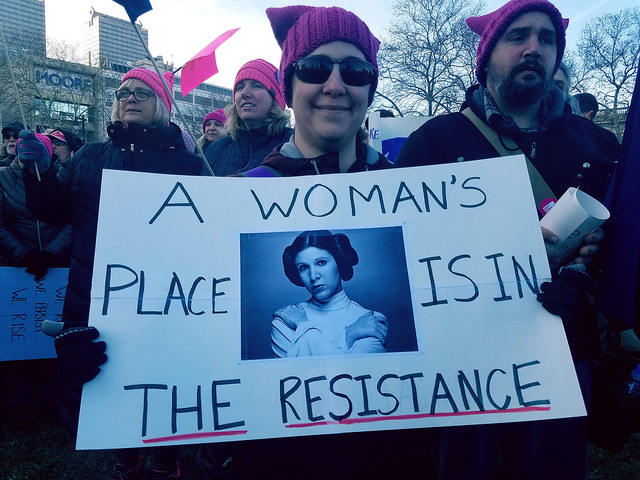
We know it happens, because it’s influenced elections.

We know it happens, because it’s impacted people’s careers.

We know it happens, because it’s spawned effective protest movements, and even encouraged people to take up knitting and crocheting.

Communication, via popular social media platforms CAN create social change.

But HOW?

#womensmarch by Rob Kall. Available from Flickr: https://flic.kr/p/23AMGwE

Continue reading “Communicating for social change”

Communicating for social change

Social Media Mindfulness Is Not Enough

A group of virtual reality avatars sitting in a circle engaging in meditation
“VR Meditation Guided by Jeremy Nickel” posted to Flickr by Sansar VR. Available at https://flic.kr/p/GBrspR CC-BY 2.0

It used to be only a few voices on the margin: Ian Bogost, Sherry Turkle, Geert Lovink, or Evgeny Morozov, for example, who urged people to think a little more about the time they were spending on social media. But soon the whisper grew and now the movement may be reaching the mainstream. With the rise to prevalence of former Google design ethicist Tristan Harris and his Center for Humane Technology, and with the Facebook Privacy/Cambridge Analytical scandal all over congress and the world news, people are starting to have conversations that were considered almost laughable before. Continue reading “Social Media Mindfulness Is Not Enough”

Social Media Mindfulness Is Not Enough

On Social Media, A Whisper is Louder than a Megaphone

What good is 300,000 facebook friends, or a viral video viewed by 3 billion people if only a fraction of those people are actually interested in what you have to share with them or sell to them? The answer is, not much. Rather than aiming for a large broadcast audience, rather than taking a broadcast approach to participatory media, those of us without the money or other resources to spread our message far and wide need to be more strategic than that. Those brands that have grown a movement have tapped into just these principles. For this reason, smaller organizations, artists, or individuals probably don’t gain much by focusing on dramatically increasin follower counts over a short amount of time. This type of activity takes too much time, energy and money that could be  better spent on actually growing a small business. Instead, for most of us, it’s better to have 3000 of the right followers- people who are most likely to convert.

an image of a megaphone with the words "speak up"
Speak up, make your voice heard by Howard Lake. Available from Flickr: https://flic.kr/p/9rAjnQ
License CC-BY-SA 2.0


Continue reading “On Social Media, A Whisper is Louder than a Megaphone”

On Social Media, A Whisper is Louder than a Megaphone

Have Publishers Left the Building?

I learned it on Instagram today: The Chive has officially left Facebook.

Ok, well they haven’t fully left. But they will no longer be posting their articles, videos and other content directly to their Facebook page. Instead, they will be sharing links only in Facebook, and the links will take people back to their webpage. The way God Herself intended.

An instagram post announcing the Chive is cutting ties to Facebook
Chive’s Feb 28th post on my Instagram Feed


Continue reading “Have Publishers Left the Building?”

Have Publishers Left the Building?

Chasing Meaningful Interaction: Facebook’s Declining Value

Have we reached peak Facebook?


A facebook error message
Facebook error by Beth Kanter on Flickr (CC by 2.0). Available from https://flic.kr/p/5iEcGp

A recent article in the Guardian reports that while people over 55 are still flocking to the social network in droves, a key demographic: teens and young adults, are leaving Facebook or even failing to join in the first place. Teens and young adults, according to the Guardian, are “defecting to snapchat”, and while Facebook initially managed to hang on to this group by buying up Instagram, it hasn’t been able to buy snapchat, and copying the popular features of snapchat on Instagram and the Facebook platform have not served to engage younger users.

Continue reading “Chasing Meaningful Interaction: Facebook’s Declining Value”

Chasing Meaningful Interaction: Facebook’s Declining Value

Civil Society: Gone to the Bots?

Civil society is defined by the London School of Economics as:

“Civil Society refers to the arena of uncoerced collective action around shared interests, purposes and values. In theory, its institutional forms are distinct from those of the state, family, and market, though in practice, the boundaries between state, civil society, family and market are often complex, blurred and negotiated. Civil society commonly embraces a diversity of spaces, actors and institutional forms, varying in their degree of formality, autonomy and power. Civil societies are often populated by organizations such as registered charities, development non-governmental organizations, community groups, women’s organizations, faith-based organizations, professional associations, trade unions, self-help groups, social movements, business associations, coalitions and advocacy groups”

I’d like to put the emphasis on “uncoerced collective action” in that definition, because I’d like to talk about how civil society might be challenged or at least threatened in an era where we organize using digital communication technologies.

Continue reading “Civil Society: Gone to the Bots?”

Civil Society: Gone to the Bots?

(They)’ll be watching you

If I were to rewrite the iconic 1983 Police hit song “I’ll be watching you” for the information age, it might go something like this:

Black and white video image of a bass player from the music video for "Every Breath You Take" by the Police.
Sing it, Sting! Screen Capture from Youtube: https://www.youtube.com/watch?v=OMOGaugKpzs

Every pic you take,
Every move you make,
Every post you make,
Every word you say,
They’ll be watching you.

Oh can’t you see,
They’re using more than cookies.
They’re with you on every road,
On every app you download.

You clicked “I agree”,
And now they see what you see,
They’re tracking you,
And all your pictures too,
They’re always watching you.

Continue reading “(They)’ll be watching you”

(They)’ll be watching you

Online Influencers: An Old Idea in a New Medium

This post is some thoughts pulled from a talk that I gave this week at Ryerson’s Start Up School. For more great resources for entrepreneurs, and to see the slide presentation that I gave, check out ryersonstartupschool.com

Since the dawn of PR, influencers have been an important tool for those people and organizations who want to reach others with their message. This is not an exaggeration. The practice of public relations was basically invented when Edward Bernays, the nephew of Sigmund Freud, hired women to march in the 1929 Easter Sunday Parade smoking cigarettes that they called their “torches of freedom“. Why did Bernays do this? Before this moment, smoking for women was considered taboo, dirty. Bernays effectively linked the act of smoking with the women’s equality movement, and changed public perception for decades to come.

Continue reading “Online Influencers: An Old Idea in a New Medium”

Online Influencers: An Old Idea in a New Medium

Social Media, the Separation of Time and Space, and a Plea for a Critical Look at Technology

Considered by James Carey to be the first medium of electronic communication, the telegraph was a revolutionary development, since it was the first communication medium to separate time and space for the purposes of communication. Before the invention of the telegraph, message speed was bound to how fast a messenger could travel: by foot, horse, or railroad. After the invention of the telegraph, messages could travel faster than a messenger ever could. This development thus had ripple effects on markets, democratic participation and community.

A picture of a telegraph machine
Telegraph by SparkFun Electronics. Available on Flickr: https://flic.kr/p/fCs2oC (CC by 2.0)


Continue reading “Social Media, the Separation of Time and Space, and a Plea for a Critical Look at Technology”

Social Media, the Separation of Time and Space, and a Plea for a Critical Look at Technology

Celebrity “trumps” truth: The key difference between the liberal press and Twitter

Today, The Verge published an article stating that Twitter has drawn a small line in the sand with respect to the tweeting habits of the 45 president of the United States. Adi Robertson reports that Twitter has suggested that while it is important not to censor or remove important public figures like the president from the platform, it will draw the line at “tweets that reveal a private address or phone number”. Of course, not all people agree with this stand. For example, Sam Harris clearly stated in a recent podcast that he thinks Trump should be banned from Twitter, since the damage he can do via a Tweet is just so great. Twitter’s response though, is one worth considering. When is it appropriate to silence a public figure on a platform like Twitter? And when is it actually in the public interest to support a person’s right to make even crazy or patently false claims on the site?

A tweet made my Donald Trump in which he complains about fake news
A tweet made by Donald Trump: Picture from “Mother Jones” http://www.motherjones.com/kevin-drum/2017/02/donald-trump-edits-tweet/


Continue reading “Celebrity “trumps” truth: The key difference between the liberal press and Twitter”

Celebrity “trumps” truth: The key difference between the liberal press and Twitter