They say a picture is worth 1000 words, and on digital platforms, a picture can help you to make your point clearer, or make your work more engaging.
There are a few types of images you may want to include in your digital science communication:
Gifs: Gifs (pronounced “Jifs”) are short moving images that are often funny or interesting. They can be inserted into a social media post or blog post in order to break up text, make a point, or help make your post more interesting. They also help you to add emotion or context to your post in a way that can connect you with your audience. FInd Gifs at Giphy or Imgur and use their sharing buttons to embed them on your blog or share them to your social feeds. On Instagram, you can create gifs of yourself or your work using the boomerang app.

Infographics: Infographics aim to take your information and present it in a visual format. The best infographics take complex information and simplify it. They are great for sharing on visual social networks, or can be included as part of a blog post on the same topic. Infographics are likely to be shared by those who need an explainer on your topic, so they can be worth the time to create. Piktochart is a drag-and-drop infographic creation tool that allows you to create an infographic without having to master design software like photoshop or illustrator. It offers a branded free version or a subscription if you wish to create infographics without the Piktochart branding.

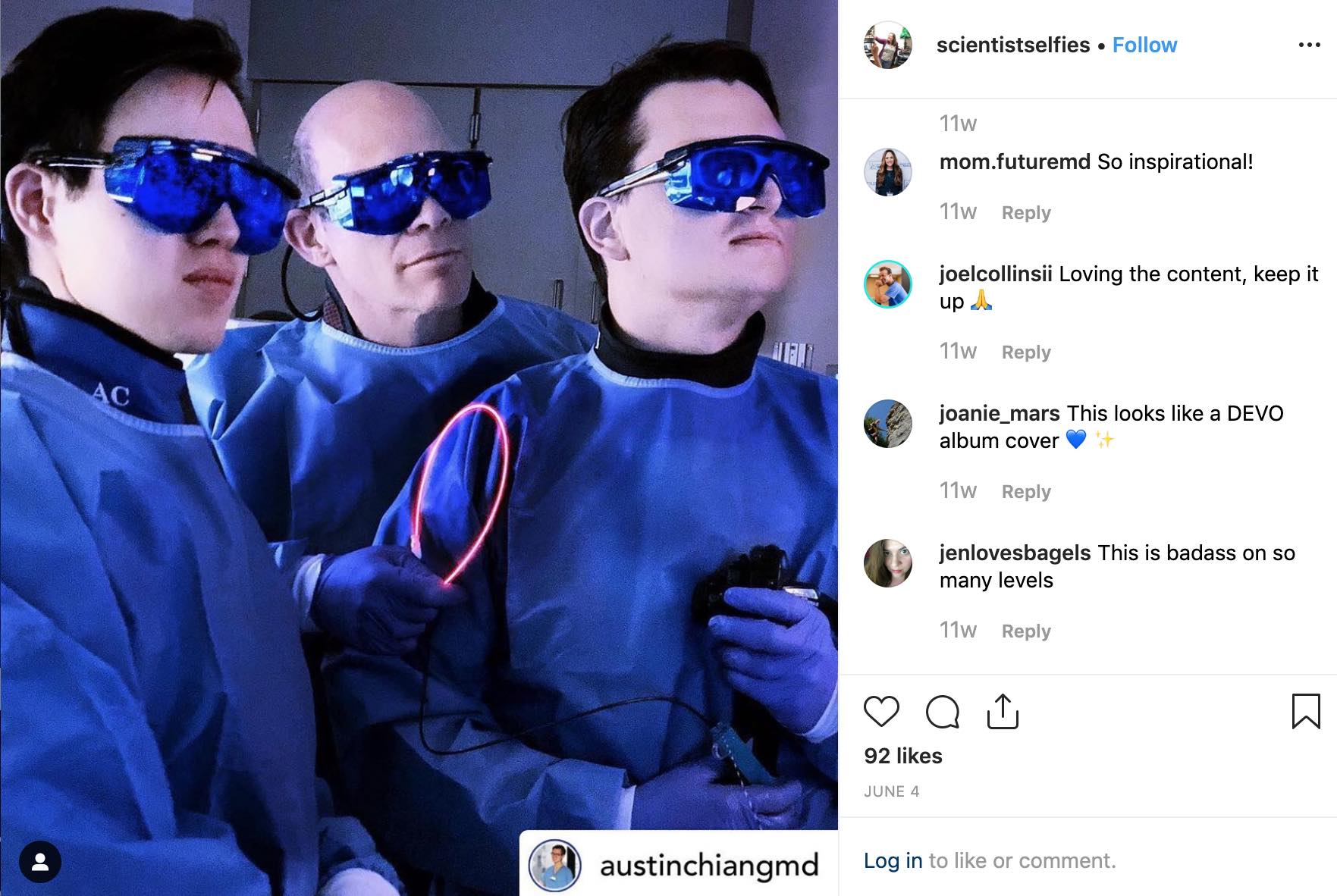
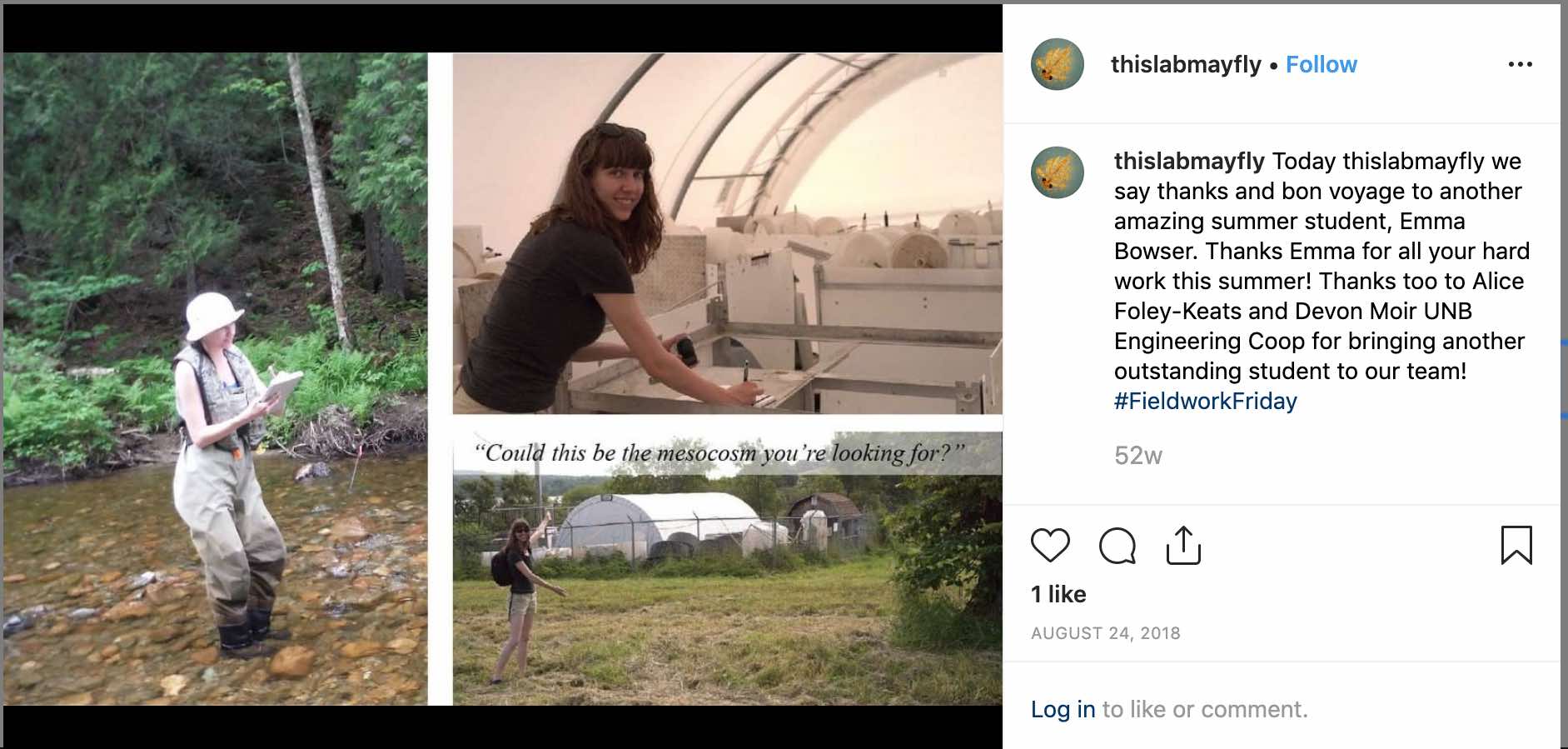
Images of Your Science: You might be out in the field, or in the lab, but chances are, your work is very interesting to an outside audience. Along with selfies, post pictures of your science along with an explanation of what you’re doing. It’s guaranteed people will find your work interesting and appreciate a look behind the scenes. For a great example of this, check out Environment and Climate Change Canada’s This Lab Mayfly’s Instagram account @thislabmayfly (link).
Graphs and Charts: You can posts graphs and charts from your work on your blog or social media feeds in order to share your science with others. If you choose to do this, however, proceed with care. Make sure you include easy to understand explanations of your work, and make the visuals clear to those outside your field. Otherwise there’s little reason to post them to the general public.
Visual images are a great way to connect with people online. Videos can be another fantastic way to communicate your science to the general public. The next section will discuss videos and where to post them for maximum impact.