Popular opinion is that fake news and distrust of the mainstream media was mostly a problem during the 2016 US election and the ill-fated Brexit vote in the UK. However, before either of these things happened, we actually saw anti-news sentiment in small pockets of Canadian social media chatter. During our last election in 2015 people were beginning to use the hashtag #CdnMedia to criticize mainstream media sources and accuse journalists of working for the Liberal government. As we enter another election year, we may want to learn from what happened before, as I suspect this type of chatter will only become a bigger player in 2019.
“Vizrt Kurdsat 1 News @ 6 HD Graphics.” by arshan khan is licensed under CC by-nc-nd 4.0
In my sustainability communication work, I’m always interested in the new and innovative methods that are being developed to teach people about climate change science and policy. Recently the Canadian Energy Policy Solutions Simulator came across my desk. This simulator, developed by the Pembina Institute, allows the user to see the emissions savings of different policy instruments that the government could introduce, and how close these different policies may or may not help Canada get to our emissions reduction targets.
A screen capture of the Pembina Institute Energy Policy Solutions landing page. The image shows the Canadian Parliament buildings at night
“203d Speed Western Stories May-1945 Includes Rawhidin\u2019 Tenderfoot by E. Hoffmann Price” by CthulhuWho1 (Will Hart) is licensed under CC BY 2.0. To view a copy of this license, visit: https://creativecommons.org/licenses/by/2.0
In recognition of the Canadian winter and the polar vortex, today I’m going to use the concept of wind chill to discuss science communication.
Recently, a 2016 article by Vox has been popping up in my social media feeds. TItled Wind chill is a terrible, misleading metric, it discusses how, over the years, a wind chill index has been replaced by the concept of a temperature equivalent, and it argues that this temperature equivalent obscures as much about the weather conditions as it reveals. The article goes on to suggest that we do away with wind chill altogether, and instead adopt more accurate metrics of the temperature, such as the Universal Temperature Climate Index.
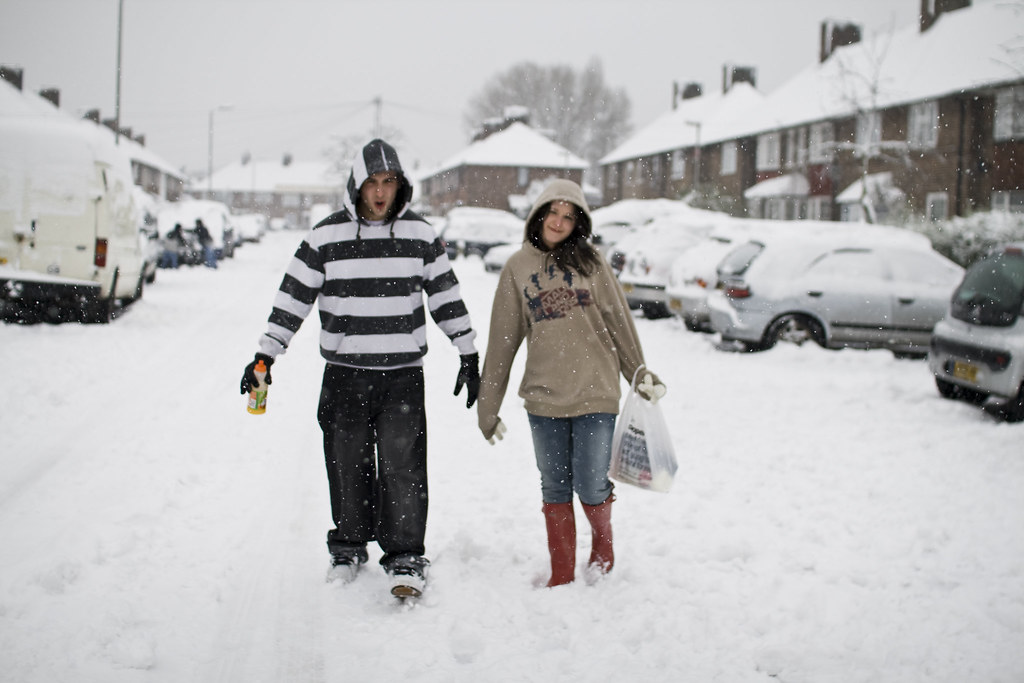
“Jak & Nic – Cold” by craigmdennis is licensed under CC by 2.0
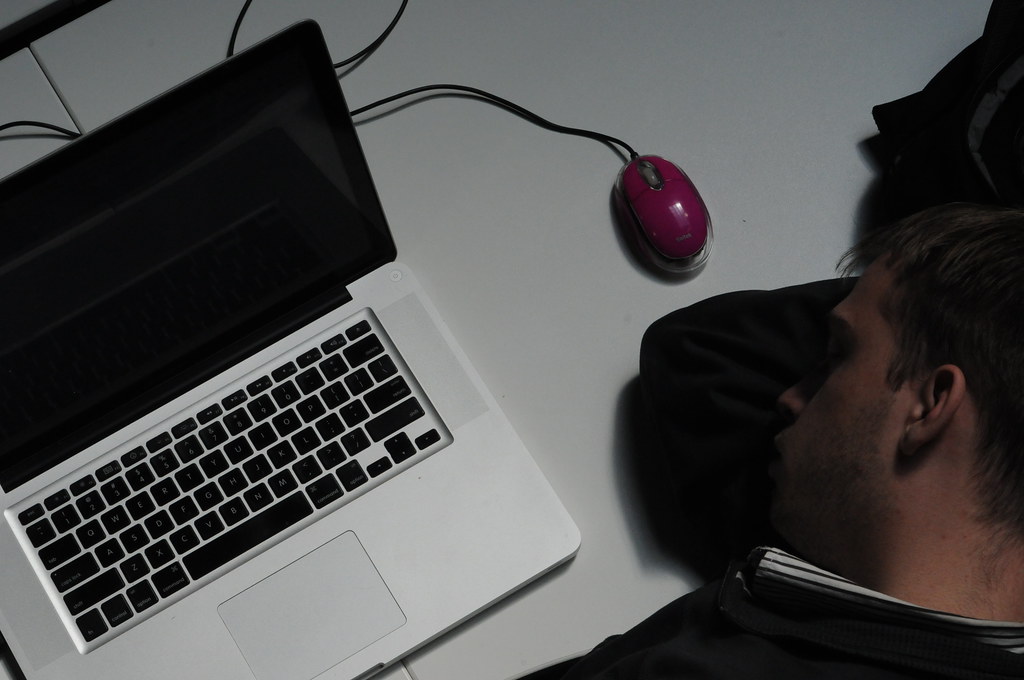
“Sleepy hacker” by thomasbonte is licensed under CC by 2.0
These companies make money by ensuring we spend as much time on their platforms as possible so they use various tricks like creating an illusion of choice, hijacking our natural tendencies as social animals, and producing the compelling draw of variable rewards to capture and hold our attention. In his article, Harris makes suggestions for why each of these tactics is problematic for people, community, and society, and he also suggests different ways we could design and approach technology in our lives. I’d like to build on his ideas specifically with respect to weaponized misinformation and propaganda. Harris doesn’t really get into this in his article, but I’d like to suggest why I think the hacking of the human mind has left us far more vulnerable to this type of message manipulation.
Propaganda is not new, nor is the attempt of foreign powers to sow the seeds of division among the population of a country against which they are engaging in information ops. For example, in the 1950s and 1960s, Russia helped to support the burgeoning human rights movement as a way to sow deep division and distrust of power. It’s a complicated relationship, and one that likely had both intended and unintended outcomes.
When social media platforms hack our brains for attention, they have also super charged the propaganda, misinformation and black ops tactics that were already being deployed at a slower grassroots scale. Just as we are wired to seek variable rewards from social media notifications, we are wired to respond to emotionally charged (particularly negative) posts. The human mind, evolutionary speaking, is optimized to ignore the mundane but attend to threats to ourselves or our tribes. Thus when we see a viral video showing a confrontation between two groups, one of whom we identify with, we will be likely to pay attention to the video and then share it with our tribe without thinking critically about what is not shown on the video.
This type of uncritical engagement with media is not particularly new either. As anyone who has taken a media studies class can tell you, we tend to trust what we see with our own eyes, which is why video is so successful a medium for building and reinforcing cultural norms. But as social media platforms use popularity and auto play to hold our attention, they also facilitate the spread of video, increasing the global scale at which they can effectively influence people’s views.
So as Harris points out, we are all being hacked for our attention. And as the companies hack our brains, they pave the way for propagandists to do so as well. This adds additional weight to Harris’ call for a social media bill of rights, and I would add, suggests that we need to carefully think through the question of regulation for platforms and whether we need to develop an international and enforceable standard of practice.
Think about the last time you shared something on Facebook or Twitter. What was your primary motivation for doing so?
“Can You Etch It – Social media refrigerator magnets – Laser engraved” by Alan Reeves is licensed under CC BY 2.0
Perhaps it was because you learned about some news or current events that you felt others should know about. Perhaps it was because you saw a cute video or picture that you thought other people would like to see too. Perhaps it was because you saw a pithy quote or saying that you felt really described the way you were feeling in that moment, and you wanted to convey that feeling to other people in your network.
According to recent research at the Social Media Lab in Toronto, Canada, Canadians are somewhat comfortable with academic researchers accessing their social media data. 56% of Canadians indicate that they are ok with their data being used for academic research purposes. In contrast, only 34% of Canadians feel comfortable with marketers accessing their social media data, but this discomfort is unfortunately at odds with the way social media companies make money, meaning every day Canadians are exposing themselves to the groups which they don’t really (when asked) want to access their data.
“Mind The Gap” by Allen Brewer is licensed under CC by 2.0
Following on my previous post related to the privacy paradox, today I’m interested in discussing a curious social media related behavior that I’m calling the trust paradox.
Despite all the wailing and gnashing of teeth about fake news, biased journalism, and journalists as “very bad people“, the very people complaining the loudest about the press seem to be those who are most adept at manipulating it. Take for example, the current President of the United States, who employs a combination of direct to consumer social media tactics, and also maintains strong relationships with non-professiona,l we-cannot-really-call-them (cough cough) news organizations like infowars, in order to perform the idea of news while supplanting the actual purpose entirely.
“Fake fish, fake lomo” by Patrick Fitzgerald. CC-BY 2.0. Available from Flickr: https://www.flickr.com/photos/barelyfitz/34407290