 This blog post stems from a podcast that I’m putting together for the Multimedia Local News Conference Publication. This publication is being put together by the Ryerson Journalism Research Centre following a very successful international conference on local news in a digital age, and I presented some research at the conference relating to how local news content shared on Twitter can be measured. I am also happy to serve on the conference and publication organizing committee.
The availability of relevant political information is central to a functioning public sphere. In some larger Canadian communities, such as Toronto, Ottawa or Vancouver, which are media centers for their respective provinces, the availability of locally relevant news that aids citizens in making meaningful voting decisions is not an issue. News in these communities is readily available. However, in other communities, this is simply not the case. local news outlets in smaller communities across Canada and around the world are being closed down, and studies have shown that when a community loses a source of local news, civic engagement declines.
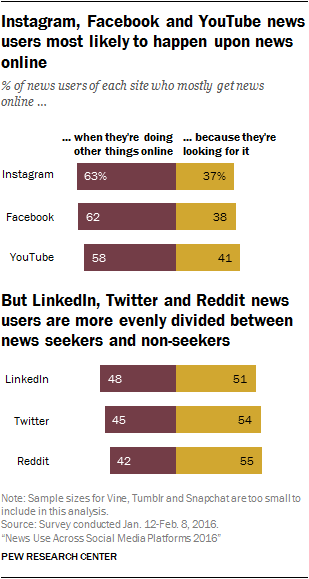
Some look to social media to bridge this gap. Twitter in particular is an increasing source of local news, as we can see in recent research by Pew. About half of all people who come across news on Twitter are deliberately seeking it out, in contrast to news habits on other social networks. This means that people think that Twitter is a reliable source of news and will seek it out there. However, our recent research has confirmed other studies that show, not only is local news quite scarce on Twitter, the quality of news that is available is very mixed, with emotion or controversy spreading farther than key information on policy or other relatively boring but necessary topics. This makes sense of course – 140 characters or less is likely insufficient to cover issues at any length – and so we could argue that Twitter is no substitute for long form journalism that could, potentially, be linked to via this platform. However, if we are going to argue that then we need to begin a discussion about how we will support and maintain professionals who can deliver the quality, fourth-estate, long form journalism we need. With current models under threat, this is a conversation that is long overdue.