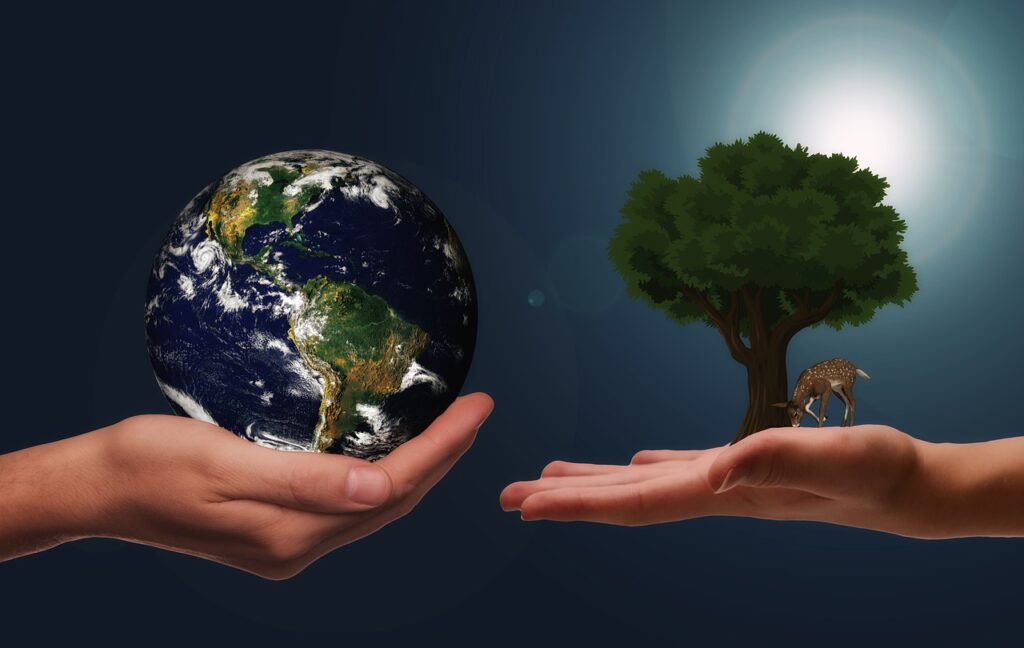
Land Mind: Discovery Through Nature

hands, earth, next generation-4091879.jpg

Double Content Remix-Assignment 4

Remix Part A

For Assignment 3, I took much more of an academic approach to my final product. I wrote a scholarly article geared towards mental health practitioners that aimed to highlight the correlation between youth mental health, climate change, and the need for increased immersion in the natural world. 

For Part A of my remix, I have decided to take a non academic approach and write a course proposal that is, specifically, for teachers of high school students, faculty who design curriculum at the Secondary level, and those who review potential new courses and proposals within School District 61 in Victoria, BC. The proposal will introduce a credited course with the purpose of encouraging more climate sensitive activity, engagement, and awareness of the natural world for high school students (ages 14-18).

The underlying message remains the same, that mental health is positively impacted by increased immersion in nature, however, in my experience working with youth, messaging must be conveyed so that it is engaging, relevant, and relatable. This course will be presented in a way that is captivating, a break from the traditional school setting, and incentivized by obtaining school credit upon completion. 

Course Proposal

Course Name: Land Mind: Discovery Through Nature

Course Abstract: The natural world is all around you. It lives inside of you. 

Do you want to rediscover your connection with the land where the natural world becomes your classroom and your teacher? 

Want to try something new and outside of the norm? 

This experiential and interdisciplinary course will take you outside of the traditional classroom setting and YOU will have a direct say in its formulation and creation. 

Land Mind: Discovery Through Nature is a new course that will be launched in SD61 beginning in September of 2022. We hope to see you there. 

Mission/Objective: To reconnect youth to the natural world. We believe that youth mental health is enhanced when students have the opportunity within their schools to immerse in and with the natural world. Land Mind: Discovery Through Nature, will be an opportunity for students to slow down, think, feel, and learn through a hands on, interactive, and youth empowered curriculum. 

Project Description: This course will take a three tiered approach. Core themes throughout will be youth mental health and wellness, land based climate action through immersion in nature, and youth leadership development. Most classes will be outside of the traditional school setting with occasional discussions being held within an available classroom provided by the respective school administration. With the use of a SD61 bus, students will be taken to different locations no further than a 30 minute drive from school property. Locations will include local farms, hiking trails, view points, beaches, botanical gardens, and forested areas. In addition, and in partnership with local First Nations and the Victoria Native Friendship Centre, students will go on medicine walks with Knowledge Keepers learning of traditional medicines and foods through the sharing of Traditional Ecological Knowledge (TEK) and will have one class a month reserved for Indigenous Storytelling led by a local Elder. A core aspect of the course will be to educate students about the traditional stewards of the land to gain an understanding of the history of place as well as the ongoing impact of colonialism and residential schools on Indigenous people. 

Upon arrival at each destination, students will be given a guiding question to help navigate their thoughts and learnings during class. At the end of each class, students will be given the opportunity to share ideas and lead a conversation with their peers. Developing leadership skills, beginning with the importance of being an active listener, will be a foundational component of the course. 

Land Mind: Discovery Through Nature will be assessed in an unconventional manner by way of self assessment. Students will assess their own learnings in the form of students blogs. Blogs can be made both private and public and will dive into the acquired knowledge of each individual youth. Students can focus on any aspect of the course and will be encouraged to draw linkages between core themes. Self assessments will be done four times a year resulting in two blogs a semester. A blog will be required for completion of each Unit of the course (4 Units in total). Acceptable blogs can be submitted in multiple mediums. Students will be encouraged to write a blog or can alternately document their learnings via the creation of a short film, Instagram reel, Tik Tok or via a painting, poem, song, or any other agreed upon expressive outlet.  

Number of Credits: Land Mind: Discovery Through Nature will be equivalent to any other credited course at any high school within the district. Working with a youth centred approach, students will be able to design how they would like the course to fit into their current schedule. School advisors and teachers will help students determine how many school credits are needed (if there are gaps in individual schedules) as well as desired outcomes of each student in the course. 

Course Structure: Land Mind: Discovery Through Nature, will be offered throughout the duration of the school year. Once a week for two and a half hours, enrolled students will gather and participate in the diverse offerings of the program.

Curriculum Development: Along with having two full time facilitators, prior to the course start date (September of 2022), a talking circle will be formed between interested youth, select school staff/faculty, and local Indigenous Elders and Knowledge Keepers to discuss where the greatest need for the program lies and what the focus of each cohort will be. Upon completion of each cohort, youth participants will review the course through a similar talking circle. Constructive feedback of what did and didn’t work, as well as limitations and additional needs within the course offering, will then be implemented into the planning and orchestrating of the subsequent cohort the following year. 

If there is a growing interest in the course among school students there is potential for two simultaneous offerings throughout the school year. An example of how this would look is detailed below. Additional staff may be required.

 1. Land Mind: Discovery Through Nature Cohort 1

Offering: Every Tuesday, 12:30-3:00 pm (September-June)

2. Land Mind: Discovery Through Nature Cohort 2

Offering: Every Thursday, 10-12:30 (September-June)

Prerequisites: No prerequisites are needed to enrol in this course. Offerings are available to students in Grades 9 through 12. 

Instructional Method: Each cohort will be offered entirely in person. There will be no remote learning associated with this course. The creators of this course are sensitive to the fact that the digital divide prevents opportunities to learn for students without computers, iPads, or access to internet at home. The intent of this course is to encourage space from cellular devices while, simultaneously, creating access for all learners regardless of socio-economic background. 

Course Capacity: The capacity of this course will strictly follow BC Health guidelines and will act in accordance with all necessary COVID-19 protocols. It is understood that changes may be required at a moments notice due to the ongoing state of COVID-19. The current estimated number of youth participants is 10-15 students. 

Faculty: Two full time staff will be needed for each course offering. Staff will create curriculum, alongside local First Nation partnerships, facilitate classes, and oversee youth self assessments. Additional staffing may be required dependent on student interest.

Budget: The only additional considerations will be for honorariums gifted to external facilitators and possible reallocation of funds to allow for a weekly driver to and from course destinations. All other funds should fall within the course creation guidelines of SD61 and fit within budget criteria. 

This course proposal was developed by Tony Cecchetti, Indigenous Youth and Family Counsellor with the Victoria Native Friendship Centre and Masters student of the MACAL program at Royal Roads University. All inquiries can be directed to the email address provided below. 

LandMind@SD61.ca

Remix Part B

For Part B of my remix, I chose to make an infographic depicting the objectives, themes, and overview of my course, Land Mind: Discovery Through Nature. The infographic was designed, specifically, to cater to high school students within SD61. The purpose and intention of creating a visual component was to intrigue students who may be lured in by more imagery and less words, a form of communication I believe works well with high school age students. Although, there are a few short sentences presented, the emphasis is heavily on the imagery and design to convey the details of the course and draw in potential participants. The idea behind the infographic was to create more accessibility to students who may otherwise be overwhelmed and deterred by a text heavy description of the course as well as attract a wide range of students from a wide range of backgrounds.

The infographic can be found below. 

Infographic made by Tony Cecchetti for the proposed course, Land Mind: Discovery Through Nature

The Weight of Words

be, being, presence-511557.jpg

Tiny Ecology Part 4

Grammar holds a radical power. It creates hierarchy and difference and has the dramatic influence to alienate and degrade. Words mater and the way we refer to flora and fauna, people, and places, using specific pronouns, holds weight and meaning. Words give explanation and purpose to what surrounds us. In addition, language is what connects us. We thrive on the ability to understand but are fearful of the uncertainty of not knowing. Why we refer to our natural world and its beautiful inhabitants as ‘it’ and ‘that’ comes from a place of fear and the need to conquer. In her article, Kimmerer (2017) argues for the need to refer to our brothers and sisters of the natural world as ‘Ki’ and ‘Kin’, to ‘signify a being [or beings] of the living earth’. How we describe the world around us is reflective of our relationship with her. Why not be equals with the trees, the ocean, the rain, and the wind? It would be a wonderful way to begin to show respect to our wounded bond with Mother Earth. 

Tonight, I decided to go up to my sit spot amidst the downpour. Dressed awkwardly, in an oversized puffy jacket, shorts, and sandals, I walked outside to where I now go to think and observe. I reflected on Kimmerer’s piece, which stuck with me in a multitude of ways. If we were to view our connection with climate and nature as a relationship, couldn’t we see how incredibly unbalanced it is? The excessive exploitation prevalent? And the harm being done? For me, it’s so clearly in front of our eyes. Tonight the land was powerful and fierce. It reminded me of an angry younger sibling trying so vehemently to get my attention. Shaking at my very feet. Or of a never ending knock on your door that can’t seem to be heard. We are siblings with the land and the wildlife that inhabit it. We are no different. We are equal participants in this so called life and will continue to be shown that we are no greater than the land in which we walk until we stand up together, unified, with a purpose to solve the greatest dilemma of our time.  

Words are meaningful and why not focus more on the metaphor of a wounded relationship, a frayed bond, or a story yet to be heard than the ‘crisis’ that is climate change. Armstrong et al. (2018) add that “metaphors ground abstract concepts in concrete physical reality and…activate mental representations that structure how people perceive…message[s]” (p. 70). Metaphor is a tool to expand awareness and could be utilized more to communicate climate change.

Tonight’s experience at my sit spot made me feel that I have much work to do to engage and affect change in the climate action space. I struggle, often, knowing where my place is and how to bring about that change. Passion is a beautiful thing but it needs to be harnessed and nurtured. My passion for climate is equivalent to that of love for a family member. The land is my family. Yet, how can that be translated to the general public? Rephrasing the climate crisis as a relationship that needs to be revived and resurfaced is a tough hill to climb. Although, it is the future of climate action and encouraging thoughtful speech and rhetoric is one path in the right direction. As Kimmerer suggests, redefining our relationship with the butterflies and the flowers and through the ‘universal grammar of animacy,’ we can begin to heal this wounded relationship I see so vividly when I look outside my window. 

References

Armstrong, A. K., Schuldt, J. P., & Krasny, M. E. (2018) Communicating climate change: A guide for educators. Retrieved from  https://cornellopen.org/9781501730795/communicating-climate-change/

Kimmerer, R. W. (2017). Speaking of nature: Finding language that affirms our kinship with the natural world. Orion Magazinehttps://orionmagazine.org/article/speaking-of-nature/

Transdisciplinarity in Story: A Climate Communications Approach

mountain, sky, spring-806915.jpg

CALS501 Unit 2 Blog Post

Climate communication must be relatable to the audience in which it seeks to engage. Effective climate communication incorporates diverse perspectives and ways of knowing in its approach. This is much easier said than done. In today’s world, climate communicators have the difficult challenge of expressing the need for climate action while balancing the multitude of values, perspectives, and beliefs prevalent in our societal realm. Throughout the 501 Design Thinking Challenge, one theme has reemerged time and time again. How does one effectively communicate the need for climate action to multiple stakeholders while simultaneously respecting and empowering the voices of the oppressed and most impacted by a changing climate? In my opinion, this starts with holding up and allowing space for Indigenous voice and story. Oral history, and specifically storytelling, is one of the most valuable forms of climate communication and must be brought to the same table as western climate science. 

Storytelling offers a unique perspective aiding in the explanation and understanding of a changing climate. In CALS 502: Communication for Climate Action, Indigenous storytelling has emerged as a strategy to effectively communicate climate action. It provides an alternate explanation to why climate change exists through emphasis on our relationship with the natural world. Indigenous story as a “practice…sustains communities, validates experiences and epistemologies…and nurtures relationships and the sharing of knowledge” (Iseke, 2013, p. 559). As our relationship with the natural world changes so has our ability to process, communicate, and confront those changes. Indigenous story views climate change through a different lens. One that focuses more on healing a damaged relationship than critiquing and criticizing the wrongdoings of humankind. It “communicate[s] meaning that both produces and reproduces a sense of place” and reestablishes a lost connection (Nakashima et al., 2018, p. 268). Effective communication must pull from diverse ways of knowing represented in Indigenous cultures. The transdisciplinarity incorporated into story makes it one of the most valuable tools of communication there is. 

In addition to the importance of story is the use of traditional and local ecological knowledge in communicating climate change and encouraging climate action. Vinyetta and Lynn (2013) add that “traditional ecological knowledge is the primary Indigenous way of understanding relationship among species, ecosystems, and ecological processes…and has the potential to play a vital role in climate [action] and adaptation efforts that bridge human and environmental systems” (p. 1). What often lacks in the communicative framing of climate change is the role of relationships in guiding climate action responses. It is a pivotal component and one that is often left out of mainstream climate communication. We are inexplicably linked to our natural world and “forget that what we do to her we do to ourselves” (Wyld, 2021, p. 30). Traditional ecological knowledge offers another component of Indigenous way of knowing that derives from centuries of respectfully interacting with the natural world and observing its responses to change. I see this particular knowledge base as an integral piece of the climate action movement. One that is equally as important as western science and should be integrated into all climate communication strategies to better tackle the challenges of our time.  

Effective climate communication is a difficult task. However, further integration of Indigenous voice, through story and traditional ecological knowledge, is a necessary step in articulating and communicating climate impacts, strategies to combat climate variabilities, and overall climate action. The reoccurring theme of transdisciplinarity in this program is important because it sheds light on the need to value the diversity of perspective, lived experience, and expertise within the climate arena. Indigenous way of knowing is the most fundamental aspect of climate communication that, until recently, has been largely alienated, disregarded, and left out. It’s time reconciliation manifests itself in the climate action movement. 

References 

Iseke, J. (2013). Indigenous storytelling as research. International Review of Qualitative Research6(4), 559–577. doi:10.1525/irqr.2013.6.4.559

Nakashima, D., Krupnik, I., & Rubis, J. (Eds.). (2018). Indigenous knowledge for climate change assessment and adaptation. Retrieved from http://books.google.com

Vinyeta, K., Lynn, K. (2013). Exploring the role of traditional ecological knowledge in climate change initiatives. U.S. Department of Agriculture, Forest Service, Pacific Northwest Research Station, Portland, OR. doi:10.2737/pnw-gtr-879

Wyld, F. (2021). The land as a research participant: A storytelling project on climate change and Indigenous perspectives. Journal of Australian Indigenous Issues, 24(1), 22-34. Retrieved from https://search.informit.org/doi/abs/10.3316/informit.046669925438109