A Historical Reclamation

CALS692 Blog#4 

The reclamation of stollen land is an integral part of reconciliation in Canada. Furthermore, “Indigenous peoples…are calling for ‘land back’ as they seek to address the ongoing structures of colonialism and revitalize self-determining nations” (Nightingale & Richmond, 2022, p. 12). While it can often be hard to see examples of true reconciliation in action when land is reclaimed to its rightful owner it becomes tangible proof that good efforts are being put forward. This is also essential in increasing Indigenous engagement in the climate action movement as restoration work can begin along with the fostering of Indigenous youth climate action leaders on land that has cultural and traditional significance. 

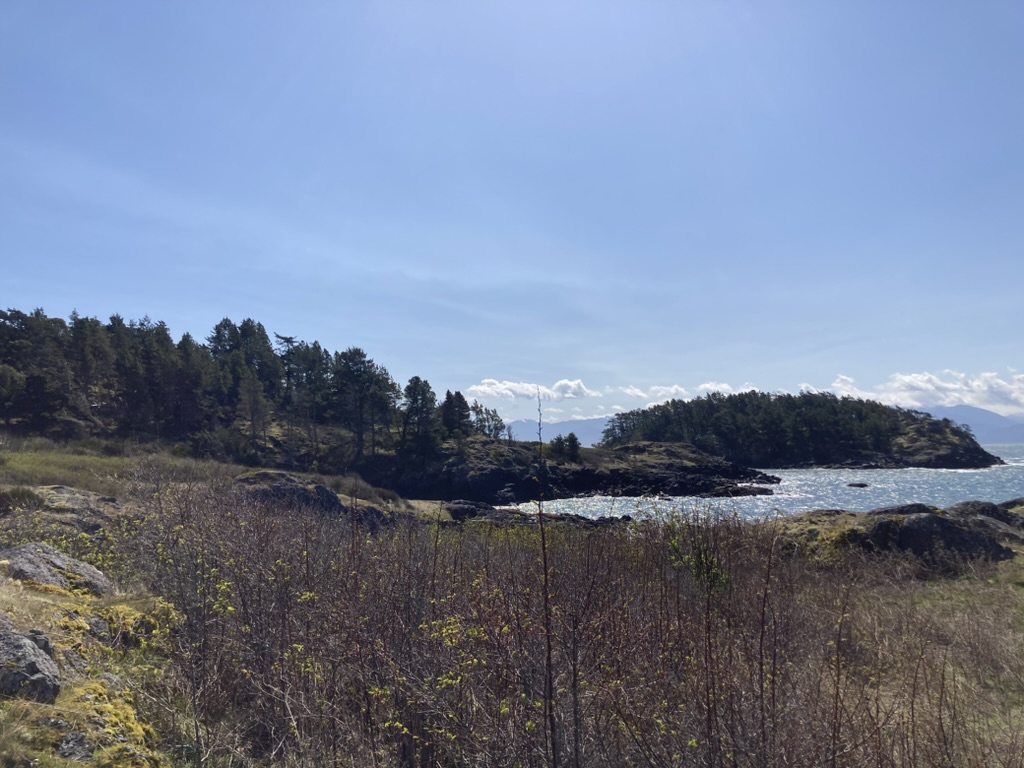
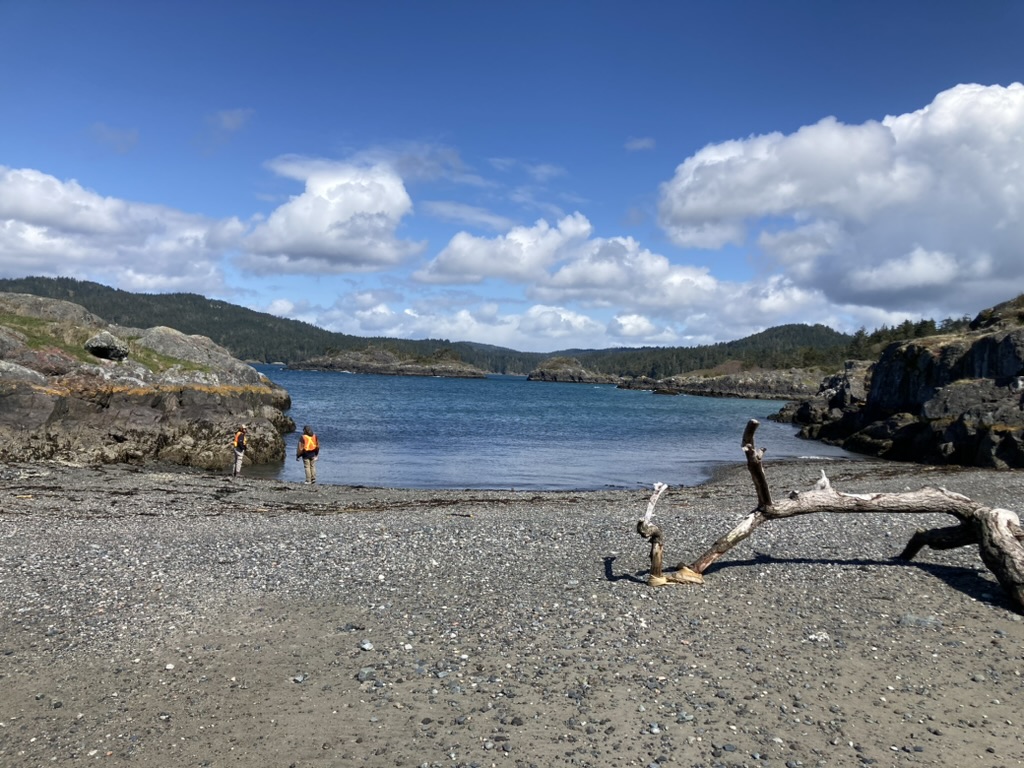
The Sc’ianew nation, located in what is now known as Beecher Bay, BC, shares the peninsula with the Department of National Defense (DND). The reserve, like many in Canada and the US, was given a small portion of land. In the case of the Sc’ianew Nation the DND took the majority of accessible of usable land in the nearby vicinity. In the early 2000s, the Sc’ianew Nation reclaimed a large part of unused DND land. DND claims that it was ‘gifted back’ to the nation but the land always belonged to Sc’ianew and the Nation is proud to of reclaimed it. Not only is it nearly 30 acres directly on the coast with a mix of forest and coastal vegetation, the land is also culturally sensitive and is a burial site to Sc’ianew members dating back hundreds of years. It has become a historical site to the Nation and archeologists now come to study the cairns that can be found along the coastline and tucked within the trees. It is quite frankly an incredible place to step foot in and one can only access it with direct approval from Chief and Council of the Sc’ianew Nation. The IndigeMind program was lucky enough to be given that approval to begin a long term eco-cultural restoration project to remove all invasive species in the area. 

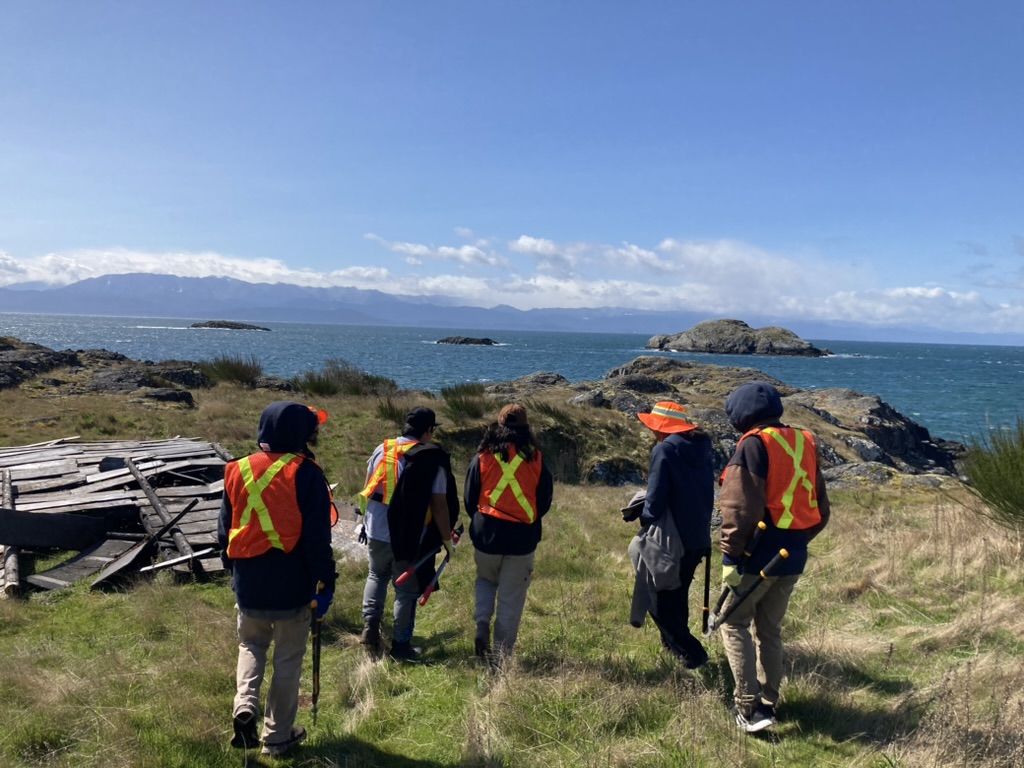
On April 11th, myself along with 8 participants of the IndigeMind inaugural cohort and Christina Armstrong of the Sc’ianew Nation headed out to what is now known as ‘Number 2’. In its process of reclamation, the Nation decided to call the land ‘Number 2’ to represent its second reserve. We met with an organization called the Habitat Acquisition Trust. The trust “is a regional land trust that conserves nature on south Vancouver Island…envision[ing] a future where the full array of natural habitats…are healthy and conserved” (hat.bc.ca, n.d.). HAT provided our cohort with equipment and training to begin our project removing scotch broom and Himalayan blackberry from the coastline. This marked the beginning to what will be an ongoing restoration project that the next two IndigeMind cohorts will be involved in. 
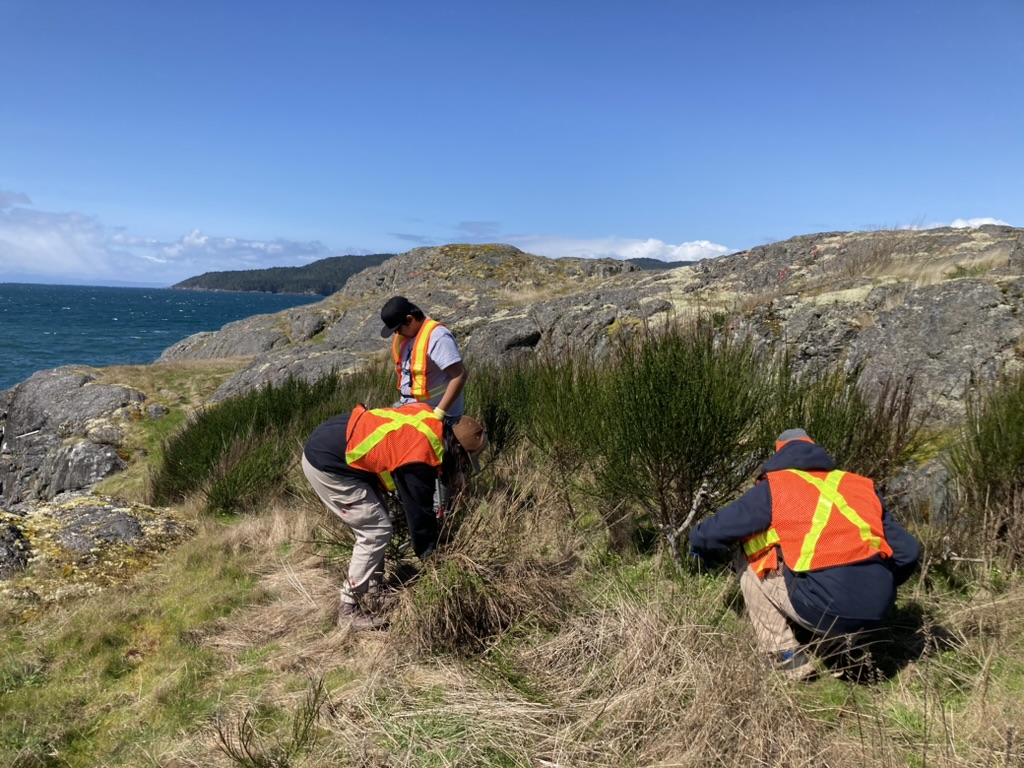
We spent four hours removing broom and piling it in an area where it could easily be removed and burned. During our break, Christina shared stories about how her people harvested off of the land and lived in harmony with the natural environment. The land was spiritual. I could feel it in the air. Christina spoke much of her ancestors and the duty the young ones have to be climate leaders to honor their ancestors in a good way. That resonated with me deeply. That we have an obligation not only for those yet to come but to those who came before us and paved the way. It made me think of climate action in a different way. Being a climate action leader is not only for the present and the future of our planet but it is also for the past. To remember, honor, and uphold the value of treating the land like a member of our family and re-learning to respect her as we hope to be respected ourselves. 

References

Nightingale, E., & Richmond, C. (2022). Reclaiming Land, Identity and Mental Wellness in Biigtigong Nishnaabeg Territory. International Journal of Environmental Research and Public Health19(12), 7285. https://doi.org/10.3390/ijerph19127285
Passing the Knowledge On – Program Development 

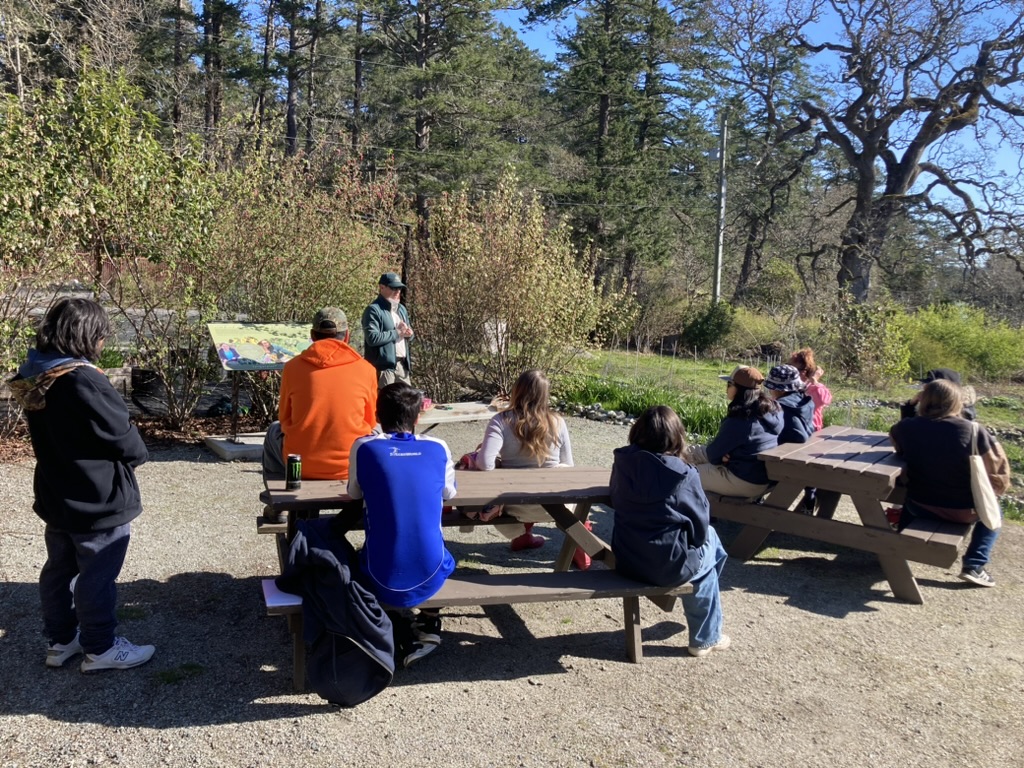
Native Plant Seed Saving Workshop with Parks Canada at Fort Rodd Hill

CALS692 Blog #2

IndigeMind is a go and we have just finished our third week of programming for our first ever cohort. The experience, thus far, has exceeded any expectations I may of had going into it. I anticipated it would take time for our community of participants to establish and our vision to come to life. Programs take time to develop but what I have experienced has been quite the opposite and I attribute this to the hours of effort put in to carefully crafting a program that is intentional, interactive, creative, and cultural. 

Proper cultural program development requires a sensitive approach. One that both honors and expresses gratitude for being in the position to hold and create space while upholding the sacred responsibility within the role. This is predominantly to insure that the “learning environment [is] relevant to community and culturally respectful to participants and [elders]”(Soaring Eagle Project, 2001). So many Indigenous youth lack immersion and relationship with the land and natural world and I have much pride in bringing to life IndigeMind while often observing in the background watching and learning as knowledge keepers share their immense wisdom. As Redvers (2020 ) notes “in order to promote wellness in Indigenous communities, it is vital to reconnect with cultural identity and practices within an Indigenous pedagogy” (p. 92). I am already witnessing how the youth come alive on the land and the impact it has on their lives. It brings me a great sense of purpose as a climate action leader. 

The current success of IndigeMind I attribute to our program model. That is, we believe in keeping the knowledge in the hands of the knowledge keeper and have partnered with one from the Sc’ianew Nation of Southern Vancouver Island to co-create and co-develop our first cohorts curriculum. In many ways, IndigeMind invests into our future Indigenous youth climate leaders while playing the role of a social enterprise by putting money back into community, valuing existing Indigenous leaders for their wisdom and sharing of knowledge. Our current contract with Cristina Armstrong of Stewards of Sc’ianew, an environmental and Indigenous led non-profit, goes until the end of August spanning the length of two full cohorts. As facilitators of IndigeMind, we will take the existing program curriculum and share it with our future partnerships as a model of what our program can look like while giving freedom to the knowledge keeper to bring in their own teachings and vision for the cohort they co-lead. Our intention is to change the location of each cohort so as to increase accessibility for all Indigenous youth in Southern Vancouver Island, both on and off reserve. As our program continues to grow, this same model will be applied. This, I believe, is a way for IndigeMind to grow beyond Vancouver island within any region in Canada where there is one of the 120 Friendship Centers. 

References 

Redvers, J. (2020). “The land is a healer”: Perspectives on land-based healing from Indigenous practitioners in northern Canada. International Journal of Indigenous Health15(1), 90–107. https://doi.org/10.32799/ijih.v15i1.34046

Soaring Eagle Project. 2001. Educating aboriginal youth using traditional ecological knowledge and western environmental science. https://web.archive.org/web/20080828010256/http://www.manitobamodelforest.net/pub lications/ombaashid.PDF

Critique of a Hazard, Risk, and Vulnerability Analysis (HRVA)

sea, ferry, mountain-5789797.jpg

CALS503-Climate Risk Management Blog Post

Assignment 2-Part B

A Hazard, Risk, and Vulnerability Analysis (HRVA) was produced for the Regional District of Nanaimo, Town of Qualicum Beach, and City of Parksville on Vancouver Island, British Columbia in September of 2019. For assignment 2-part b, I analyzed and critiqued the methods, approach, results, and knowledge of terms, as well as important omissions from the produced document. The intention of the assessment was to “help [the] community make risk-based choices to address vulnerabilities, mitigate hazards, and prepare for response to, and recovery from, a range of hazard events” (EMBC, 2020, p. 6). As climate change, and environmental hazards and impacts associated with it, continues to increase in magnitude and occurrence, it is imperative that efforts are put in place to prepare for the inevitable realities. This HRVA is a step in the right direction.

The critiqued HRVA was produced based on a qualitative analysis of accumulated non-scientific data using a bottom-up approach by gaining knowledge and insights from “local government…First Nations community representatives, subject matter experts, and other agency stakeholders” (CCEM, 2019. p. v). There were a total of three public engagement sessions held over a nine month period of time. The intended audience of the document were local community members, invested stakeholders, and decision makers within Nanaimo, Qualicum Beach, and Parksville. 

The assessment defined the key terms of hazard, vulnerability, and risk using up to date definitions from various governmental agencies (the UN Office for Disaster Risk Reduction and the Government of British Columbia) and placed such terms in accessible, accurate, and relevant locations throughout the document. 

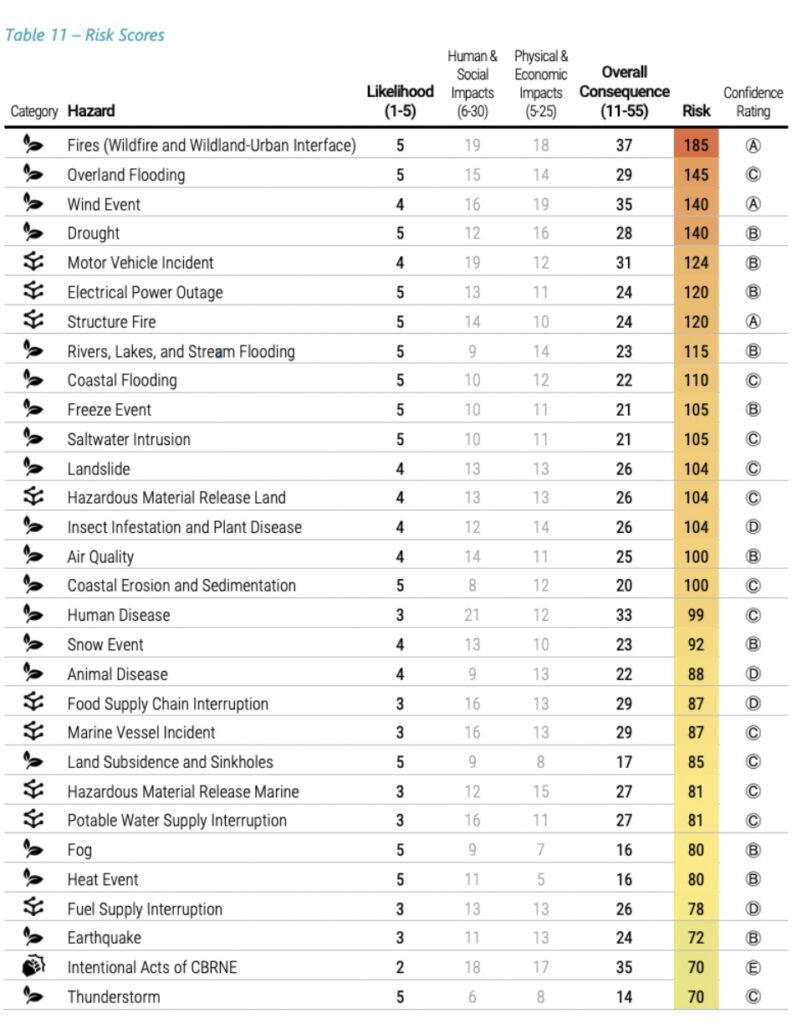
Results were communicated through ‘risk scores’ that were allocated to each natural hazard. Scores were determined by multiplying the likelihood of a hazard occurring by its overall consequence, the higher the number the greater the risk. An example of the how risk scores were demonstrated can be seen below. Natural hazards are represented with the symbol of a leaf under the word ‘Category’.


Table 11- Risk Scores (p. 45)

It was concluded that the Regional District of Nanaimo, Town of Qualicum Beach, and City of Parksville are increasingly susceptible to the impacts of “severe wildfire and [urban interface fire] seasons and seasonal water shortages” as well as overland flooding and wind events (CCEM, 2019, p. 93). 

Although the document was quite informative, organized, and produced utilizing a variety of regional expertise there was need for improvement in multiple areas. The HRVA omitted local Indigenous knowledge from the Qualicum, Snaw-naw-as, and Snuneymuxw First Nations. There was no mention of traditional ecological knowledge as well as little to no Indigenous representation at the three public engagement sessions. Not only does the document inaccurately represent the historical knowledge of the region but it alienates communities with incredible resiliency and adaptive capacity to climate impacts. Indigenous knowledge must be present within future HRVAs and should inform the overall process from start to finish. 

An additional critique lies in the engagement sessions and the limited outreach done in community. Of the three engagement sessions, 70% of the total participants attended at least two sessions (CCEM, 2019, pp. 6-7). This points to limited public representation with few voices guiding the results and findings of the HRVA. Additional engagement sessions are encouraged for a more thorough analysis of the community perspectives of climate hazards, risks, and vulnerabilities.   

Lastly, the HRVA lacked in sufficient recommendations to increase resiliency and better prepare the region for a changing climate and the impacts of future environmental hazards. Subsequent assessments could benefit from having more practical steps for community stokeholders to increase engagement and awareness within the climate action space. 

References

CCEM Strategies Ltd. (2019, September). Hazard, risk, and vulnerability analysis: Regional District of Nanaimo, Town of Qualicum Beach, and City of Parksville. Retrieved from https://www.rdn.bc.ca/sites/default/files/inline-files/2019%20RDN%20HRVA%20Report
%20FINAL.pdf

EMBC. (2020). Hazard, risk, and vulnerability analysis (HRVA) for local authorities and First Nations: Companion guide for the HRVA tool. Retrieved from https://www2.gov.bc.ca/ assets/gov/public-safety-and-emergency-services/emergency-preparedness-response- recovery/local-government/hrva/guides/companion_guide_to_the_hrva.pdf