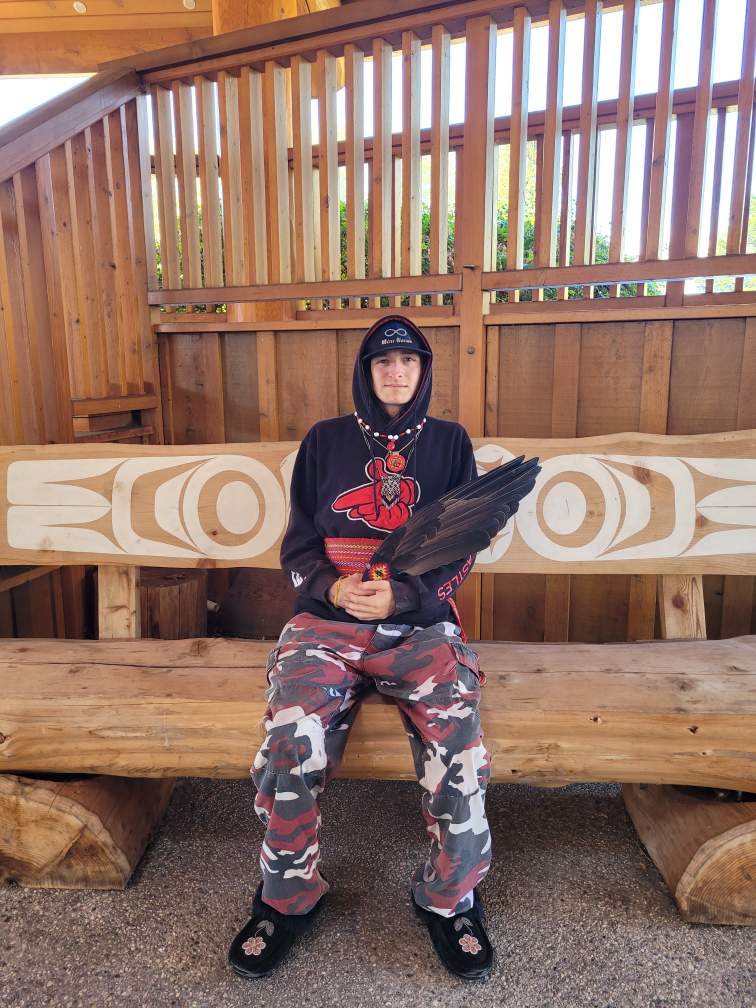
In the last episode of the IndigeMind Podcast series, I spoke with Kyle Carter (“Spider Red Stone Boy”) about his experience in the IndigeMind program, his belief system, and the importance of culture in his life. Kyle is both Métis and Cree with family ties to the Prairies and, specifically, rural Saskatchewan. He is a proud descendent of Louis Riel and an advocate for his people, the value of cultural teachings, and land based knowledge.
Kyle is a young man whom we call a knowledge keeper in training. Over the years he has learned from elders both in the Friendship Centre community and at ceremonial gatherings, such as Sundance, just outside of Merritt, BC. He has a natural ability to teach and share his immense knowledge of medicinal teas and the uses of many medicinal plants. Our hope is to soon hire Kyle as our first Youth Climate Ambassador to honour him as a youth leader and hold him up for his strengths. It has been a privilege to walk with Kyle over the years, witness his growth, and admire his transformation into a strong Indigenous climate leader.
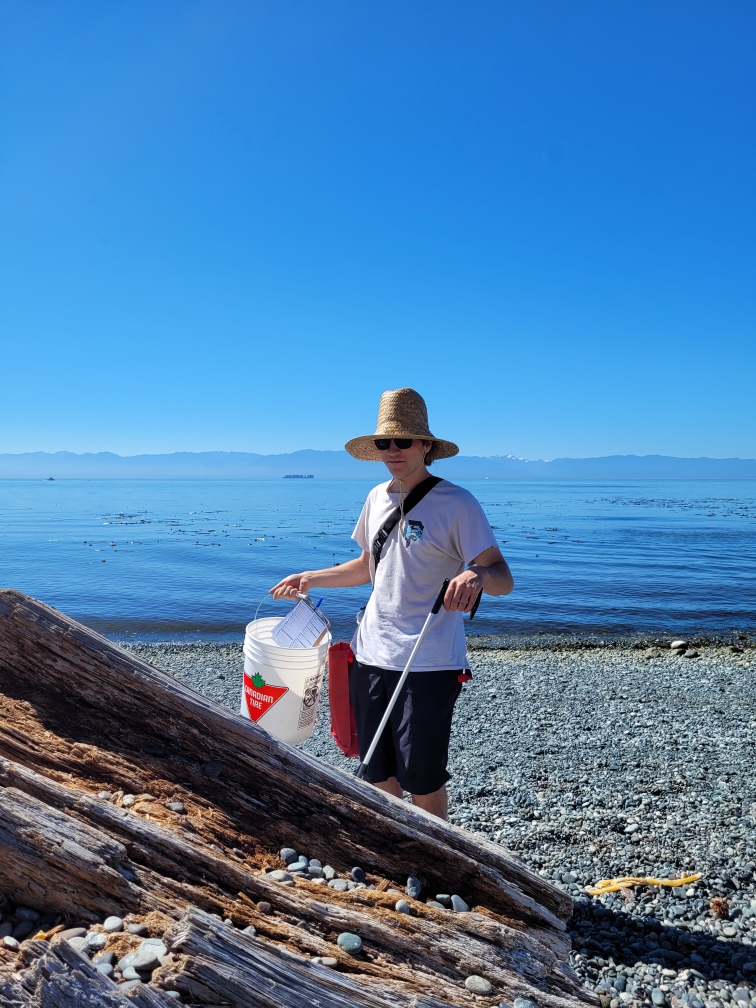
Today, I had the honour of speaking with one of our first graduates of the IndigeMind Climate Action Program, Logan Ballegeer. Logan is incredibly passionate about watershed conservation efforts and, specifically, the integration and need for more Indigenous knowledge systems in the Climate Action movement. He will be moving to Powell River at the end of September and plans to enrol in the Ocean Bridge program with Ocean Wise. The program empowers young leaders to take action for ocean conservation and develop their own project centred around their specific interests and passions.
I look forward to mentoring Logan and following his journey as he continues to become a climate leader in his community. He has immense knowledge and so much to share. I am proud of how far he has come (I have known him now for five years) and I have nothing but optimism and excitement about where the next chapter of his leadership journey will take him.
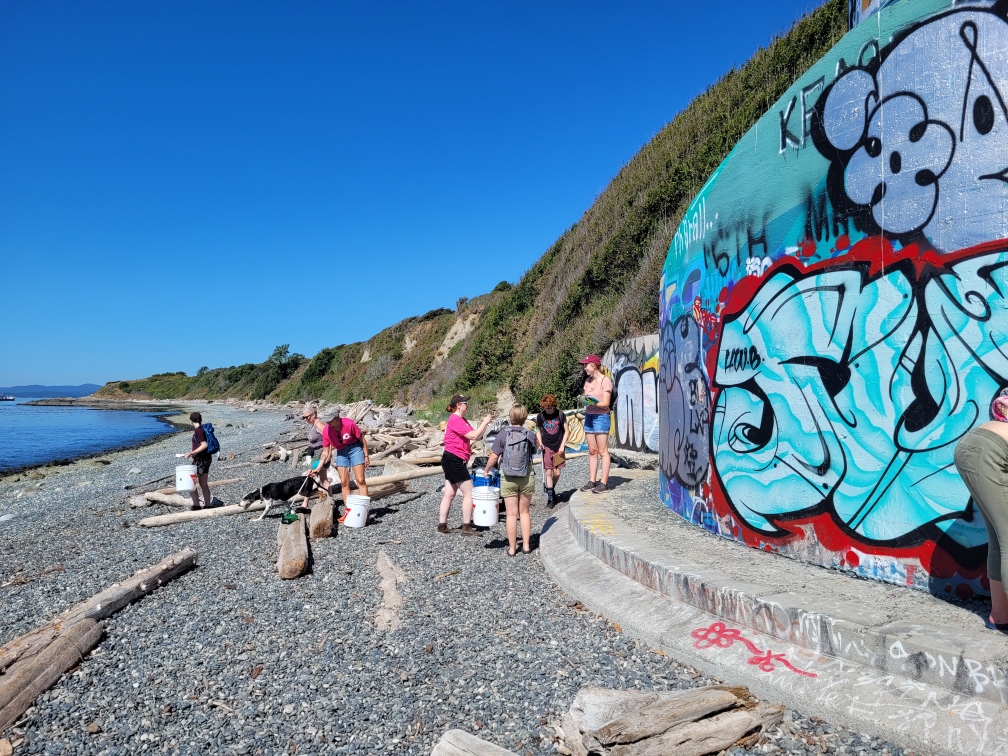
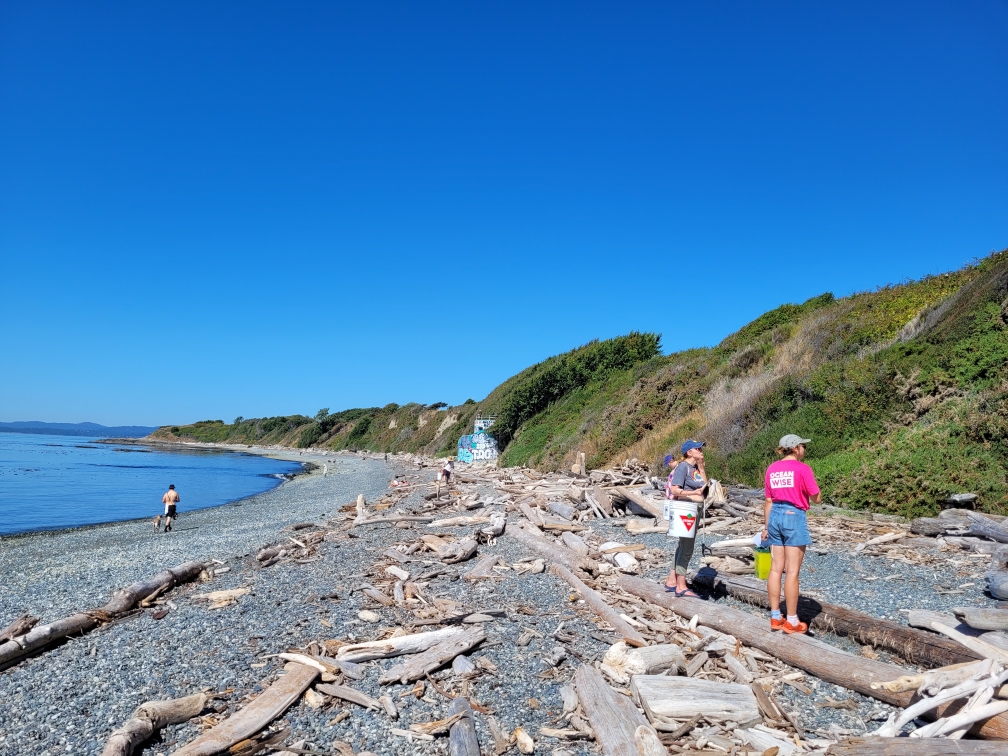
Today, the IndigeMind Climate Action program had its first joint beach clean up with the Youth to Sea program from Ocean Wise. Youth to Sea is a 10-month youth centered program (ages 15-18) aimed at helping youth gain the practical skills to become stewards of our oceans and change makers in their communities. Although the program is not specific to Indigenous youth, it is learning about its role in reconciliation and how to be an ally to local nations here on Vancouver Island. The cohort that we met up with was the inaugural Victoria Youth to Sea cohort. The program has been running for many years but in cities across Canada such as Vancouver, Halifax, and Montreal.
Caring for our oceans is very in line with IndigeMind and our vision of fostering the next generation of Indigenous Youth Climate Action leaders. The “oceans play a key role in climate regulation especially in part buffering the effects of increasing levels of greenhouse gages in the atmosphere and rising global temperatures” (Reid et al., 2009, p. 1). As our ocean temperatures warm and the marine ecosystems continue to dramatically shift, we are confronted with the pressing reality that a shifting climate impacts our waters, millions of aquatic species, our food supply, and coastal communities around the world. In addition to over fishing and the impacts of oil spills, our oceans are suffering other forms of pollution and human waste products can be found on every beach. As noted by Jorgensen et al (2021) “marine litter, the majority of which is plastic, is one of the most pressing global environmental challenges impacting the planet [and] one way coastal communities respond to this challenge is through the environmental stewardship practice of volunteer beach cleanups” (p. 153).
We decided it was time to take it upon ourselves to start a monthly beach cleanup in collaboration with other youth climate focused groups on Vancouver Island. Although we couldn’t this time, our plan through IndigeMind is to focus our efforts on local reserve beaches where there is visibly more trash than off reserve. Although the need is greater on reserve beaches for regular cleanups gaining approval to do so comes with more unfortunate hurdles. My initial hope was to go to the beaches of one of two local Nations on Southern Vancouver Island, the Tsawout or Tsartlip Nations, whom we work with in the IndigeMind program, and do a community clean up. However, I was reminded of the politics on reserve and the understanding that both relationships and projects take time to unfold and come to fruition. In order to plan a beach clean I needed to get approval from Chief and Council which I could not obtain given our limited time frame. My intention is to focus future IndigeMind beach clean ups only on reserve and invite ally youth groups and climate organizations to join as an active expression of reconciliation.
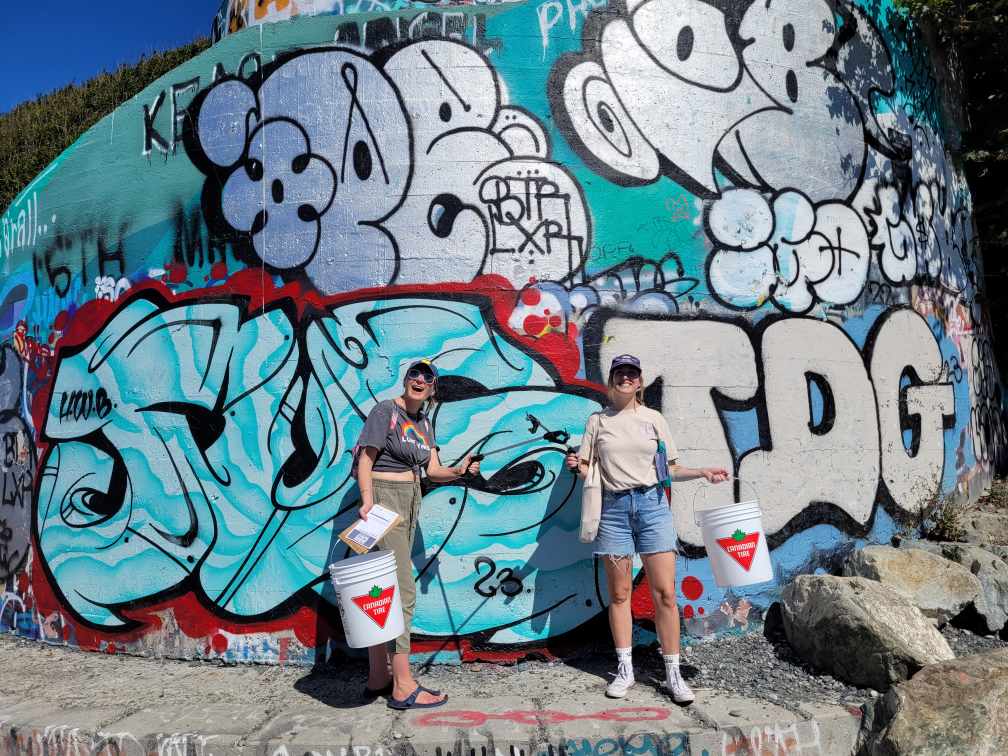
All this said, our day on Dallas road with Youth to Sea was a huge success. The beach was quite clean to begin with and the city clearly invests money into one of its most tourist heavy locations. Problematic from the standpoint of seeing the city also invest in initiatives that centre around relationship building and reconciliation with local Nations. However, an opportunity for programs like IndigeMind to bridge that gap.
Both groups met at Spiral beach on Dallas road at 10:30. Nadia Salmaniw, co-founder of IndigeMind, led us in a grounding and land acknowledgement, and then we headed to the beach to begin our clean. Youth to Sea graciously provided us with pickers, buckets, and data sheets to track types of trash that we found for a larger data collection done by Ocean Wise. We walked the beach for 2 hours and then gathered for the last hour to share lunch and sort the trash that we found.
Upon completion of the day their was excitement about the next time our groups get together. Although there are many youth groups that focus on climate related endeavours there is not always cohesion and collaboration. We need more hands on deck and an important step in ones leadership journey is to learn how to walk parallel paths with those fighting the same fight and those hoping to carve out a brighter future for our planet. My hope, is that these collaborative efforts shows that to our youth and is a start in the right direction.
References
Jorgensen, B., Krasny, M., & Baztan, J. (2020). Volunteer beach cleanups: civic environmental stewardship combating global plastic pollution. Sustainability Science. https://doi.org/ 10.1007/s11625-020-00841-7
Sims, D. (2009). Advances in Marine Biology. Volume 56. Academic Press
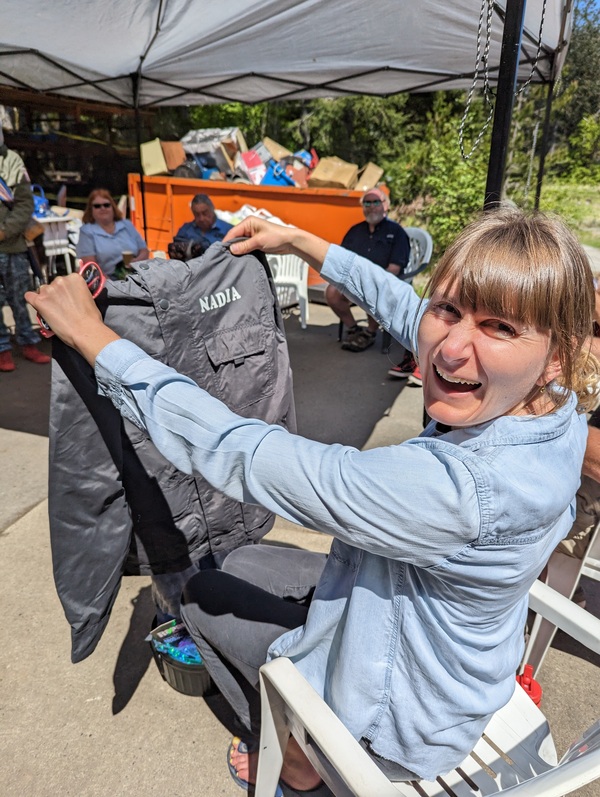
Today, I spoke with dear friend, colleague, and fellow visionary, Nadia Salmaniw, who co-created the IndigeMind Climate Action Program with me back in 2021. Nadia has roots to the Haida Nation on her mother’s side and Ukraine on her father’s side. Along with her new role within IndigeMind as the Head of Land-Based Education, she is also the Director of the CEER (Career, Employment, and Educational Resources) department at the Victoria Native Friendship Centre where she has worked for the past decade. Nadia is deeply passionate about our youth, the land, and finding ways to heal the deep traumas associated with intergenerational trauma. She is an advocate for the climate and, like me, believes that our youth are the future and must be equipped with the tools, traditional knowledge, and cultural practices to become the climate leaders of tomorrow.
The Sc’ianew Nation, like many other nations on Southern Vancouver Island, is investing in food security initiatives to educate, inform, and provide healthy and sustainably grown food for nation members. As highlighted by Cidro et al. (2015) “access to safe, affordable, and nutritious food is an obstacle facing many Indigenous people…while food security [remains] an urgent social, economic, cultural, and health issue” (p. 24). Through the leadership and guidance of Stewards of Sc’ianew and the support of the IndigeMind Climate Action Program funds were provided for the building of greenhouses, traditional/medicinal plants from Satin Flower nurseries, and a variety of vegetable plants from other local nurseries.
As part of a two day workshop, IndigeMind participants assisted, first, with the assembling of two-thirty foot greenhouses and, second, the planting of the greenhouses with the plants provided through the food security initiative. IndigeMind participants worked the first day with youth from the Sc’ianew Nation to build the greenhouses learning about proper assembly, maintenance, and the teamwork required to build large and durable structures. By the end of the first day both greenhouses were assembled. There were issues securing the coverings, as the material was low grade, however, extra reinforcements were installed to prevent the wind from blowing off the coverings. Sc’ianew is right on the water and is susceptible to large gusts of wind and powerful wind storms throughout the year so it was essential that the greenhouses were not only installed correctly but were secured properly. The base of the greenhouses were staked to the ground and the tarps were weighted down on the exterior using 2’ by 4’ pieces of dimensional lumber found at the shop.
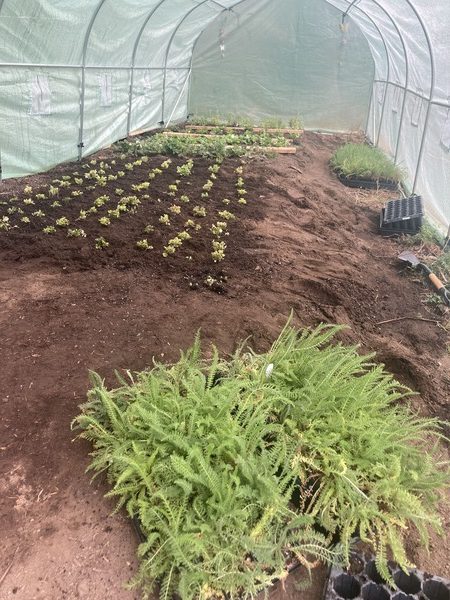
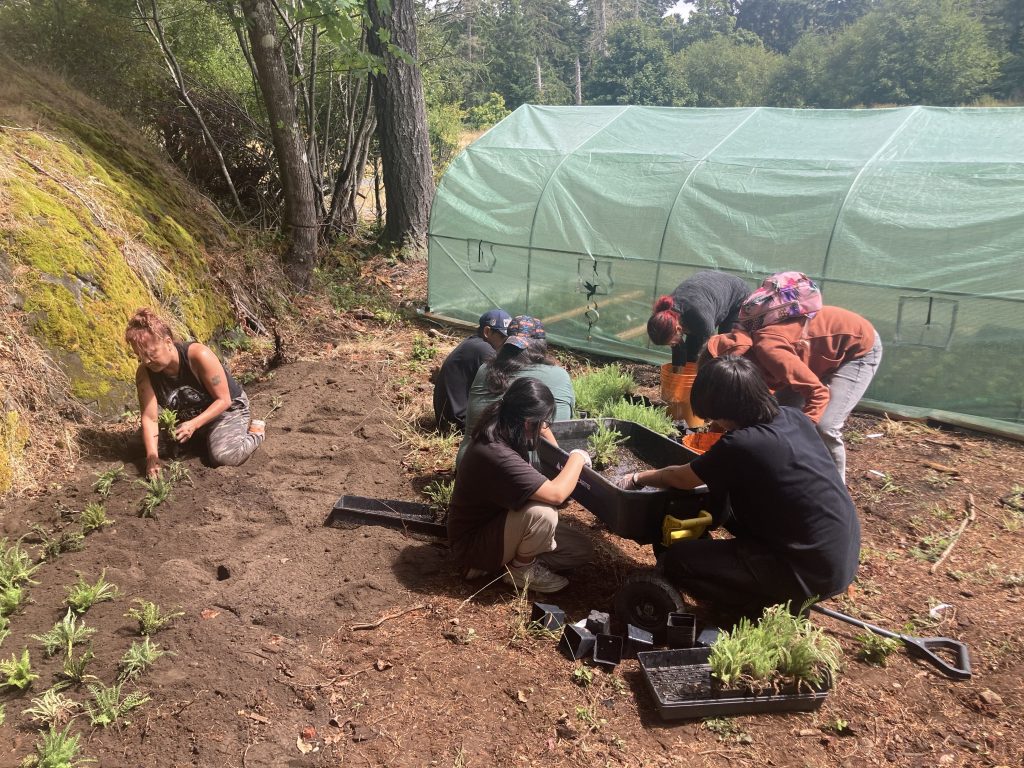
Day two of the workshop consisted of hauling in wheel barrows full of dirt, preparing rows, and planting the inside of one of the greenhouses. A local earthworks company brought in approximately 15 cubic yards of high quality gardening soil to be used for constructing rows and building up the organic matter in the more compact and clay based soil in the area. The youth naturally selected tasks and worked together. It was inspiring to see the camaraderie develop and the ease at which the group tackled the tasks, including moving heavy wheel barrows of dirt and working in tight spaces inside of the greenhouse.
Once the dirt was brought into the greenhouse and the rows were built the plants were taken out of the nursery containers and placed into a large bin of rooting hormone. The rooting hormone was made from the willow tree and the same rooting liquid that the participants learned how to make with Tsawout Elder, Earl Clayton Jr. in the first cohort. The youth let the roots of the medicinal plants sit in the liquid for 15-30 seconds and then passed the plant to the youth in charge of planting. This went on for some time until the entire greenhouse was fully planted with sea blush, prunella vulgars (self-heal), alumroot, salal, and wild strawberry with yarrow and Oregon grape planted in open air outside of the greenhouse. More dirt was then brought to the base of a beautiful and natural rock wall on the backside of the greenhouse where nearly 100 yarrow plants were put into the ground in a zone that resembled their natural habitat.
After all of the plants were put into the ground there was a feeling of satisfaction and accomplishment that could be felt within the group. The activity was practical hands on learning out on the land, like everything we do in IndigeMind, and the days work could be seen. It was tangible. Once mature and ready for harvest, Cristina Armstrong will lead IndigeMind cohorts in salve and balm making workshops using the medicinal plants from the greenhouse and traditional recipes from her family.
Food security is an essential part of Indigenous communities reclaiming their history, culture, and identity. Coté (2016) adds that on Vancouver Island, “the Nuu-chah-nulth-aht are actively engaging in decolonization and sustainable self-determination through reinstatement of authority over ha-huulhi (ancestral territory) and through the development of strategies and implementation of policies aimed at the sustainable production and consumption of traditional foods through an ecologically sound food system that honours sacred relationships to land, water, plants and all living things” (p. 11). With more Indigenous specific food security initiatives concentrated both on and off reserve Indigenous youth can learn traditional knowledge and become change makers in their communities.
References
Cidro, J., Adekunle, B., Peters, E., Martens, T. (2015). Beyond Food Security: Understanding Access to Cultural Food for Urban Indigenous People in Winnipeg as Indigenous Food Sovereignty. Canadian Journal of Urban Research, 24(1), 24-43. https://www.jstor.org/ stable/26195276
Coté, C. (2016). “Indigenizing” Food Sovereignty. Revitalizing Indigenous Food Practices and Ecological Knowledges in Canada and the United States. Humanities, 5(3), 57. https:// doi.org/10.3390/h5030057