A Conversation with Chris Jim

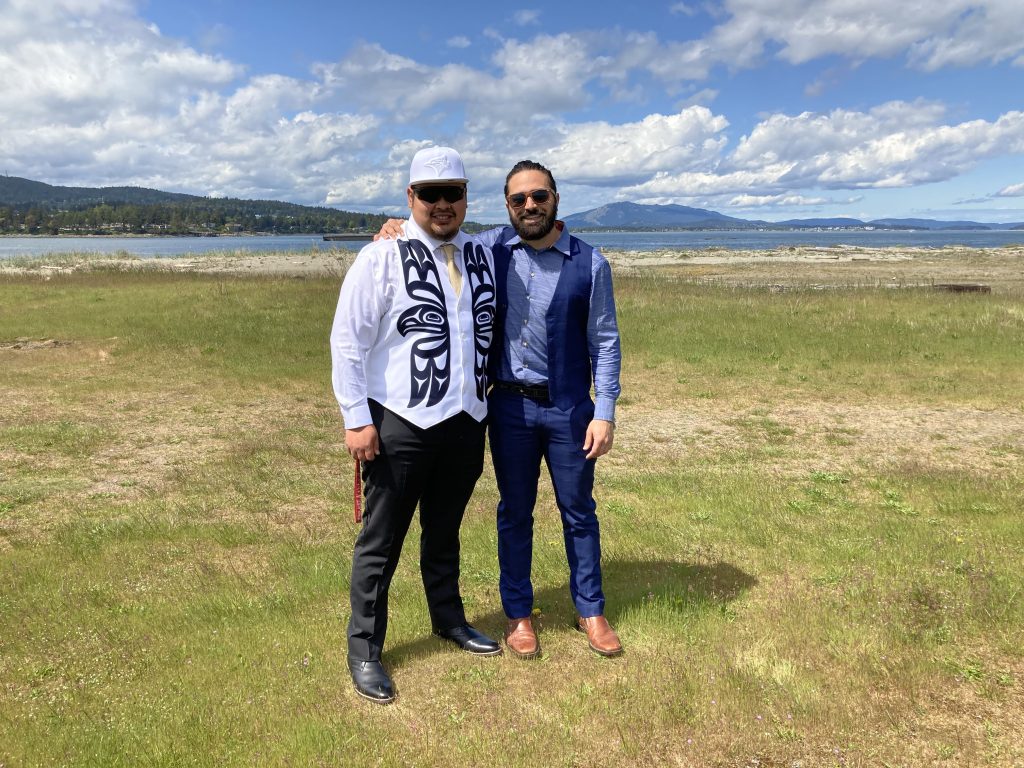
Chris and Tony at Chris’ wedding in May, 2021

CALS692 IndigeMind Podcast #1

In the first part of a mini-series podcast on the evolution of the IndigeMind Climate Action Program, Tony speaks with good friend and Co-Founder Chris Jim of the Tsawout Nation on Southern Vancouver Island. They speak about how the idea of IndigeMind came to be, why we need land-based programming for Indigenous youth, and the importance of Indigenous youth led climate action efforts as a path forward. Chris Jim is a leader in his community and a man who inherently embodies the most essential components of genuine, grounded, and culturally centered climate action leadership. Please enjoy our conversation below.

Harvesting From the Land

CALS692 Blog#5

There is nothing quite like harvesting food from the land. It is ingrained in all of us. Regardless of where we are from all of our ancestors learned to live and subsist off of the land that surrounded them. Communities developed deep relationships with the ecological systems they lived within as it was needed for survival for either consumption or trade. Local Indigenous communities on Southern Vancouver Island lived off of the diversity of food provided by the abundance of the coastline from shellfish to salmon and herring to octopus, sea cucumber, and urchin. The land provided and communities nurtured their relationship with the natural environment that surrounded them. 

Unfortunately, this relationship has changed over time. Historically, “Indigenous knowledge systems and teachings have been integral to preserving Indigenous cultures and traditions, [however], colonization has negatively impacted Indigenous cultures, resulting in a decrease in traditional activities” (Ahmed et al., 2022, p. 1). Due to a variety of factors, communities have lost the ability to fend for themselves. Colonization has stripped Indigenous knowledge of traditional food growing, hunting, and fishing practices. As noted by Ahmed et al. (2023), “traditional harvesting practices which are deeply rooted in familial and social systems of Indigenous communities continue to be negatively impacted by colonization and colonial assimilative policies…[and] this disruption has contributed to the growing issue of food insecurity amongst Indigenous peoples in Canada” (p. 1). In addition to the impacts of colonialism, marine habitats and specie abundance has been dramatically impacted by both commercial overfishing and a changing climate. The abundance that was once known on the coastline is almost non-existent. Herring populations have significantly declined and salmon numbers are incredibly low while restrictions are imposted annually on non-Indigenous fisherman by the Department of Fisheries and Oceans (DFO) to try and allow the populations to rebound. Although, we all know that they will never fully rebound given the warmer temperatures and the increased difficulty to migrate back to spawning grounds. A good friend of mine from the Tla’amin nation in what is now known as Powell River shared with me recently that his grandfather shared that when he was young he used to be able to “walk on the backs of salmon there were so many”. This will never be the case again.

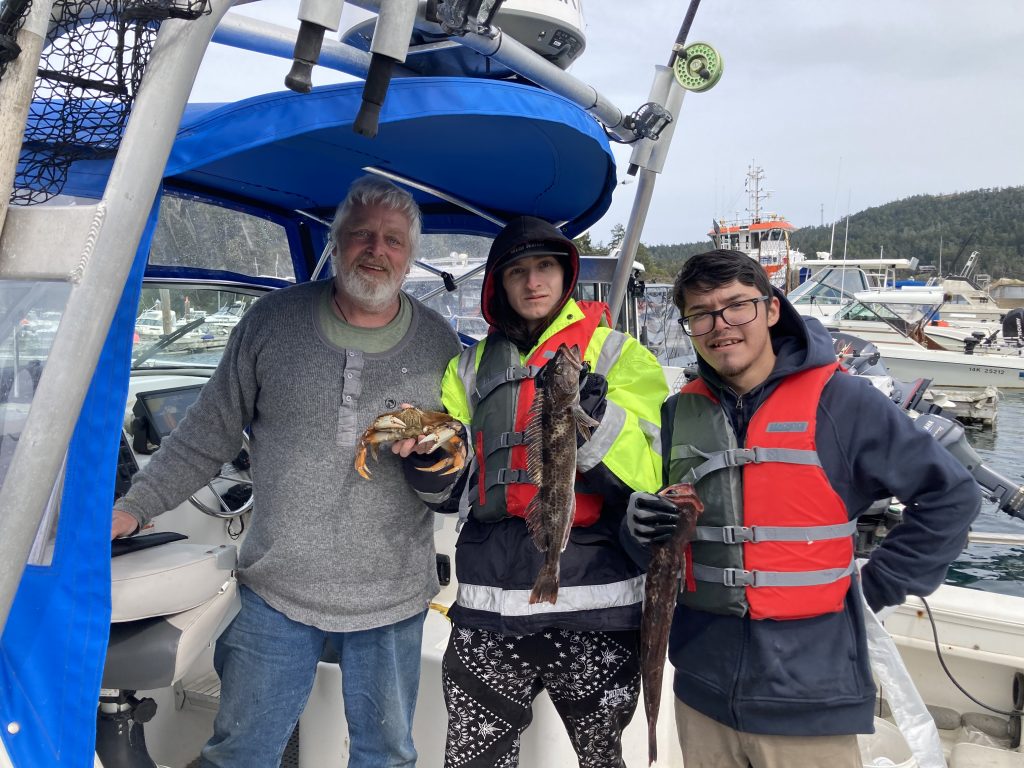
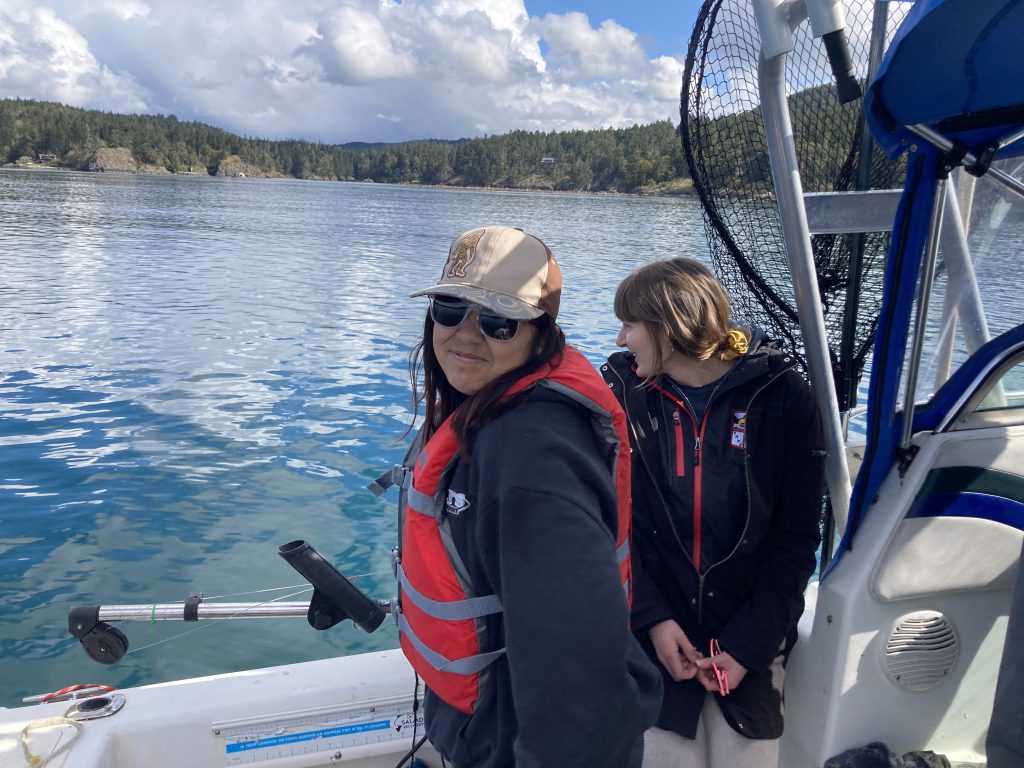
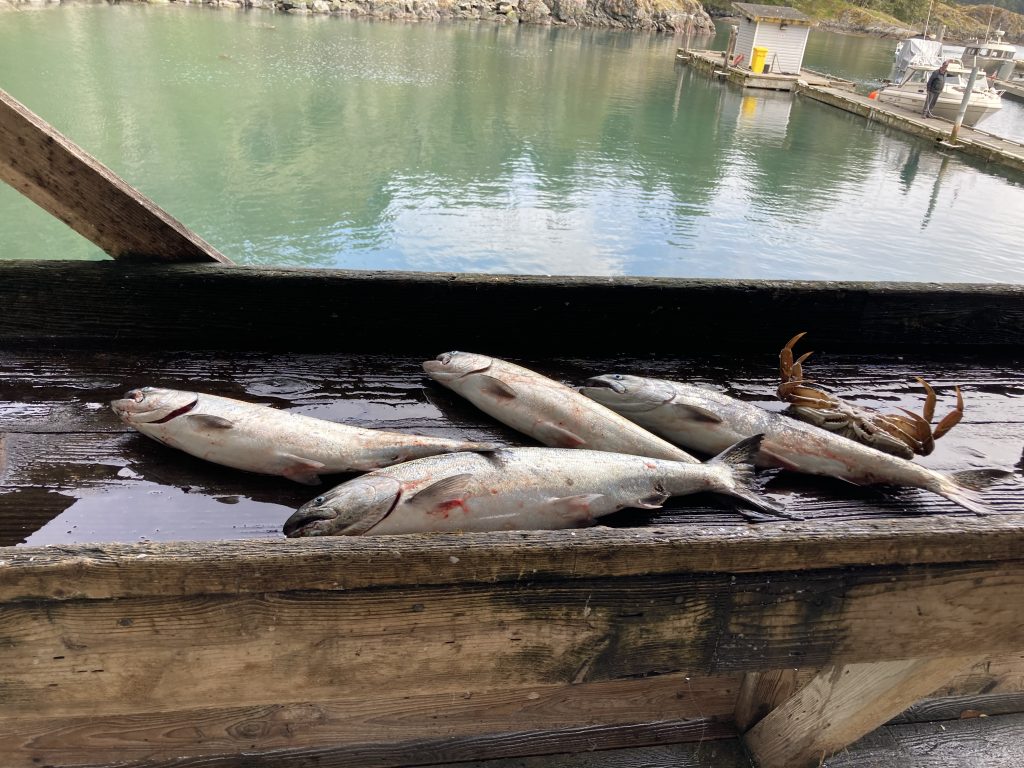
In order to teach and show our youth how to harvest from the land, my IndigeMind Climate Action program implemented a three part fishing, harvesting, and learning of local marine biology component to our first cohort. Each fishing day, a third of our cohort was taken out of the Sc’ianew Marina with an underwater camera to learn how coastal ecology has shifted over time due to climate change and oil spills in the region. In addition, participants learned to both pull crab traps and troll for salmon and lingcod. The experience each day was nothing short of remarkable. Each youth participant glowed when they reeled in a salmon or held a crab for the first time. Youth whom have been dealt a rough hand in life opened up and smiled like I had never seen them smile. It was education that was beneficial to them. An experience that they could leave with a memory and knowledge that they don’t receive in their classrooms within the school district. For me, the experience was yet another reminder of the importance of what we are doing. Not only generating positive experiences for our youth through land based programming but opening up a pathway for them to explore further their interests in climate related professions and opportunities while reconnecting with culture and traditional practices. 

Resources 

Ahmed, F., Liberda, E. N., Solomon, A. J., Davey, R. J., Sutherland, B., & Leonard, T. (2022). Indigenous Land-Based Approaches to Well-Being: The Amisk (Beaver) Harvesting Program in Subarctic Ontario, Canada. 19(12), 1-39. https://doi.org/ 10.3390/ijerph19127335

Ahmed, F., Liberda, E. N., Solomon, A. J., Davey, R. J., Sutherland, B., & Leonard, T. (2023) Indigenous Land-Based Approaches to Well-Being: The Niska (Goose) Harvesting Program in Subarctic Ontario, Canada.  20(4), 1-29.  https://doi.org/10.3390ijerph20043686

A Historical Reclamation

CALS692 Blog#4 

The reclamation of stollen land is an integral part of reconciliation in Canada. Furthermore, “Indigenous peoples…are calling for ‘land back’ as they seek to address the ongoing structures of colonialism and revitalize self-determining nations” (Nightingale & Richmond, 2022, p. 12). While it can often be hard to see examples of true reconciliation in action when land is reclaimed to its rightful owner it becomes tangible proof that good efforts are being put forward. This is also essential in increasing Indigenous engagement in the climate action movement as restoration work can begin along with the fostering of Indigenous youth climate action leaders on land that has cultural and traditional significance. 

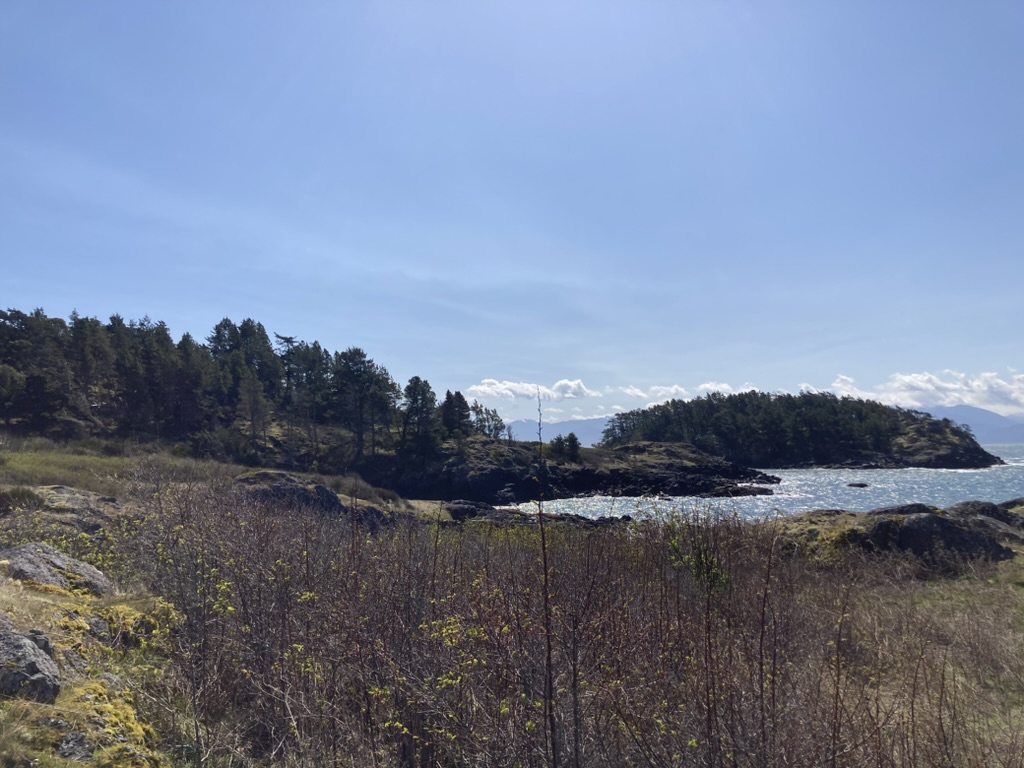
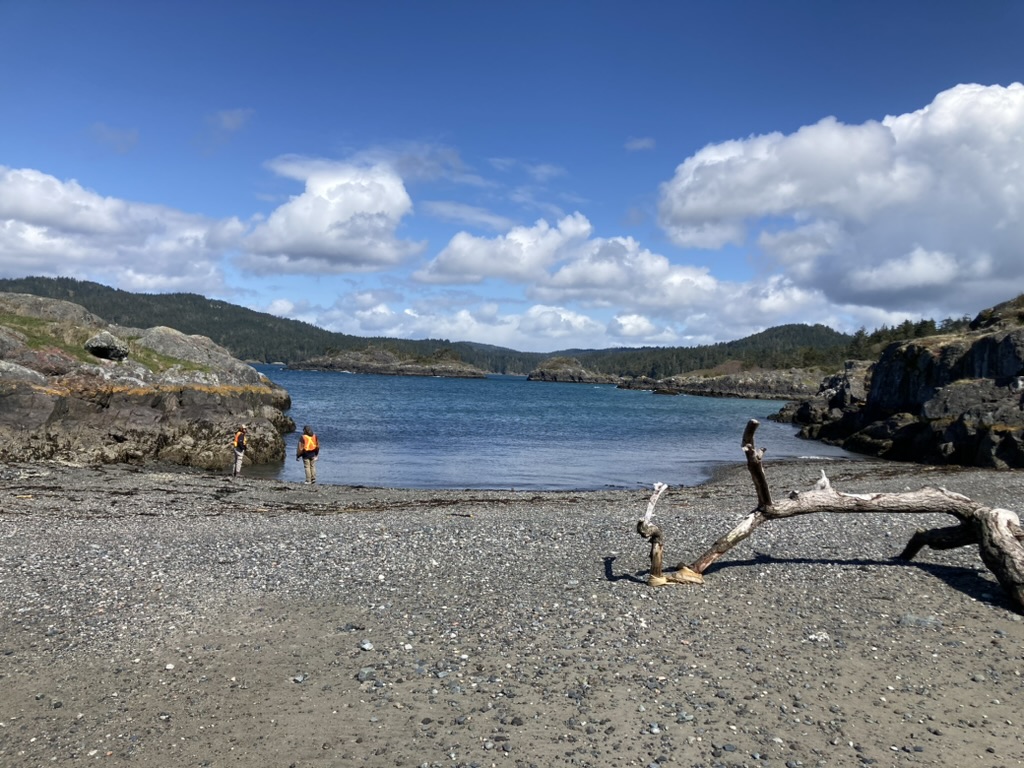
The Sc’ianew nation, located in what is now known as Beecher Bay, BC, shares the peninsula with the Department of National Defense (DND). The reserve, like many in Canada and the US, was given a small portion of land. In the case of the Sc’ianew Nation the DND took the majority of accessible of usable land in the nearby vicinity. In the early 2000s, the Sc’ianew Nation reclaimed a large part of unused DND land. DND claims that it was ‘gifted back’ to the nation but the land always belonged to Sc’ianew and the Nation is proud to of reclaimed it. Not only is it nearly 30 acres directly on the coast with a mix of forest and coastal vegetation, the land is also culturally sensitive and is a burial site to Sc’ianew members dating back hundreds of years. It has become a historical site to the Nation and archeologists now come to study the cairns that can be found along the coastline and tucked within the trees. It is quite frankly an incredible place to step foot in and one can only access it with direct approval from Chief and Council of the Sc’ianew Nation. The IndigeMind program was lucky enough to be given that approval to begin a long term eco-cultural restoration project to remove all invasive species in the area. 

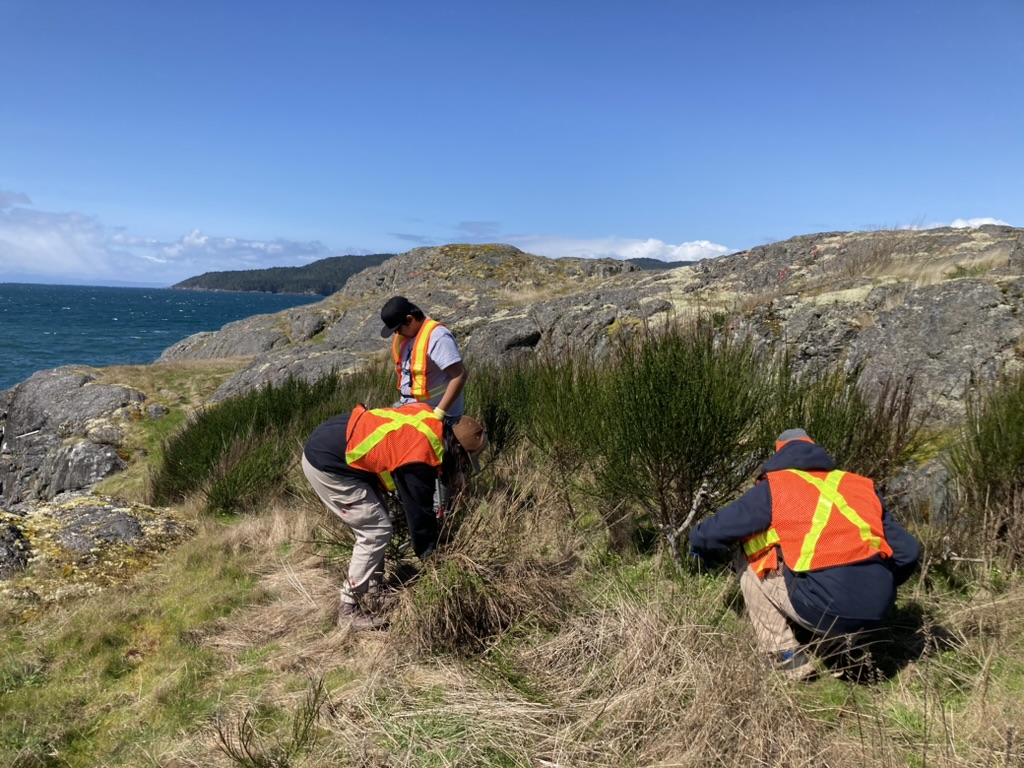
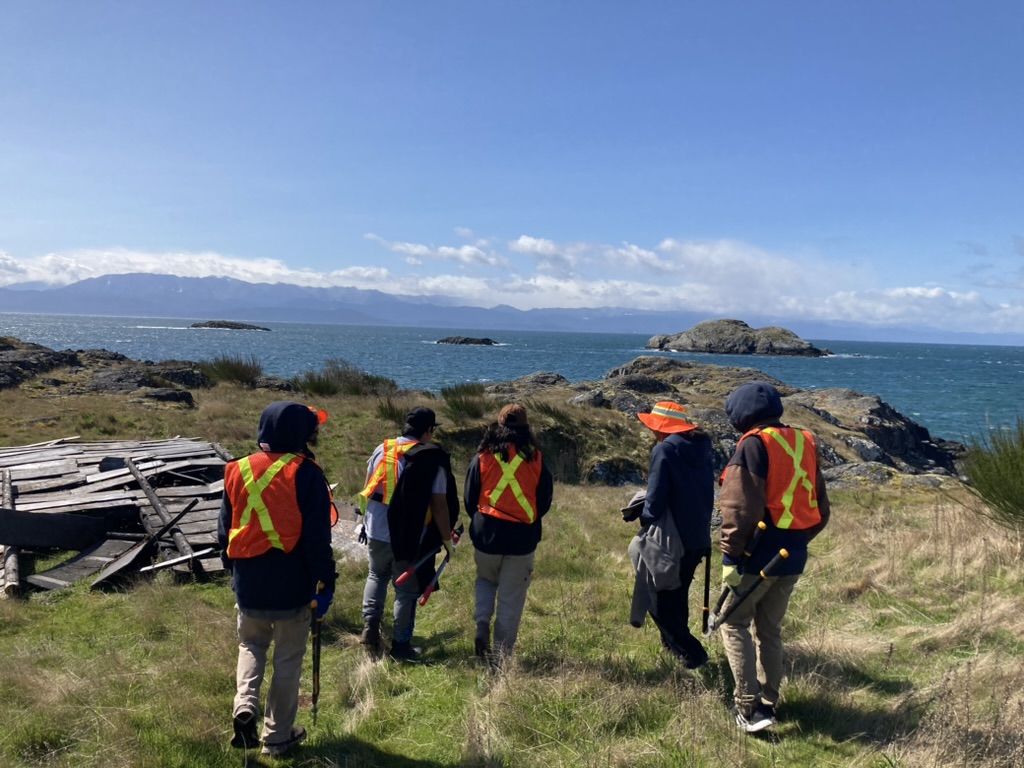
On April 11th, myself along with 8 participants of the IndigeMind inaugural cohort and Christina Armstrong of the Sc’ianew Nation headed out to what is now known as ‘Number 2’. In its process of reclamation, the Nation decided to call the land ‘Number 2’ to represent its second reserve. We met with an organization called the Habitat Acquisition Trust. The trust “is a regional land trust that conserves nature on south Vancouver Island…envision[ing] a future where the full array of natural habitats…are healthy and conserved” (hat.bc.ca, n.d.). HAT provided our cohort with equipment and training to begin our project removing scotch broom and Himalayan blackberry from the coastline. This marked the beginning to what will be an ongoing restoration project that the next two IndigeMind cohorts will be involved in. 

We spent four hours removing broom and piling it in an area where it could easily be removed and burned. During our break, Christina shared stories about how her people harvested off of the land and lived in harmony with the natural environment. The land was spiritual. I could feel it in the air. Christina spoke much of her ancestors and the duty the young ones have to be climate leaders to honor their ancestors in a good way. That resonated with me deeply. That we have an obligation not only for those yet to come but to those who came before us and paved the way. It made me think of climate action in a different way. Being a climate action leader is not only for the present and the future of our planet but it is also for the past. To remember, honor, and uphold the value of treating the land like a member of our family and re-learning to respect her as we hope to be respected ourselves. 

References

Nightingale, E., & Richmond, C. (2022). Reclaiming Land, Identity and Mental Wellness in Biigtigong Nishnaabeg Territory. International Journal of Environmental Research and Public Health19(12), 7285. https://doi.org/10.3390/ijerph19127285

Propagation and Willow Tea Rooting Hormone Workshop

CALS692 Blog#3

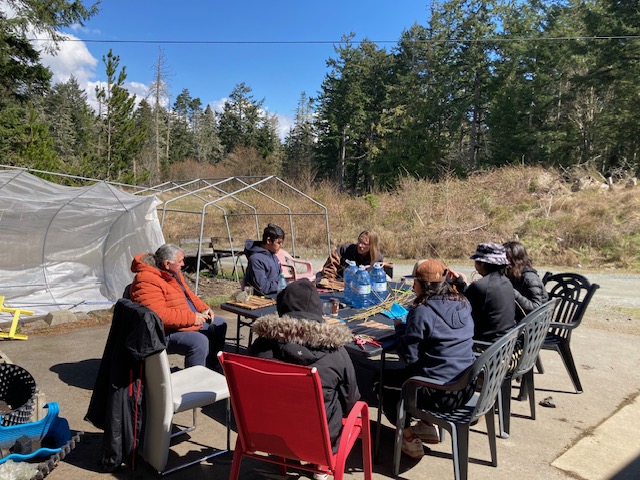
Today, Tsawout Elder and knowledge keeper, Earl Clayton Jr., ran a workshop for IndigeMind participants teaching them how to propagate cuttings from native plants and how to make a traditional rooting liquid. The workshop ran out of our ‘home base,’ which is now known to participants as the ‘shop’ in Beecher Bay on the Sc’ianew reserve. The ‘shop’ is a beautiful open space with native and medicinal plants in every corner. The shop began as a meeting space for youth from the Sc’ianew nation to come and get involved in ecological restoration work on the reserve. In the past few years the area around the shop has been completely restored to its natural habitat. 

We start each day sitting in circle. Not only is this culturally appropriate and respectful but also allows space for our youth to introduce themselves to the presenter and helps to create an environment where our youth voices can be heard. Speaking up in a public setting in front of community is a starting point on the journey of climate action leadership development that IndigeMind strives to foster and encourage. 

Earl Claxton began by telling our participants stories of his youth and changes in the natural environment that he has observed coming from a family of fisherman and harvesters of the land. The stories provide context for the youth prior to engaging in that days activities. They are “stories and metaphors grounded in local culture and language…and valorize collective identity” (Kirmayer et al., 2011, p. 84). After discussion about the importance of ecological restoration and the role of Native plants in restoring harmony to the landscape we took off on a nature walk. Earl taught participants how to identify native plant species including salal, ocean spray, alder, white willow, salmon berry, and oregon grape to name a few. He then taught the group how to properly take a cutting of a branch to propagate. Each youth was encouraged to pick a native species in the area and each went around to take a cutting to bring back to the shop. 

When the group returned to the shop, Earl demonstrated how to shave off an adequate amount of the stems epidermal layer to encourage rooting once placed into soil. Five gallon containers with mixed compost and soil where prepared so participants could take their plants home after the days completion.

Next, Earl took the group back out on a walk to show them how to harvest willow tree branches to make a traditional rooting hormone used to help propagated cuttings ‘catch’ and root in new soil. Participants each took rocks and smashed pieces of willow branches and placed the pieces into small mason jars they were given to bring home. The jars were then filled with water that the youth were instructed to leave out in sunshine for 2-3 days to allow the rooting hormone to be released. As an experiment, participants were encouraged to use the hormone on their propagated cutting to see if it would help expedite the rooting process. 

The workshop, like every program day, ended in circle where youth were encouraged to share one thing that they were grateful for. As per protocol, Elder Earl Clayton Jr., was thanked by myself, as a representative of the Victoria Native Friendship Center, and the youth for his willingness to share his Traditional Ecological Knowledge, stories, and time and was gifted prior to his departure.

As IndigeMind continues to unfold, I am reminded of the importance of land based programming and traditional ecological knowledge not only as an essential component of climate action but as a tool to develop the next generation of Indigenous youth climate action leaders. Wildcat et al. (2014) remind us that “land based education… [should] reconnect Indigenous peoples to land and the social relations, knowledges, and languages that arise from the land” (p. I). IndigeMind’s purpose is to foster an environment for Indigenous youth leaders to learn how to carry the teachings of their ancestors and elders in order to restore our damaged ecological systems and bring back connection to cultural land based practices. 

References 

Kirmayer, L. J., Dandeneau, S., Marshall, E., Phillips, M. K., & Williamson, K. J. (2011). Rethinking Resilience from Indigenous Perspectives. The Canadian Journal of Psychiatry56(2), 84–91. https://doi.org/10.1177/070674371105600203

Wildcat, M., McDonald, M., Irlbacher-Fox, S., Coulthard, G. (2014). Learning from the land: Indigenous land based pedagogy and decolonization. Decolonization: Indigeneity, Education, and Society, 3(3), I-XV.