IndigeMind – A Reflective Journey

CALS692 Final Blog

When I set out to start and create the IndigeMind climate action program I didn’t know what to expect. I was full of passion and a desire to instil change in my community, just as RRU encourages us to be change-makers and visionaries. I took that notion very literally. In the span of the past year I have started a climate action program, department, and mapped out a vision for a future where Indigenous youth leaders are at the forefront of the climate action movement. 

IndigeMind adheres to the Truth and Reconciliation’s Calls to Action of “establish[ing]…community based youth organizations that deliver programs on reconciliation and [climate action] (TRC Calls to Action, 2015, p. 8). I focused a lot on the idea of reconciliation in action while bringing this vision to life. As an ally, I wanted to do what so much of our western society has yet to figure out, that often taking a step back, listening, and creating safe space can be the most powerful action you can take. IndigeMind has become just this. It is a place for reconnection, growth, exploration, and most importantly, it allows for a safety net that our Indigenous youth so often do not have the luxury of experiencing. The land is our very best teacher and if we listen, calmly and intentionally, we can begin to observe the intricacies of its beauty that need more attention and care. Land based learning is essential in both reconciliatory efforts but also in nurturing and raising our next generation of climate leaders. Fast et al. (2021) note that “many urban Indigenous youth are living experiences of disconnection from their communities due to colonialism and the barriers it presents to reconnection…The benefits of land-based learning range from centring Indigeneity and confronting settler colonial forms of education to regenerating intergenerational teachings and increasing the spiritual and cultural wellbeing of participants” (p. 120). 

Prior to IndigeMind, I felt an obligation to do right by the land and carve out a life where I could have a positive impact. When I was introduced to MACAL it came at the right time, as I felt who I am as a person was reflected in the program itself. IndigeMind is also an extension of who I am and what I believe in with every aspect of its existence precisely designed in line with my values and belief system. Dr. Henrietta Mann eloquently adds that “we have spiritual responsibilities to renew the Earth and we do this through our ceremonies so that our Mother, the Earth, can continue to support us. Mutuality and respect are part of our tradition. Somewhere along the way…you have to give back to the land” (Ritchie, 2020, pp. 55-56). Although I am not of Indigenous ancestry, my family worked the land for their living for generations and I was raised to respect the land just as I would respect any other living entity. Mother Earth breathes life into all of us and without her none of us exist. It is up to us to care for her, as climate change continues to rattle the very fabric of our existence and, although, my impact may be small at least I am living and breathing climate action leadership. 

IndigeMind came about as a direct response to a lack of land based programming and cultural safety for Indigenous youth in our school systems. As a counsellor in Victoria’s School District 61, I observed this first hand working solely with the Indigenous population and I eventually asked myself what really needs to change? Youth need to be out on the land. It’s that simple. Additionally, the climate field is still too rooted in western ideology and science. Indigenous peoples have stewarded the lands for thousands of years and did so in harmony and, what we now would call, a regenerative approach. There was no exploitation or mass extraction of resources. That came when the white man arrived and, unfortunately, that same mentality has led us to where we are today-a wounded natural world out of equilibrium.

The need for educational curriculum that is focused in Indigenous knowledge, taught by knowledge keepers, and out on the land is the most direct way to create engaging and transformative spaces for our youth. So I asked myself, what is needed to increase Indigenous youth engagement in the climate action space? The answer quickly became to “deliver educational programming in [both] Western Environmental Science and Traditional Ecological Knowledge…to youth of first nation ancestry, in a culturally relevant context…provid[ing] an opportunity for the students to [be] expose[d]…to the choices available to them upon [program] completion” (Soaring Eagle Project, 2001, p. 3). 

IndigeMind is not just focused on getting youth back out on the land. We believe in preparing youth with the necessary skills to enter into the work force in climate related jobs with the overall goal of increasing indigenous youth voice in the climate sector. In the process, the reclamation of culture and traditional ways of knowing can occur. So many of the youth I work with are disconnected from their home communities and traditional ways of life. However, land-based programming can become the pathway to reconnection. Simpson (2002) adds that “founding Indigenous Environmental Education programs within Indigenous Knowledge systems is one of the most important ways of strengthening our cultures, promoting environmental protection, the realization of sustainable local economies, and supporting students through healing and decolonizing” (pp.16-17). 

The IndigeMind program has become a very prominent part of my life. Started in partnership with my studies at RRU, I have learned so much about myself, how to lead in this space, and how true allyship looks. It is deeply important to me that I lead in a way that is collective and upholding of the strengths of those I am fortunate enough to work with and walk along side of. Kluttz et al. (2019) remind us that “co-existing and, through that, co-resisting requires compassion. Compassion for oneself, as an ally attempting to decolonise oneself, and compassion for Indigenous peoples… An ally’s…personal decolonization journey should include a combination of conscience, values, and a commitment to staying open to constant self-evaluation and self-correction, without ego” (pp. 63-64).

The youth are our future. We put our hope into each of them to continue the legacies that we, as their parents, mentors, and teachers leave behind. As a father who two young daughters, and a third on the way, I am reminded of my profound hope that my girls can experience the beauties of the natural world in the same ways that I have. Although, this may seem out of reach there is the opportunity to re-teach respect for the land and those whom have come before us. That life itself requires cohesion, collaboration, friendship, and unity. We rely on one another for so many things just as the land does. And it is time to put the needs of our planet at the forefront with the voice of leadership coming from our youth. 

Onwards. Thank you and may the journey continue just as it is meant to. 

Resources

Fast, E., Lefebvre, M., Reid, C., Deer, W. B., Swiftwolfe, D., Clark, M., Boldo, V., Mackie, J., & Mackie, R. (2021). Restoring Our Roots: Land-Based Community by and for Indigenous Youth. International Journal of Indigenous Health, 16(2). https://doi.org/10.32799/ijih.v16i2.33932 

Kluttz, J., Walker, J., & Walter, P. (2019). Unsettling allyship, unlearning and learning towards decolonising solidarity. Studies in the Education of Adults, 52(1), 49–66. https://doi.org/10.1080/02660830.2019.1654591 

Ritchie, J. (2020). Movement from the margins to global recognition: climate change activism by young people and in particular indigenous youth. International Studies in Sociology of Education, 30(1-2), 53–72.

Simpson, L. (2002). Indigenous Environmental Education for Cultural Survival. Canadian Journal of Environmental Education, 7(1), 13-25. https://cjee.lakeheadu.ca/article/view/271 

Soaring Eagle Project. 2001. Educating aboriginal youth using traditional ecological knowledge and western environmental science. https://web.archive.org/web/20080828010256/http://www.manitobamodelforest.net/pub lications/ombaashid.PDF 

Truth and Reconciliation Commission of Canada. (2015). Truth and Reconciliation

Commission of Canada: Calls to Action. https://publications.gc.ca/collections
/collection_2015/trc/IR4-8-2015-eng.pdf

The IndigeMind Departmental Merger 

CALS692 Blog#10

The Victoria Native Friendship Centre is currently under a massive organizational restructuring. The purpose of the restructure is to streamline services and merge departments to improve overall supports for Indigenous folks both on and off reserve. It is a transition that the organization has wanted to do for some time now. However, “the challenge [of organizational change]…has become even more significant…as current change management best practices are increasingly inadequate to deal with the accelerated pace of change” (Kerber & Buono, 2018, p. 56). There is much change on the horizon but I do believe that, overall, it will benefit the growth of programs like IndigeMind allowing for additional support and collaboration from within the organization. 

IndigeMind is its own department at the VNFC along with being its own climate action program. The department still consists of one person, myself, and the current merge will allow me to collaborate more with existing staff at the organization and, most importantly, utilize the services of other staff members whose tasks will include helping me brand and promote the program within Greater Victoria. Although I am excited to be getting some support I am also hesitant about too much promotion for a program that, in many ways, needs to stay small for the time being. Until I have secured more grant funding to hire part time or permanent IndigeMind staff any and all IndigeMind related tasks fall to me, as I am the creative mind behind the program, the facilitator, the promoter, the marketer, the administrator, and the curator. I currently operate the duties and roles of so many job titles and there is only so much capacity I have. Additionally, if we promote too much how would I be able to manage interest? I don’t want to have a waitlist of 50 kids like every other youth specific service on the Island. I firmly believe that once IndigeMind is fully promoted we will need to have multiple cohorts running simultaneously. Up until this point, much of our promotion and recruitment has come from word of mouth and my extensive network from years of working for the VNFC. Things take time to grow and develop and there is no need to rush it. My goal is that IndigeMind is around for a very long time, whether it is run solely by me or not. It is for the youth and our future leaders and rushing a new program can, unfortunately, lead to its demise. 

The merger of departments will allow for me to run the IndigeMind program during the day out of our youth drop in space at the Friendship Center. I am working on scheduling local restoration work that will allow for more accessibility within the program as opposed to necessary vehicle transportation. Youth interested in getting supports or services from the Youth Department will have their first contact point be IndigeMind. This will help me with recruitment and also allow youth who do not have support workers to still get connected to the Friendship Centre through the immense benefits of land based programming. It is a change that will be positive for IndigeMind but may take time to come to fruition just as any change does. Change can be difficult but it is necessary for growth. Russ (2008) adds that “organizations do not change through automation…rather, change is implemented and sustained through human collaboration” (pp. 199-200). May the journey continue. Onwards. 

References

Kerber, K., & Buono, A. (2018). The rhythm of change leadership. Organization Development Journal, 36(3), 55-72.

Russ, T. L. (2008). Communicating Change: A Review and Critical Analysis of Programmatic and Participatory Implementation Approaches. Journal of Change Management8(3-4), 199–211. https://doi.org/10.1080/14697010802594604 

A Conversation with Kyle Carter

CALS692 IndigeMind Podcast #5

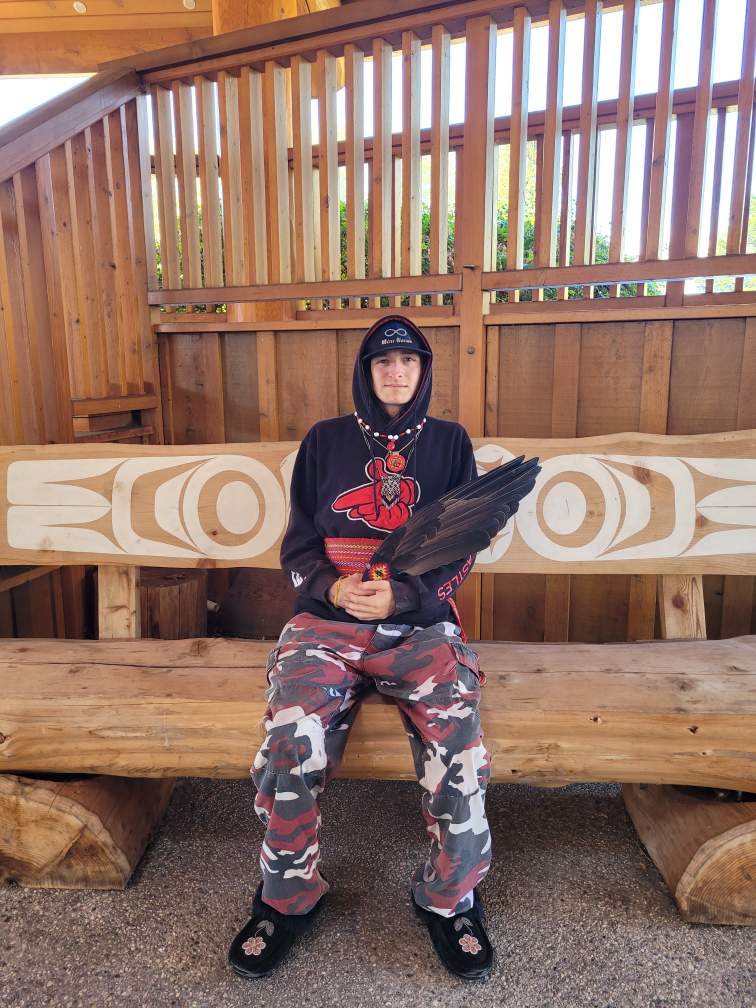
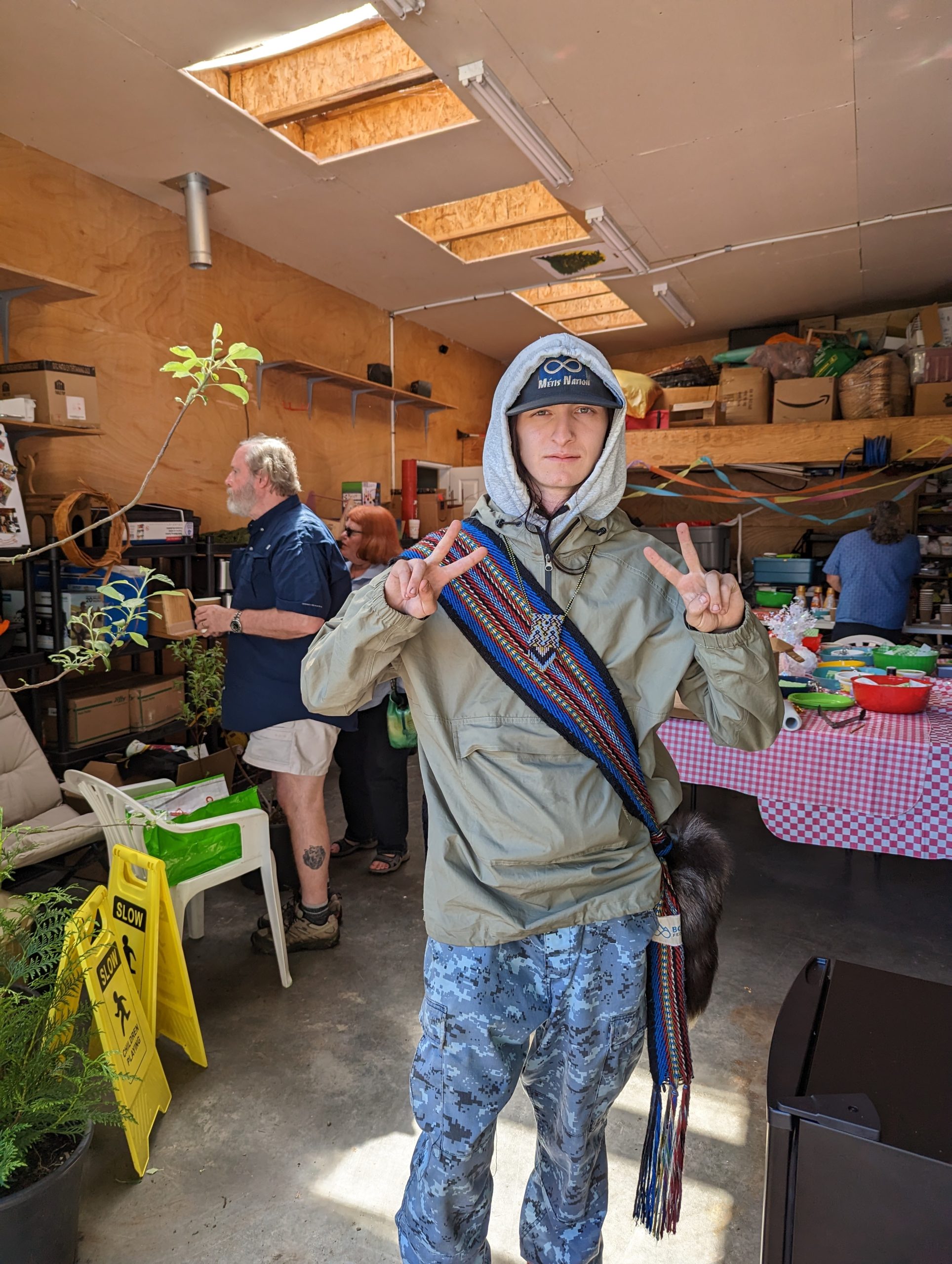
In the last episode of the IndigeMind Podcast series, I spoke with Kyle Carter (“Spider Red Stone Boy”) about his experience in the IndigeMind program, his belief system, and the importance of culture in his life. Kyle is both Métis and Cree with family ties to the Prairies and, specifically, rural Saskatchewan. He is a proud descendent of Louis Riel and an advocate for his people, the value of cultural teachings, and land based knowledge.

Kyle is a young man whom we call a knowledge keeper in training. Over the years he has learned from elders both in the Friendship Centre community and at ceremonial gatherings, such as Sundance, just outside of Merritt, BC. He has a natural ability to teach and share his immense knowledge of medicinal teas and the uses of many medicinal plants. Our hope is to soon hire Kyle as our first Youth Climate Ambassador to honour him as a youth leader and hold him up for his strengths. It has been a privilege to walk with Kyle over the years, witness his growth, and admire his transformation into a strong Indigenous climate leader.

A Conversation with Logan Ballegeer

CALS692 IndigeMind Podcast #4

Today, I had the honour of speaking with one of our first graduates of the IndigeMind Climate Action Program, Logan Ballegeer. Logan is incredibly passionate about watershed conservation efforts and, specifically, the integration and need for more Indigenous knowledge systems in the Climate Action movement. He will be moving to Powell River at the end of September and plans to enrol in the Ocean Bridge program with Ocean Wise. The program empowers young leaders to take action for ocean conservation and develop their own project centred around their specific interests and passions.

I look forward to mentoring Logan and following his journey as he continues to become a climate leader in his community. He has immense knowledge and so much to share. I am proud of how far he has come (I have known him now for five years) and I have nothing but optimism and excitement about where the next chapter of his leadership journey will take him.

IndigeMind Meets Youth to Sea Program 

CALS692 Blog#9

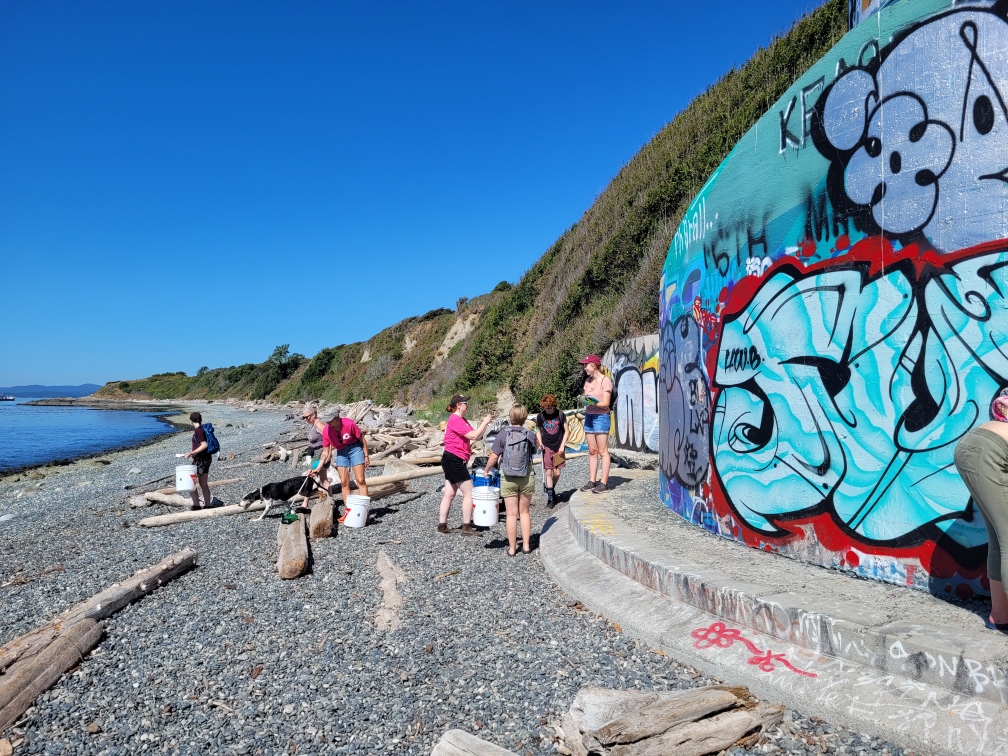
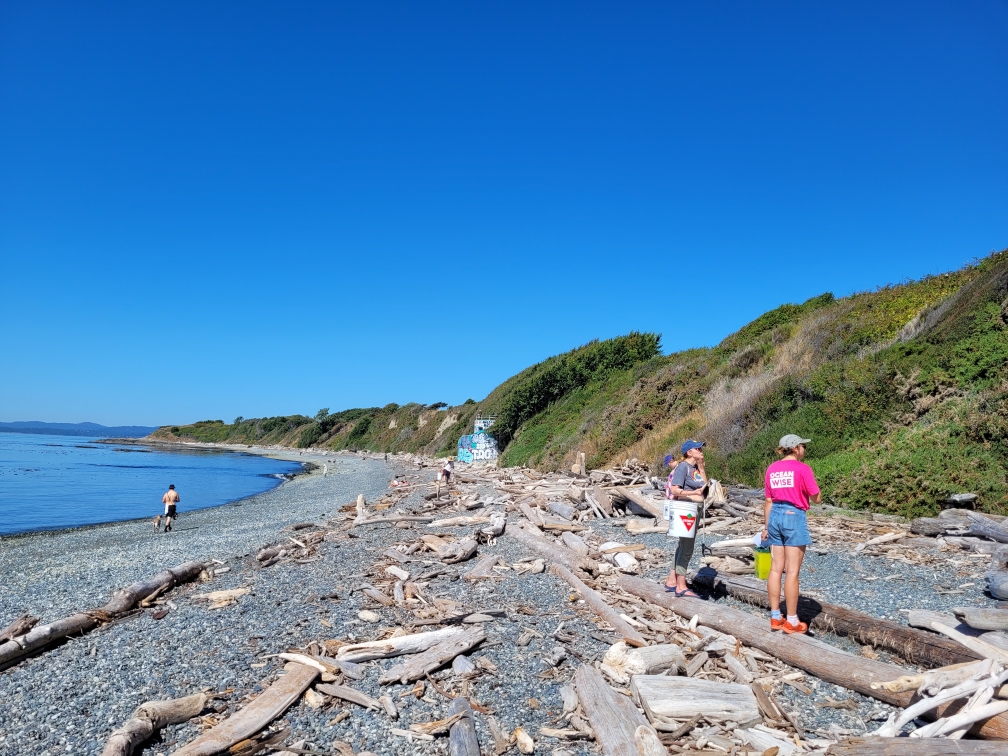
Today, the IndigeMind Climate Action program had its first joint beach clean up with the Youth to Sea program from Ocean Wise. Youth to Sea is a 10-month youth centered program (ages 15-18) aimed at helping youth gain the practical skills to become stewards of our oceans and change makers in their communities. Although the program is not specific to Indigenous youth, it is learning about its role in reconciliation and how to be an ally to local nations here on Vancouver Island. The cohort that we met up with was the inaugural Victoria Youth to Sea cohort. The program has been running for many years but in cities across Canada such as Vancouver, Halifax, and Montreal. 

Caring for our oceans is very in line with IndigeMind and our vision of fostering the next generation of Indigenous Youth Climate Action leaders. The “oceans play a key role in climate regulation especially in part buffering the effects of increasing levels of greenhouse gages in the atmosphere and rising global temperatures” (Reid et al., 2009, p. 1). As our ocean temperatures warm and the marine ecosystems continue to dramatically shift, we are confronted with the pressing reality that a shifting climate impacts our waters, millions of aquatic species, our food supply, and coastal communities around the world. In addition to over fishing and the impacts of oil spills, our oceans are suffering other forms of pollution and human waste products can be found on every beach. As noted by Jorgensen et al (2021) “marine litter, the majority of which is plastic, is one of the most pressing global environmental challenges impacting the planet [and] one way coastal communities respond to this challenge is through the environmental stewardship practice of volunteer beach cleanups” (p. 153). 

We decided it was time to take it upon ourselves to start a monthly beach cleanup in collaboration with other youth climate focused groups on Vancouver Island. Although we couldn’t this time, our plan through IndigeMind is to focus our efforts on local reserve beaches where there is visibly more trash than off reserve. Although the need is greater on reserve beaches for regular cleanups gaining approval to do so comes with more unfortunate hurdles. My initial hope was to go to the beaches of one of two local Nations on Southern Vancouver Island, the Tsawout or Tsartlip Nations, whom we work with in the IndigeMind program, and do a community clean up. However, I was reminded of the politics on reserve and the understanding that both relationships and projects take time to unfold and come to fruition. In order to plan a beach clean I needed to get approval from Chief and Council which I could not obtain given our limited time frame. My intention is to focus future IndigeMind beach clean ups only on reserve and invite ally youth groups and climate organizations to join as an active expression of reconciliation. 

All this said, our day on Dallas road with Youth to Sea was a huge success. The beach was quite clean to begin with and the city clearly invests money into one of its most tourist heavy locations. Problematic from the standpoint of seeing the city also invest in initiatives that centre around relationship building and reconciliation with local Nations. However, an opportunity for programs like IndigeMind to bridge that gap. 

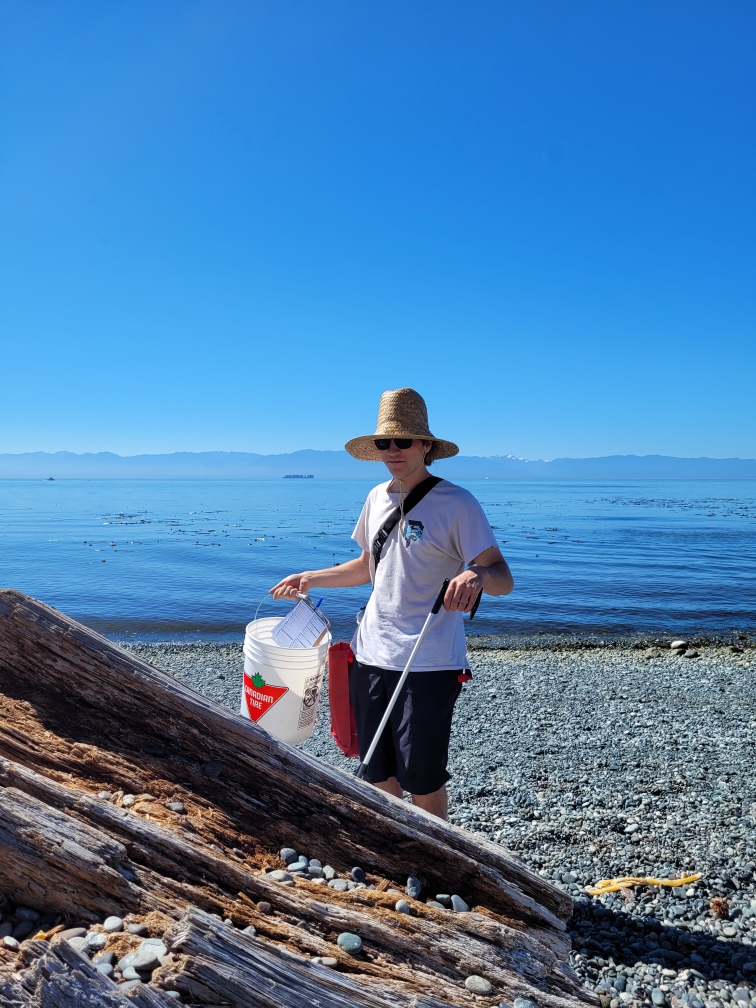
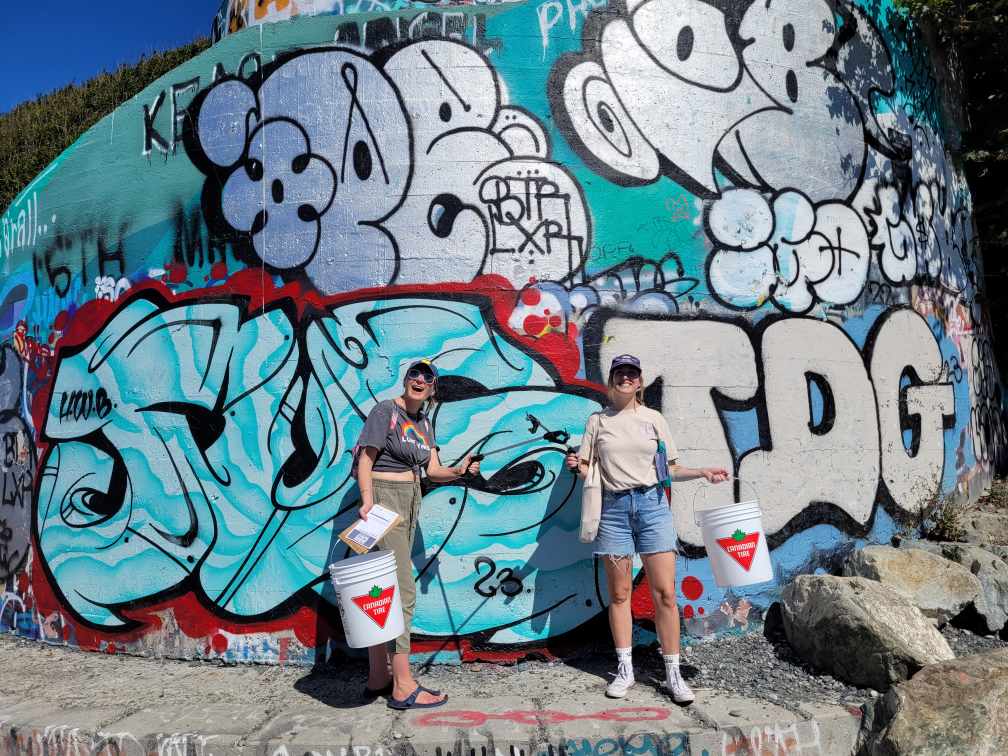
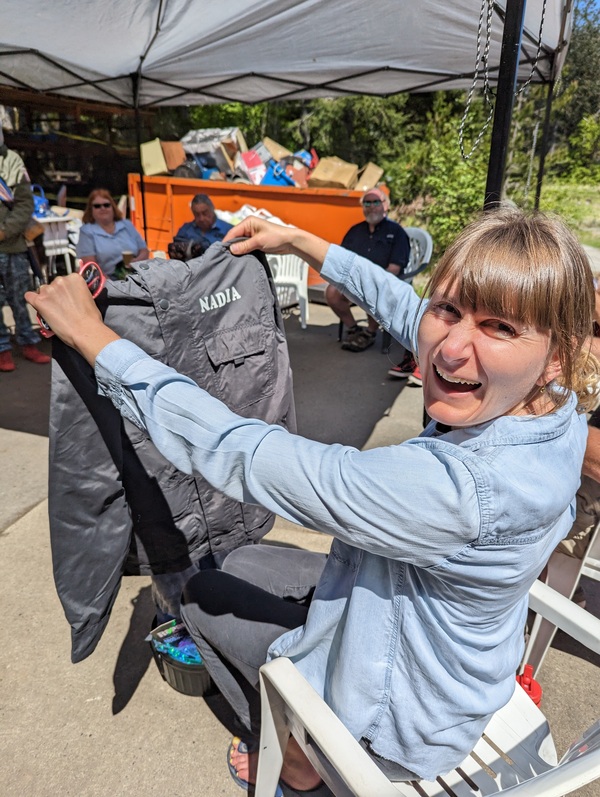
Both groups met at Spiral beach on Dallas road at 10:30. Nadia Salmaniw, co-founder of IndigeMind, led us in a grounding and land acknowledgement, and then we headed to the beach to begin our clean. Youth to Sea graciously provided us with pickers, buckets, and data sheets to track types of trash that we found for a larger data collection done by Ocean Wise. We walked the beach for 2 hours and then gathered for the last hour to share lunch and sort the trash that we found. 

Upon completion of the day their was excitement about the next time our groups get together. Although there are many youth groups that focus on climate related endeavours there is not always cohesion and collaboration. We need more hands on deck and an important step in ones leadership journey is to learn how to walk parallel paths with those fighting the same fight and those hoping to carve out a brighter future for our planet. My hope, is that these collaborative efforts shows that to our youth and is a start in the right direction.

References 

Jorgensen, B., Krasny, M., & Baztan, J. (2020). Volunteer beach cleanups: civic environmental stewardship combating global plastic pollution. Sustainability Science. https://doi.org/ 10.1007/s11625-020-00841-7

Sims, D. (2009). Advances in Marine Biology. Volume 56. Academic Press

A Conversation with Nadia Salmaniw

CALS692 IndigeMind Podcast #3

Today, I spoke with dear friend, colleague, and fellow visionary, Nadia Salmaniw, who co-created the IndigeMind Climate Action Program with me back in 2021. Nadia has roots to the Haida Nation on her mother’s side and Ukraine on her father’s side. Along with her new role within IndigeMind as the Head of Land-Based Education, she is also the Director of the CEER (Career, Employment, and Educational Resources) department at the Victoria Native Friendship Centre where she has worked for the past decade. Nadia is deeply passionate about our youth, the land, and finding ways to heal the deep traumas associated with intergenerational trauma. She is an advocate for the climate and, like me, believes that our youth are the future and must be equipped with the tools, traditional knowledge, and cultural practices to become the climate leaders of tomorrow.

Sc’ianew Food Security 

CALS692 Blog#8

The Sc’ianew Nation, like many other nations on Southern Vancouver Island, is investing in food security initiatives to educate, inform, and provide healthy and sustainably grown food for nation members. As highlighted by Cidro et al. (2015) “access to safe, affordable, and nutritious food is an obstacle facing many Indigenous people…while food security [remains] an urgent social, economic, cultural, and health issue” (p. 24). Through the leadership and guidance of Stewards of Sc’ianew and the support of the IndigeMind Climate Action Program funds were provided for the building of greenhouses, traditional/medicinal plants from Satin Flower nurseries, and a variety of vegetable plants from other local nurseries. 

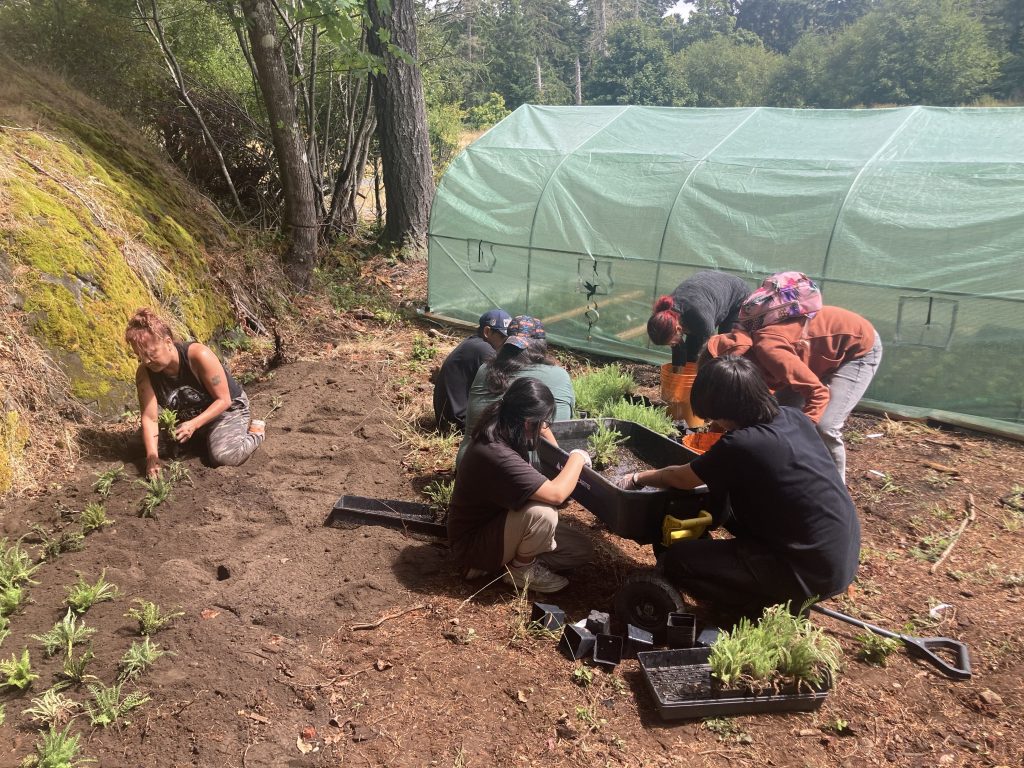
As part of a two day workshop, IndigeMind participants assisted, first, with the assembling of two-thirty foot greenhouses and, second, the planting of the greenhouses with the plants provided through the food security initiative. IndigeMind participants worked the first day with youth from the Sc’ianew Nation to build the greenhouses learning about proper assembly, maintenance, and the teamwork required to build large and durable structures. By the end of the first day both greenhouses were assembled. There were issues securing the coverings, as the material was low grade, however, extra reinforcements were installed to prevent the wind from blowing off the coverings. Sc’ianew is right on the water and is susceptible to large gusts of wind and powerful wind storms throughout the year so it was essential that the greenhouses were not only installed correctly but were secured properly. The base of the greenhouses were staked to the ground and the tarps were weighted down on the exterior using 2’ by 4’ pieces of dimensional lumber found at the shop. 

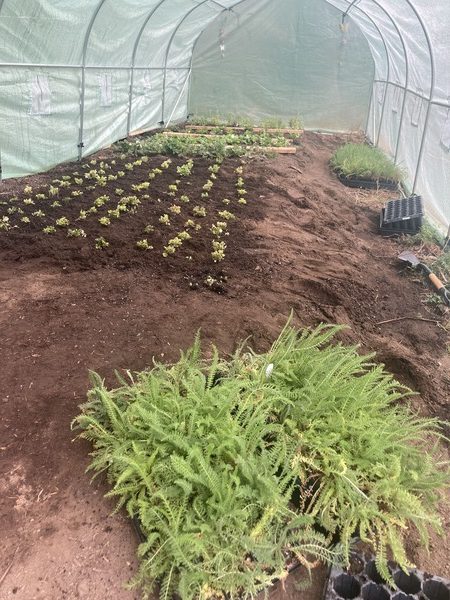
Day two of the workshop consisted of hauling in wheel barrows full of dirt, preparing rows, and planting the inside of one of the greenhouses. A local earthworks company brought in approximately 15 cubic yards of high quality gardening soil to be used for constructing rows and building up the organic matter in the more compact and clay based soil in the area. The youth naturally selected tasks and worked together. It was inspiring to see the camaraderie develop and the ease at which the group tackled the tasks, including moving heavy wheel barrows of dirt and working in tight spaces inside of the greenhouse. 

Once the dirt was brought into the greenhouse and the rows were built the plants were taken out of the nursery containers and placed into a large bin of rooting hormone. The rooting hormone was made from the willow tree and the same rooting liquid that the participants learned how to make with Tsawout Elder, Earl Clayton Jr. in the first cohort. The youth let the roots of the medicinal plants sit in the liquid for 15-30 seconds and then passed the plant to the youth in charge of planting. This went on for some time until the entire greenhouse was fully planted with sea blush, prunella vulgars (self-heal), alumroot, salal, and wild strawberry with yarrow and Oregon grape planted in open air outside of the greenhouse. More dirt was then brought to the base of a beautiful and natural rock wall on the backside of the greenhouse where nearly 100 yarrow plants were put into the ground in a zone that resembled their natural habitat. 

After all of the plants were put into the ground there was a feeling of satisfaction and accomplishment that could be felt within the group. The activity was practical hands on learning out on the land, like everything we do in IndigeMind, and the days work could be seen.  It was tangible. Once mature and ready for harvest, Cristina Armstrong will lead IndigeMind cohorts in salve and balm making workshops using the medicinal plants from the greenhouse and traditional recipes from her family. 

Food security is an essential part of Indigenous communities reclaiming their history, culture, and identity. Coté (2016) adds that on Vancouver Island, “the Nuu-chah-nulth-aht are actively engaging in decolonization and sustainable self-determination through reinstatement of authority over ha-huulhi (ancestral territory) and through the development of strategies and implementation of policies aimed at the sustainable production and consumption of traditional foods through an ecologically sound food system that honours sacred relationships to land, water, plants and all living things” (p. 11). With more Indigenous specific food security initiatives concentrated both on and off reserve Indigenous youth can learn traditional knowledge and become change makers in their communities. 

References

Cidro, J., Adekunle, B., Peters, E., Martens, T. (2015). Beyond Food Security: Understanding Access to Cultural Food for Urban Indigenous People in Winnipeg as Indigenous Food Sovereignty. Canadian Journal of Urban Research, 24(1), 24-43. https://www.jstor.org/ stable/26195276

Coté, C. (2016). “Indigenizing” Food Sovereignty. Revitalizing Indigenous Food Practices and Ecological Knowledges in Canada and the United States. Humanities5(3), 57. https:// doi.org/10.3390/h5030057

Graduation Cohort 1 – A Leadership Journey

CALS692 Blog#7

Prior to beginning the journey of running and creating the IndigeMind Climate Action program, there was much anticipation and unknowns. How would the program be perceived by participants and community? How would I be able to measure its success? Would I be able to generate consistent interest and attendance throughout the program? Many questions arose that I was unable to answer until I lived the experience of operating the program day to day. IndigeMind’s first cohort exceeded any and all expectations that I may of had. Our youth were engaged and participatory, they listened and shared when the time was right, and they respected the elders who taught them and the land that welcomed us throughout our restoration days. Each youth brought a piece of themselves that made the group dynamic unique. And in the end, they all embarked on the beginning of their climate action leadership journeys. 

On the final day of our program we had a small graduation event at our workshop space in Sc’ianew. We invited all of the elders and knowledge keepers who gave their time to make the program a success, as the “Elders are keepers of tradition, guardians of culture, the wise people, the teachers…who safeguard knowledge” (Simpson, 2002, p. 17). The day before we took the youth salmon fishing and brined and smoked the salmon that we caught for the graduation. I was touched to see so many folks attend who had been a part of the 7-week program along with others who were invited. We sat in a large circle to adhere to local protocol and elder Earl Clayton Jr. from the Tsawout Nation opened the ceremony in prayer. After Earl’s opening, I spoke about the program, the journey we have taken to get to where we are, and all of the remarkable youth and elders whose energy, knowledge, and passion turned what was just an idea in our minds into a beautiful reality.  

What happened next, is what I consider the most profound part of our entire program. When we first envisioned a graduation, we spoke of it being youth driven and allowing each participant to stand up and share what they learned along with what they hope to do as climate action leaders moving forward. I had prompted each youth that we wanted them to share a few words but had no idea what to expect. What happened next was incredible. Each youth got up and shared what the program meant to them and what they had learned. They shared about how they ‘hate’ school and how IndigeMind showed them that they can still do something with their lives that is valuable and meaningful. They spoke about their struggles with depression and anxiety and how being on the land and immersed in culture improved their mental health. They spoke about plans to start their own restoration projects at local parks. It was an incredible and moving ceremony that led to teary eyes for many in attendance. Personally, to see the youth make a public declaration to their community and be open and honest about their struggles was powerful. It once again reinforced the need and importance of land based programs like IndigeMind, which creates an opportunity and safe space for growth and exploration that isn’t found anywhere else for many of these kids. I felt immensely proud to of witnessed such leadership transformation and encouraged each youth to continue on with their journey. I reminded them that this was just the first step and that we need more Indigenous youth leaders at the forefront of the present and future of climate action. As noted by MacKay et al. (2020) “the climate action movement has created new ways of thinking about the power and voice among youth, [especially] Indigenous youth” (p. 3). Youth voices are essential and are needed now more than ever to lift up and raise the climate action agenda.

To conclude, I am honoured and humbled to be in the role that I am in and grateful to learn from the youth, elders, and knowledge keepers that I am fortunate enough to spend my days with. It is a transformation experience for me as well and has influenced my own leadership journey. 

References

MacKay, M., Parlee, B., & Karsgaard, C. (2020). Youth Engagement in Climate Change Action: Case Study on Indigenous Youth at COP24. Sustainability12(16), 6299. https://doi.org/ 10.3390/su12166299

Simpson, L. (2002). Indigenous Environmental Education for Cultural Survival. Canadian Journal of Environmental Education, 7(1), 13-25. https://cjee.lakeheadu.ca/article/view/271

A Conversation with Cristina Armstrong

CALS692 IndigeMind Podcast #2

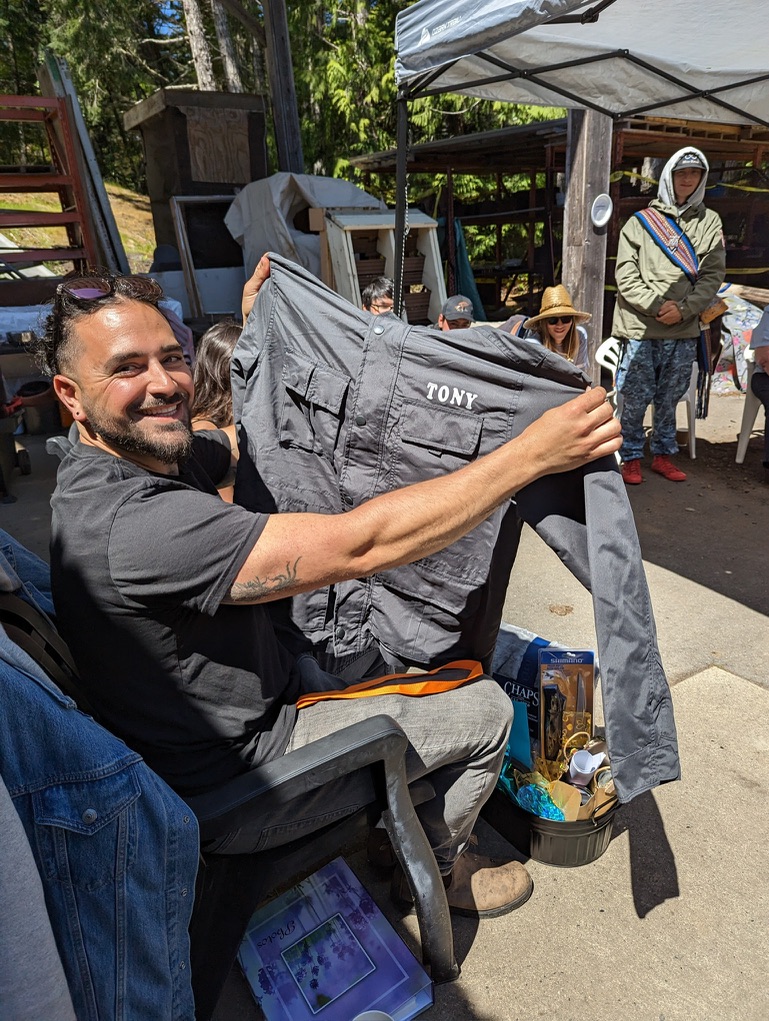
In part two of the IndigeMind Podcast Series, Tony speaks with friend, collaborator, and colleague, Cristina Armstrong of the Sc’iancew Nation on Vancouver Island and Seabird Island Nation on the Fraser River. Cristina is the Founder and Director of the Stewards of Sc’ianew Society, a non-profit founded in 2021 that focuses its efforts on rehabilitating the environment by removing invasive plants and growing and restoring Indigenous habitat. At the start of 2023, IndigeMind and the Stewards of Sc’ianew partnered to launch the first two IndigeMind cohorts. Cristina has been at the forefront of the evolution of the IndigeMind Climate Action program, helping to organize workshops, and bring in elders and knowledge keepers from her vast network. She is an incredible leader rooted in culture, an action oriented advocate of the natural world, and an example of how hard work and perseverance can manifest into a remarkable success story impacting the lives of hundreds of youth. She motivates and supports me to continue to grow IndigeMind no matter the difficulties or bumps in the road and I am grateful that she was willing to donate her time and join my mini-series podcast. I hope that you enjoy our conversation below.

The Tree of Life

CALS692 Blog#6

The Cedar tree holds significant cultural symbolism for many west coast First Nations communities. Its branches protect people and keep evil spirits away. Its bark is stripped and used for the weaving of baskets, headbands, necklaces, and many other cultural and traditional objects used in ceremony. In addition, cedar has been used “to provide housing, transportation, clothing, heating, tools, storage, medicines, and [is] still used for functional purposes, artistic expression, and spiritual practices” (Castleden, 2007, p. 6). It is also referred to as ‘The Tree of Life’ for what it provides and has provided Indigenous peoples for thousands of years. 

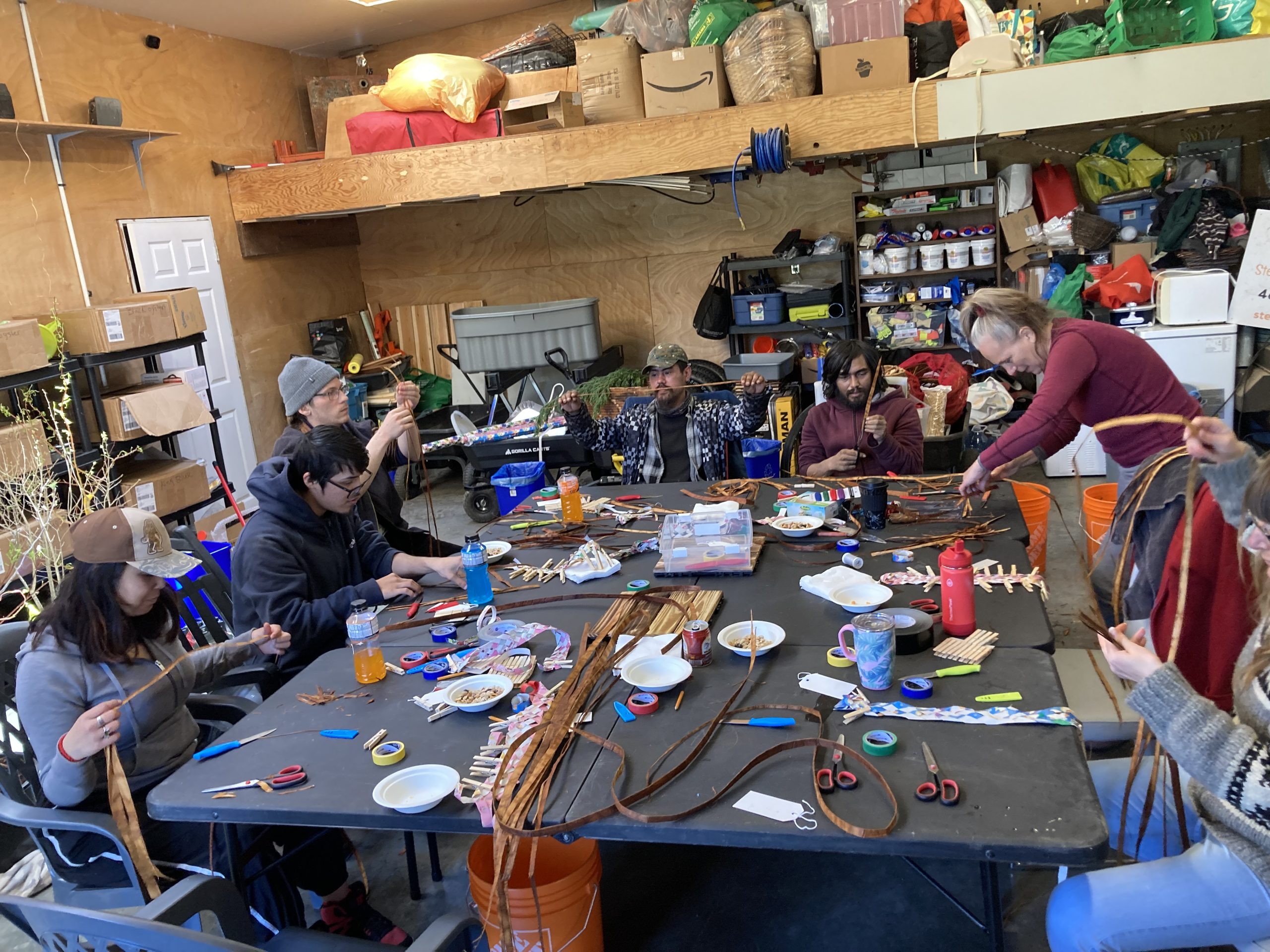
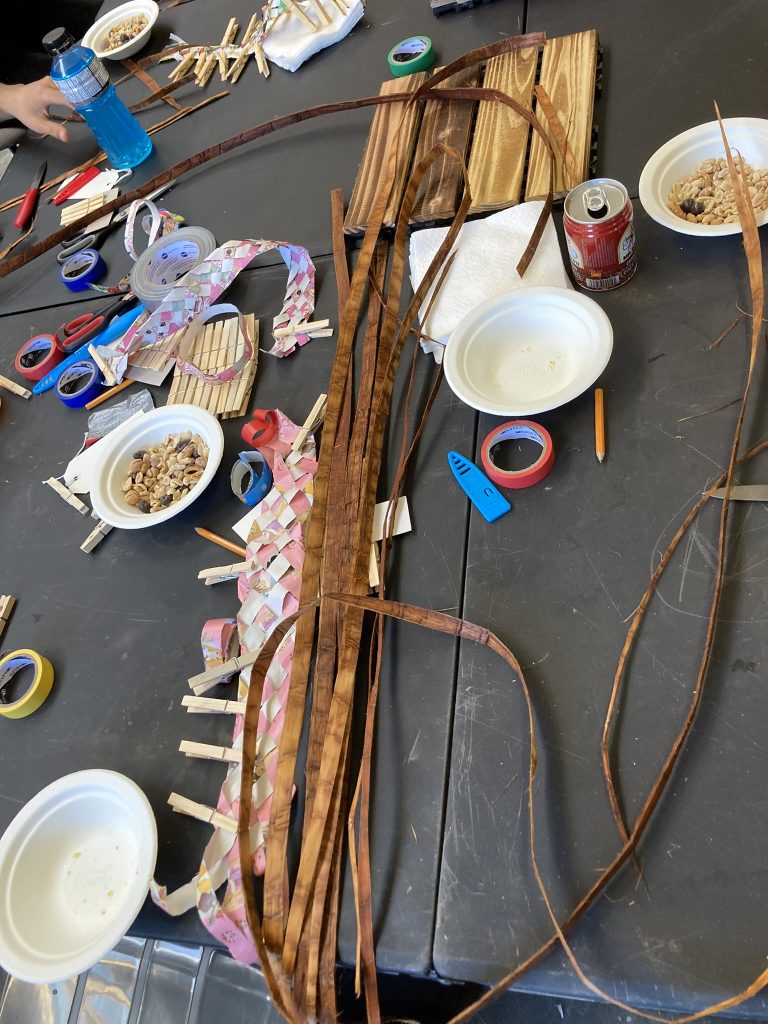
The IndigeMind Climate Action program was lucky enough to have knowledge keeper, Charlene George, from the T’Sou-ke First Nation run a two day cedar weaving workshop out of our home base on Sc’ianew territory. The two day workshop was meant, in part, to show participants the complete process from the harvesting of cedar to the curing, drying, and weaving of it. Properly curing cedar can take months and requires a particular temperature and air humidity and, although, the youth experienced what it was like to harvest cedar they learned to weave it from cedar that was harvested and cured over the past year. Charlene George was kind enough to supply cedar that she had personally harvested. 

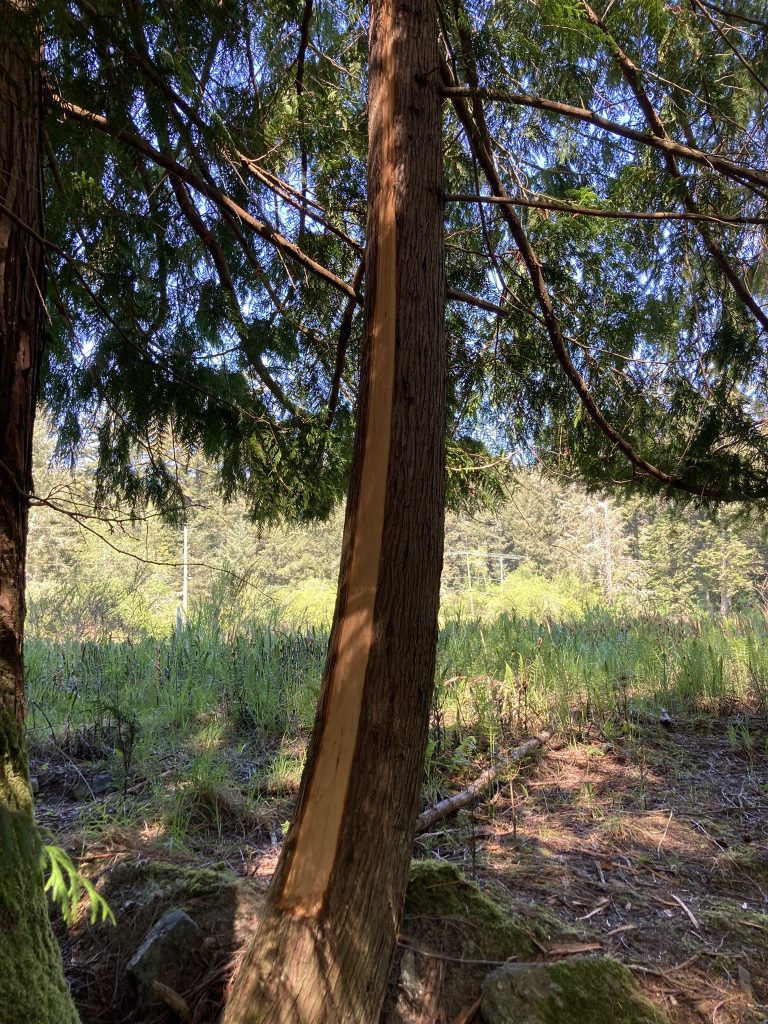
The experience of witnessing the youth harvest the cedar was beautiful and quite profound. Charlene George first spoke to the tree and asked for its blessing. She then carefully and precisely cut a slit towards the bottom of the tree. She mentioned to all of us in attendance that she wasn’t sure if we would harvest today. The temperature called for a hot day and she didn’t want to harm the tree. She added that harvesting cedar from a tree that is healthy and old enough does not actually harm it if done properly and in the right conditions. Most can continue to grow and heal over time. Unfortunately, due to climate change, increased long periods of heat, and shorter precipitation windows the cedars throughout the west coast and, specifically, on Vancouver island are dying in large numbers annually. 

After Charlene cut the slit at the base of the tree she gently wriggled her fingers and then full hand under to begin to the lift the bark off of the tree. She looked behind her and asked if a youth would like to participate. One of our youth immediately jumped in and placed his hand where Charlene’s was and began to slowly pull with one hand and guide his pull with the other. The energy of the space was palpable. There was silence all around except for the separating sound of the bark being pulled from the tree. The pull was nearly twenty feet long and went a good distance up the tree. As a group, we then cleaned the cedar pull of pitch (sap) and the rougher outside layer of bark to prepare it to be rolled and cured over the next several months. 

The experience of harvesting the cedar was visibly impactful for the youth involved in the two day workshop. The second day consisted of learning how to weave cedar. The amount of care and concentration shown by the youth was clearly reflective of the experience of harvesting from the day before. It taught them to slow down and to show respect for the process. Zahn et al. (2018) add that ”Indigenous teachings provide the invaluable reminder that humanity must respect nature and act accordingly with practices of reciprocity, conservation, and protection of natural systems long-term”(p. 327). Charlene George also shared that the energy you bring in to the harvest is reflected in the overall experience. That if you have negative thoughts you must leave them elsewhere prior to harvest or to not harvest at all as that energy can be felt by the tree. 

At the end of the second day, each participant had woven at least one bracelet out of cedar that they had individually stripped for size and length. They were taught to gift the first item that they wove, as it is customary in tradition to gift the first away. It was a powerful two days and I, too, learned so much about the ‘Tree of Life’. A tree that has sustained, nurtured, and supported Indigenous people from generations.

References

Castleden, H. (2007). [Thesis]. As Sacred as Cedar and Salmon: A Collaborative Study with Huu-ay-aht First Nation, British Columbia into Understanding the Meaning of “Resources” from an Indigenous Worldview (pp. 1–137).

Zahn, M. J., Palmer, M. I., & Turner, N. J. (2018). “Everything We Do, It’s Cedar”: First Nation and Ecologically-Based Forester Land Management Philosophies in Coastal British Columbia. Journal of Ethnobiology38(3), 314. https://doi.org/ 10.2993/0278-0771-38.2.314