CALS692 Blog#6
The Cedar tree holds significant cultural symbolism for many west coast First Nations communities. Its branches protect people and keep evil spirits away. Its bark is stripped and used for the weaving of baskets, headbands, necklaces, and many other cultural and traditional objects used in ceremony. In addition, cedar has been used “to provide housing, transportation, clothing, heating, tools, storage, medicines, and [is] still used for functional purposes, artistic expression, and spiritual practices” (Castleden, 2007, p. 6). It is also referred to as ‘The Tree of Life’ for what it provides and has provided Indigenous peoples for thousands of years.
The IndigeMind Climate Action program was lucky enough to have knowledge keeper, Charlene George, from the T’Sou-ke First Nation run a two day cedar weaving workshop out of our home base on Sc’ianew territory. The two day workshop was meant, in part, to show participants the complete process from the harvesting of cedar to the curing, drying, and weaving of it. Properly curing cedar can take months and requires a particular temperature and air humidity and, although, the youth experienced what it was like to harvest cedar they learned to weave it from cedar that was harvested and cured over the past year. Charlene George was kind enough to supply cedar that she had personally harvested.
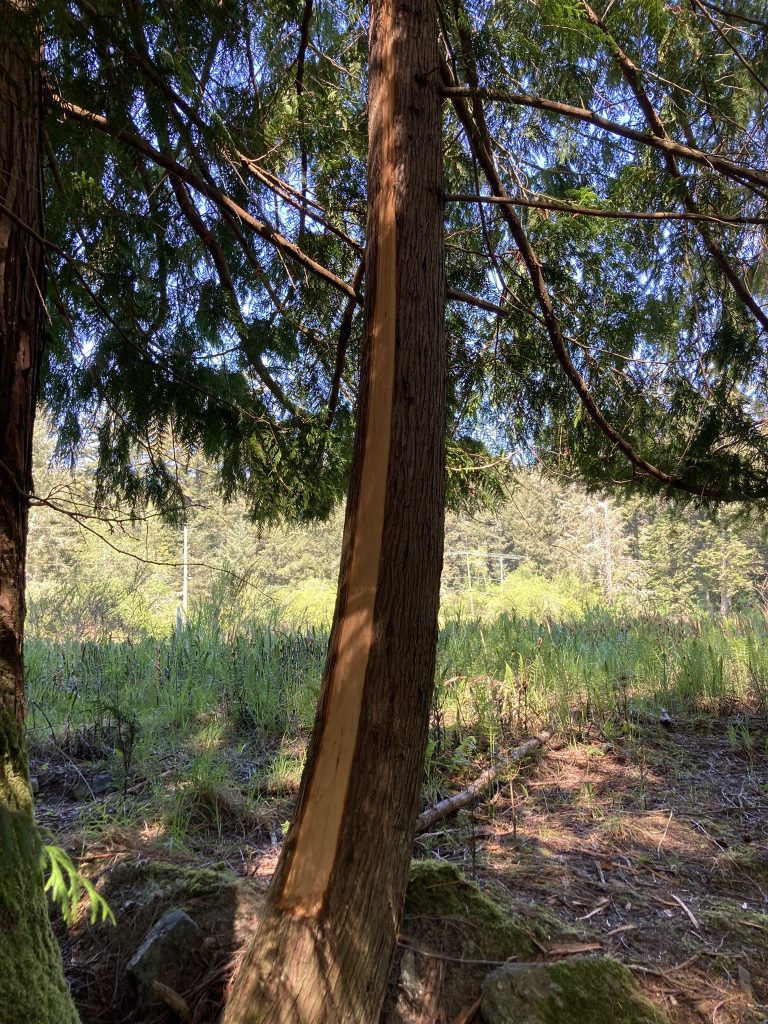
The experience of witnessing the youth harvest the cedar was beautiful and quite profound. Charlene George first spoke to the tree and asked for its blessing. She then carefully and precisely cut a slit towards the bottom of the tree. She mentioned to all of us in attendance that she wasn’t sure if we would harvest today. The temperature called for a hot day and she didn’t want to harm the tree. She added that harvesting cedar from a tree that is healthy and old enough does not actually harm it if done properly and in the right conditions. Most can continue to grow and heal over time. Unfortunately, due to climate change, increased long periods of heat, and shorter precipitation windows the cedars throughout the west coast and, specifically, on Vancouver island are dying in large numbers annually.
After Charlene cut the slit at the base of the tree she gently wriggled her fingers and then full hand under to begin to the lift the bark off of the tree. She looked behind her and asked if a youth would like to participate. One of our youth immediately jumped in and placed his hand where Charlene’s was and began to slowly pull with one hand and guide his pull with the other. The energy of the space was palpable. There was silence all around except for the separating sound of the bark being pulled from the tree. The pull was nearly twenty feet long and went a good distance up the tree. As a group, we then cleaned the cedar pull of pitch (sap) and the rougher outside layer of bark to prepare it to be rolled and cured over the next several months.
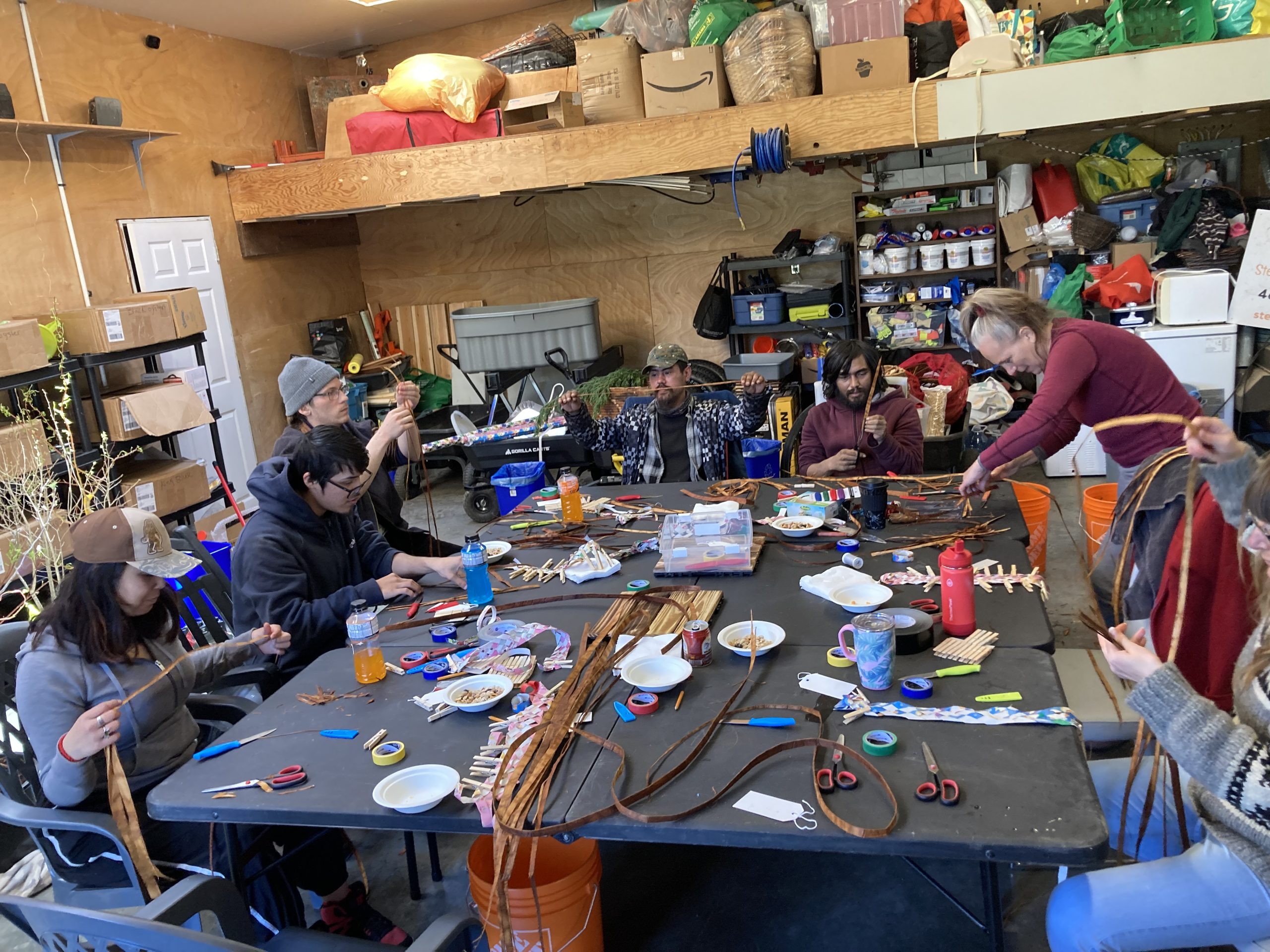
The experience of harvesting the cedar was visibly impactful for the youth involved in the two day workshop. The second day consisted of learning how to weave cedar. The amount of care and concentration shown by the youth was clearly reflective of the experience of harvesting from the day before. It taught them to slow down and to show respect for the process. Zahn et al. (2018) add that ”Indigenous teachings provide the invaluable reminder that humanity must respect nature and act accordingly with practices of reciprocity, conservation, and protection of natural systems long-term”(p. 327). Charlene George also shared that the energy you bring in to the harvest is reflected in the overall experience. That if you have negative thoughts you must leave them elsewhere prior to harvest or to not harvest at all as that energy can be felt by the tree.
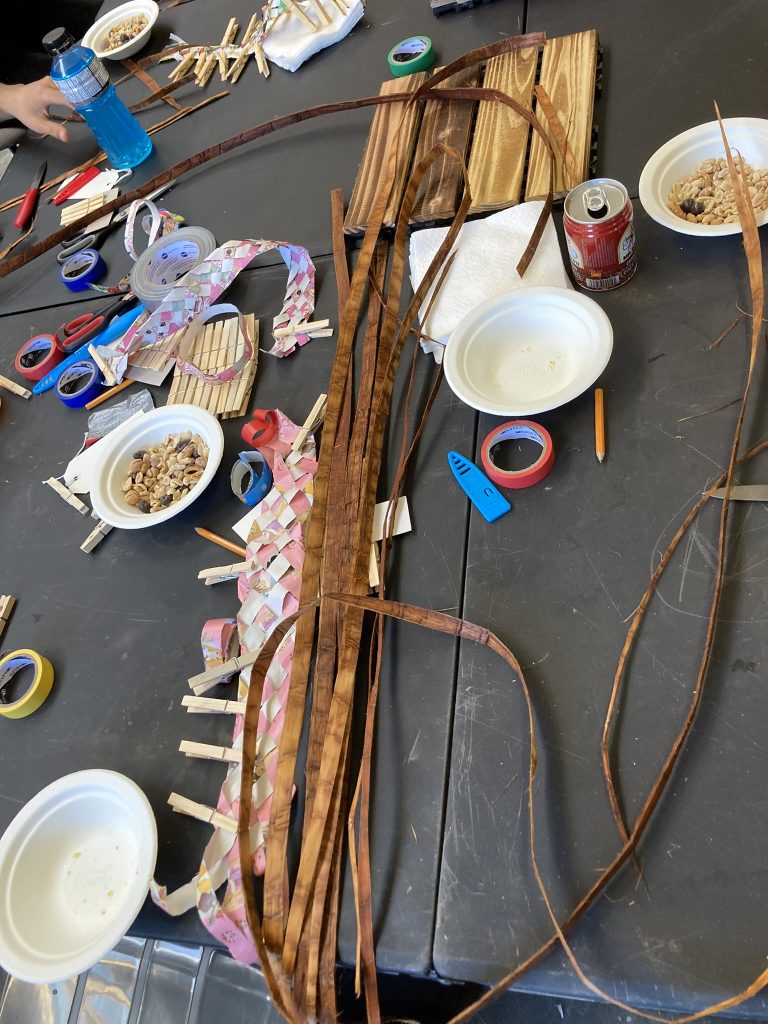
At the end of the second day, each participant had woven at least one bracelet out of cedar that they had individually stripped for size and length. They were taught to gift the first item that they wove, as it is customary in tradition to gift the first away. It was a powerful two days and I, too, learned so much about the ‘Tree of Life’. A tree that has sustained, nurtured, and supported Indigenous people from generations.
References
Castleden, H. (2007). [Thesis]. As Sacred as Cedar and Salmon: A Collaborative Study with Huu-ay-aht First Nation, British Columbia into Understanding the Meaning of “Resources” from an Indigenous Worldview (pp. 1–137).
Zahn, M. J., Palmer, M. I., & Turner, N. J. (2018). “Everything We Do, It’s Cedar”: First Nation and Ecologically-Based Forester Land Management Philosophies in Coastal British Columbia. Journal of Ethnobiology, 38(3), 314. https://doi.org/ 10.2993/0278-0771-38.2.314