Building Bridges Through Reconciliation

wooden footbridge, footbridge, wooden bridge-2114668.jpg

CALS505

Where do I stand, as a non-Indigenous man, in the movement towards reconciliation? The more I reflect on what being a leader in the climate action space means the more I am brought to the idea that I must also be conscious and engage in reconciliatory actions. I must understand and acknowledge the deep history of colonial oppression that the Indigenous peoples of this continent have endured. Climate action is so directly linked to Indigenous knowledge that leading in one space requires being an ally and advocate in the other. I feel this strongly in my work. I advocate for Indigenous youth as a non-Indigenous person and take much pride in that. I am a firm believer that any movement requires cohesion and unity from multiple walks of life. From multiple backgrounds, cultures, and traditions. 

Climate action requires strong leadership yet so does reconciliation. Can one lead within the realm of reconciliation without being Indigenous? I think so. Leadership is not easy. It is not meant to be. It is complex in its nature and ever evolving. It requires taking chances and it requires making space for change to happen. The true leaders facilitate space for those around them to feel safe. When I think about the climate action program I am starting this is exactly what I hope to do. The program will lean heavily towards Indigenous practices and cultural knowledge sharing. If I can help create a comfortable space for an elder to come in and share his or her story then I feel I am leading in a good way. If I can help reconnect one young student to culture by way of land based programming then I am becoming the climate action leader that I hope to be. 

As a personal goal, I would like to continue to learn how to simultaneously be a leader and an ally when engaging in both climate action and reconciliation. How can I maintain cultural sensitivity in my work? At times, I am self conscious about pioneering a climate action department at an Indigenous organization. I don’t want that to be perceived in the wrong way. I want the program to be a bridge towards growth and transformation. A community where folks can reclaim what was stripped from them and become the next generation of climate action leaders. I believe that Indigenous voices are pivotal in the effort to combat climate change. A climate action department at an Indigenous organization seems like a perfect fit.

When I think of leadership I am reminded that overcoming adversity and criticism comes with the territory. There is never one singular right answer. Good leadership calls upon understanding the diversity of culture, perspective, and lived experience. It calls on us to be humble, sensitive, researched, and honest. And lastly, it is the leader who holds up those marginalized, persecuted, and oppressed and allows for identity to be reclaimed with honor and purpose that I wish to be. This is what I hope to do. This is how I hope to lead. 
Collective Leadership

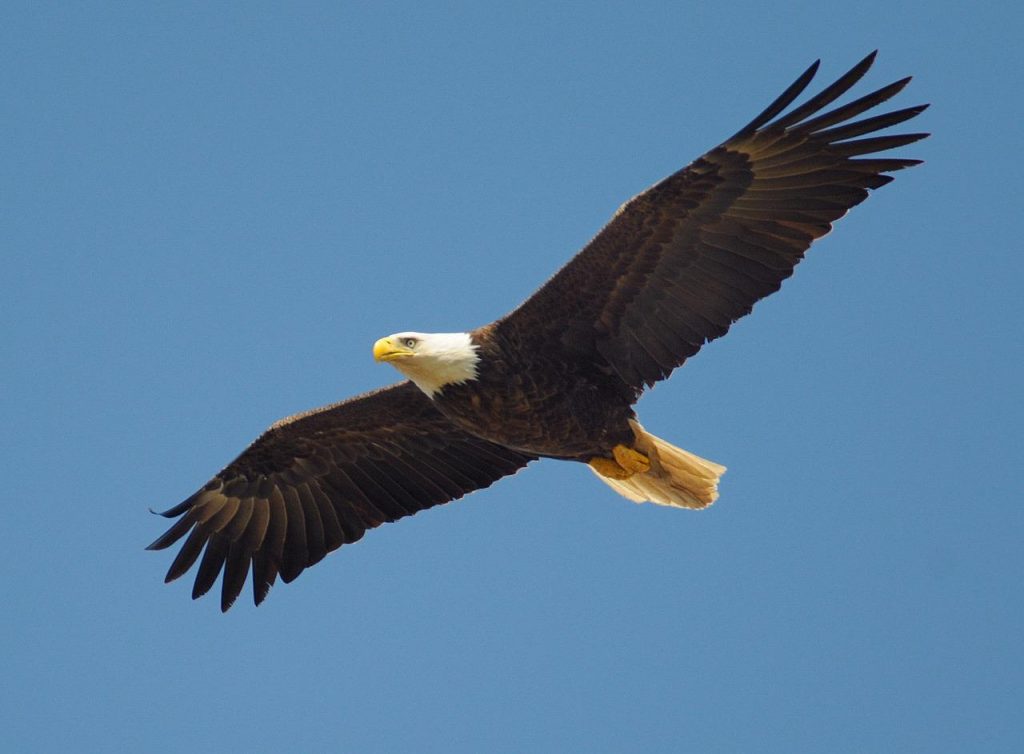
eagle, fly, bird-864725.jpg

After reading the Spiller et al. (2020) article, Paradigm warriors: Advancing a radical ecosystems view of collective leadership from an Indigenous Māori perspective, I was struck with the powerful and profound notion of collective leadership. This idea, belief, and philosophy is one I have yet to explore. However, it embodies how leadership truly should be. 

I was raised in a western worldview where “leadership referred to the capacity of an individual to convince others to accept/follow his decisions and/or the associated underlying paradigm” (Vignola et al., 2017, p. 85). Leaders were determined by their strength, charisma, and ability to captivate, sway, and, in many ways, to this day still are. The Maori worldview brings forth the idea of collective leadership as a “new and emerging paradigm” (Spiller et al., 2020, p. 516). It is so vastly different than the western views of leadership that they are nearly incomparable. 

Collective leadership stems from an ecosystems view where relationships “across generations and across living and non-living entities” are valued with high regard (Spiller et al., 2020, p. 517). It is a paradigm that diverts from the “hierarchical, vertical, and individualized leadership styles to collective, horizontal forms” (Spiller et al., 2020, p. 517). I am deeply inspired by this paradigm, as it gives way to welcoming Indigenous knowledge into the present and future of climate action leadership. Leadership is not linear. It is fluid and circular. Leading through story, relationship, and vision is such a profound way to lead.

Collective leadership is rooted in Indigenous ecological knowledge, social ecological systems, and a Maori worldview. Three pillars that can educate and inform of the inevitable impacts of climate change. It is also rooted in wisdom passed on through proverbs, stories, parables, song, dance, and carvings (Spiller et al., 2020, p. 518). Collective leadership, therefore, becomes a part of culture, spirituality, and history. Past becomes a blueprint for present and future. It makes so much sense to me. I deeply believe that no one person can undue what has been done to our land and waters. We are to blame for those actions and wrongdoings. However, ‘collectively’ is the way forward. Spiller et al. (2020) add, “it is through the collective will of others that leaders earn respect, not through self proclamation and self assertion” (p. 518). The greatest leaders lead knowing that they are on this earth for a fraction of time and that their actions are meant to carve a way forward for generations to come. To me, that is climate action leadership at its core; a willingness to dedicate one’s life and professional pursuits to an unknown future. 

When I think of leadership what comes to mind is engaging community. How do we effectively join hands to create lasting, positive, and impactful change? How do leaders uplift more leaders in the climate action space? I had never heard of collective leadership before but it feels that it has been there inside of me all along. Knowing that the most powerful change comes from common ground and seeing eye to eye with our peers. Understanding that in order to lead in a good way comes with it a responsibility to represent those that speak but also those that do not. As climate action leaders, we are representing the land we walk and the air that we breath. We are representing all of our ancestors, all of our journeys, and all of our histories. 

References

Spiller, C., Maunganui Wolfgramm, R., Henry, E., & Pouwhare, R. (2019). Paradigm warriors: Advancing a radical ecosystems view of collective leadership from an Indigenous Māori perspective. Human Relations73(4), 516–543. https://doi.org/ 10.1177/0018726719893753

Vignola, R., Leclerc, G., Morales, M., & Gonzalez, J. (2017). Leadership for moving the climate change adaptation agenda from planning to action. Current Opinion in Environmental Sustainability26-27, 84–89. https://doi.org/10.1016/j.cosust.2017.03.005