CALS692 Blog #2
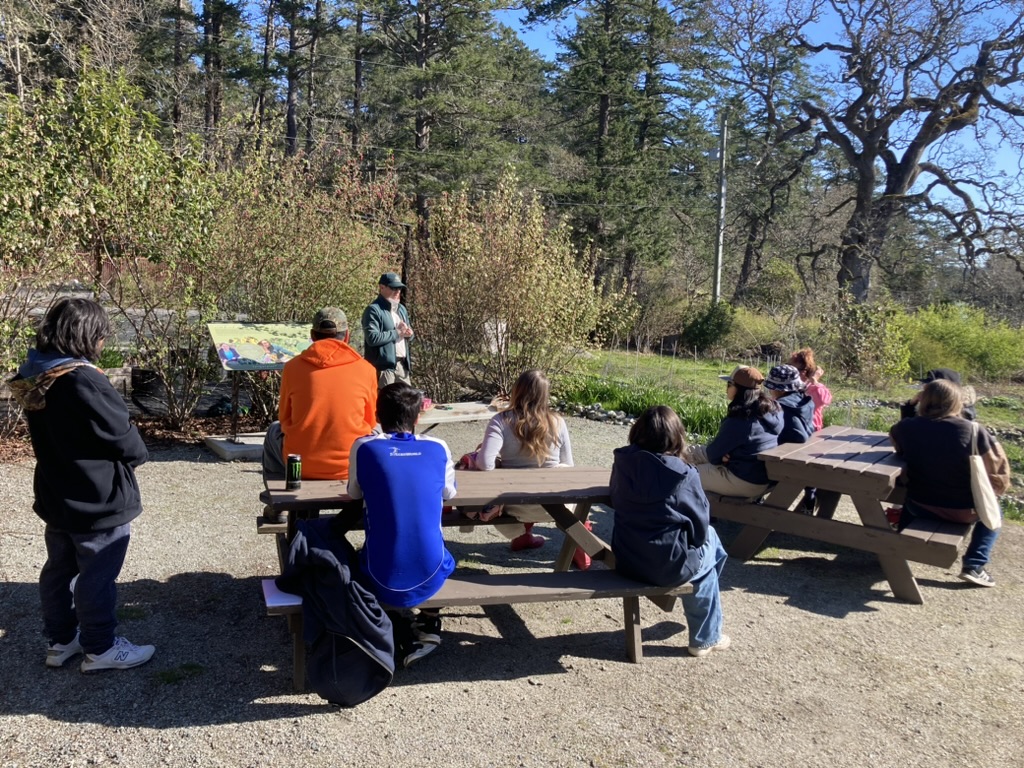
IndigeMind is a go and we have just finished our third week of programming for our first ever cohort. The experience, thus far, has exceeded any expectations I may of had going into it. I anticipated it would take time for our community of participants to establish and our vision to come to life. Programs take time to develop but what I have experienced has been quite the opposite and I attribute this to the hours of effort put in to carefully crafting a program that is intentional, interactive, creative, and cultural.
Proper cultural program development requires a sensitive approach. One that both honors and expresses gratitude for being in the position to hold and create space while upholding the sacred responsibility within the role. This is predominantly to insure that the “learning environment [is] relevant to community and culturally respectful to participants and [elders]”(Soaring Eagle Project, 2001). So many Indigenous youth lack immersion and relationship with the land and natural world and I have much pride in bringing to life IndigeMind while often observing in the background watching and learning as knowledge keepers share their immense wisdom. As Redvers (2020 ) notes “in order to promote wellness in Indigenous communities, it is vital to reconnect with cultural identity and practices within an Indigenous pedagogy” (p. 92). I am already witnessing how the youth come alive on the land and the impact it has on their lives. It brings me a great sense of purpose as a climate action leader.
The current success of IndigeMind I attribute to our program model. That is, we believe in keeping the knowledge in the hands of the knowledge keeper and have partnered with one from the Sc’ianew Nation of Southern Vancouver Island to co-create and co-develop our first cohorts curriculum. In many ways, IndigeMind invests into our future Indigenous youth climate leaders while playing the role of a social enterprise by putting money back into community, valuing existing Indigenous leaders for their wisdom and sharing of knowledge. Our current contract with Cristina Armstrong of Stewards of Sc’ianew, an environmental and Indigenous led non-profit, goes until the end of August spanning the length of two full cohorts. As facilitators of IndigeMind, we will take the existing program curriculum and share it with our future partnerships as a model of what our program can look like while giving freedom to the knowledge keeper to bring in their own teachings and vision for the cohort they co-lead. Our intention is to change the location of each cohort so as to increase accessibility for all Indigenous youth in Southern Vancouver Island, both on and off reserve. As our program continues to grow, this same model will be applied. This, I believe, is a way for IndigeMind to grow beyond Vancouver island within any region in Canada where there is one of the 120 Friendship Centers.
References
Redvers, J. (2020). “The land is a healer”: Perspectives on land-based healing from Indigenous practitioners in northern Canada. International Journal of Indigenous Health, 15(1), 90–107. https://doi.org/10.32799/ijih.v15i1.34046
Soaring Eagle Project. 2001. Educating aboriginal youth using traditional ecological knowledge and western environmental science. https://web.archive.org/web/20080828010256/http://www.manitobamodelforest.net/pub lications/ombaashid.PDF