CALS692 Blog#5
There is nothing quite like harvesting food from the land. It is ingrained in all of us. Regardless of where we are from all of our ancestors learned to live and subsist off of the land that surrounded them. Communities developed deep relationships with the ecological systems they lived within as it was needed for survival for either consumption or trade. Local Indigenous communities on Southern Vancouver Island lived off of the diversity of food provided by the abundance of the coastline from shellfish to salmon and herring to octopus, sea cucumber, and urchin. The land provided and communities nurtured their relationship with the natural environment that surrounded them.
Unfortunately, this relationship has changed over time. Historically, “Indigenous knowledge systems and teachings have been integral to preserving Indigenous cultures and traditions, [however], colonization has negatively impacted Indigenous cultures, resulting in a decrease in traditional activities” (Ahmed et al., 2022, p. 1). Due to a variety of factors, communities have lost the ability to fend for themselves. Colonization has stripped Indigenous knowledge of traditional food growing, hunting, and fishing practices. As noted by Ahmed et al. (2023), “traditional harvesting practices which are deeply rooted in familial and social systems of Indigenous communities continue to be negatively impacted by colonization and colonial assimilative policies…[and] this disruption has contributed to the growing issue of food insecurity amongst Indigenous peoples in Canada” (p. 1). In addition to the impacts of colonialism, marine habitats and specie abundance has been dramatically impacted by both commercial overfishing and a changing climate. The abundance that was once known on the coastline is almost non-existent. Herring populations have significantly declined and salmon numbers are incredibly low while restrictions are imposted annually on non-Indigenous fisherman by the Department of Fisheries and Oceans (DFO) to try and allow the populations to rebound. Although, we all know that they will never fully rebound given the warmer temperatures and the increased difficulty to migrate back to spawning grounds. A good friend of mine from the Tla’amin nation in what is now known as Powell River shared with me recently that his grandfather shared that when he was young he used to be able to “walk on the backs of salmon there were so many”. This will never be the case again.
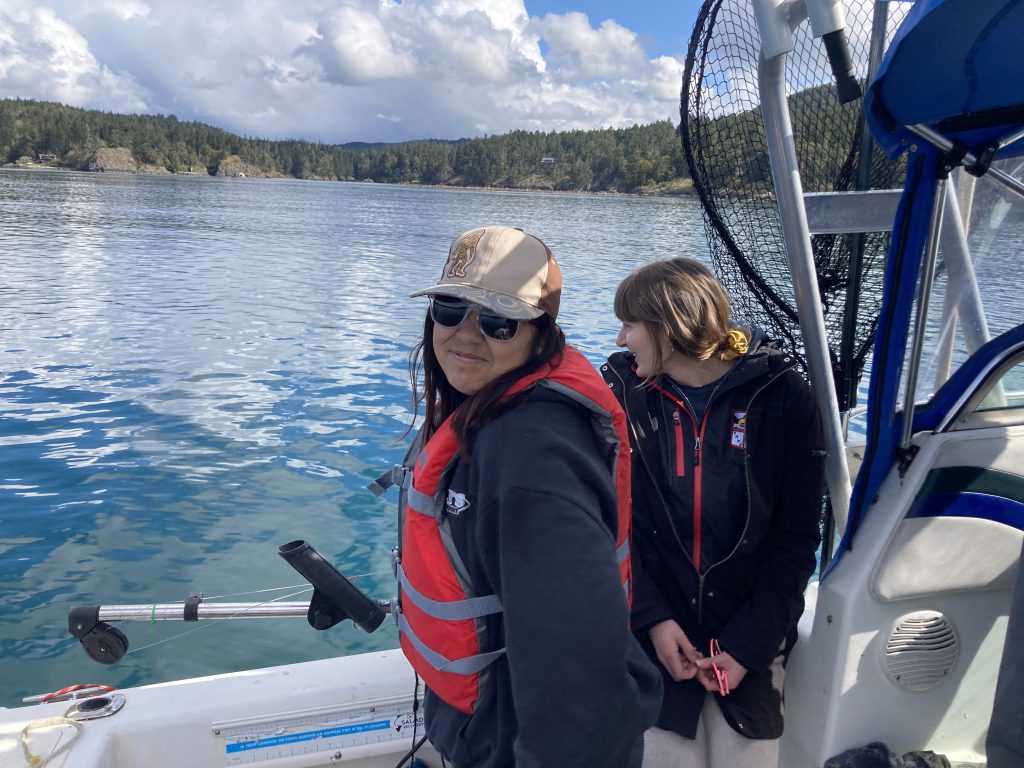
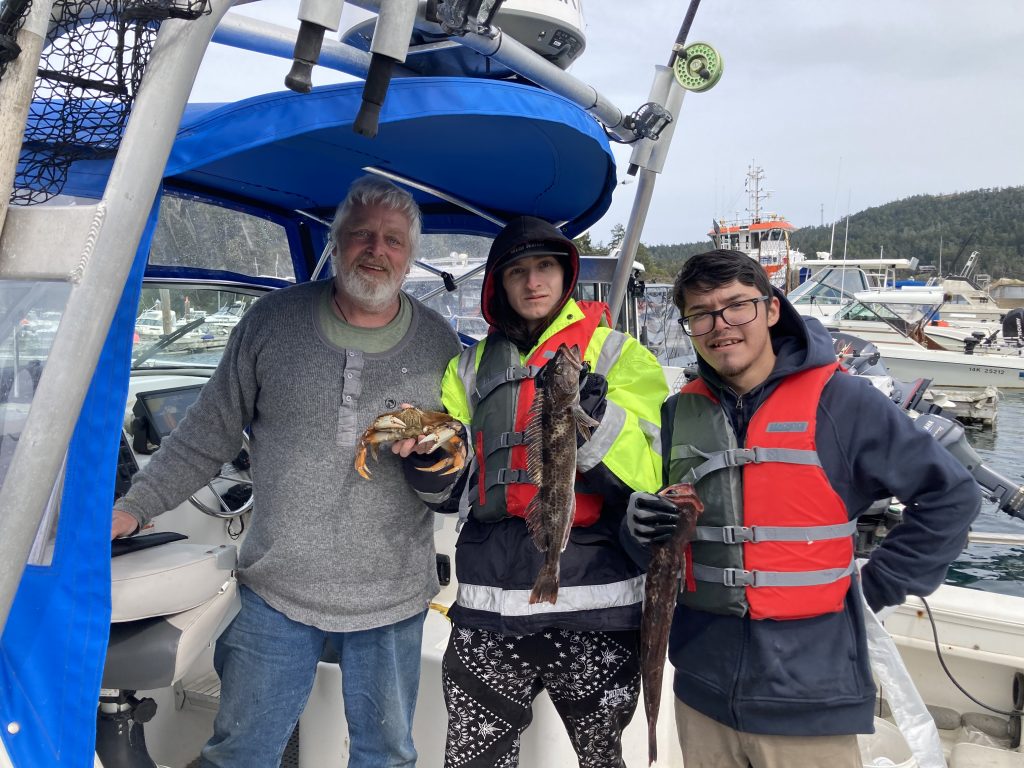
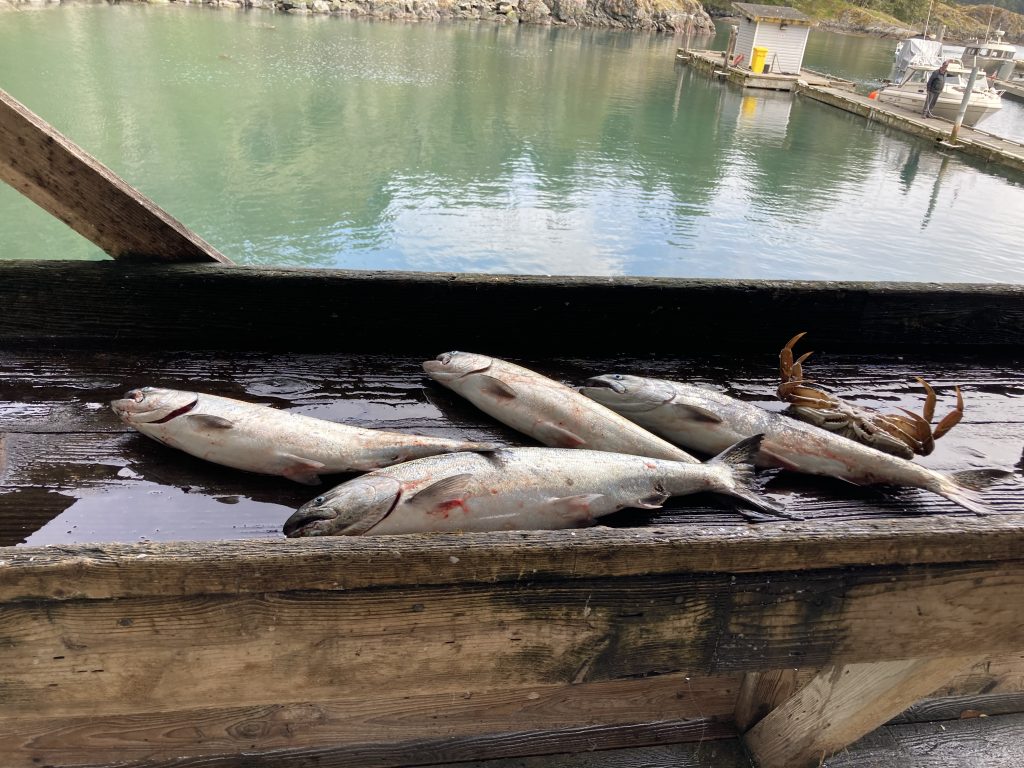
In order to teach and show our youth how to harvest from the land, my IndigeMind Climate Action program implemented a three part fishing, harvesting, and learning of local marine biology component to our first cohort. Each fishing day, a third of our cohort was taken out of the Sc’ianew Marina with an underwater camera to learn how coastal ecology has shifted over time due to climate change and oil spills in the region. In addition, participants learned to both pull crab traps and troll for salmon and lingcod. The experience each day was nothing short of remarkable. Each youth participant glowed when they reeled in a salmon or held a crab for the first time. Youth whom have been dealt a rough hand in life opened up and smiled like I had never seen them smile. It was education that was beneficial to them. An experience that they could leave with a memory and knowledge that they don’t receive in their classrooms within the school district. For me, the experience was yet another reminder of the importance of what we are doing. Not only generating positive experiences for our youth through land based programming but opening up a pathway for them to explore further their interests in climate related professions and opportunities while reconnecting with culture and traditional practices.
Resources
Ahmed, F., Liberda, E. N., Solomon, A. J., Davey, R. J., Sutherland, B., & Leonard, T. (2022). Indigenous Land-Based Approaches to Well-Being: The Amisk (Beaver) Harvesting Program in Subarctic Ontario, Canada. 19(12), 1-39. https://doi.org/ 10.3390/ijerph19127335
Ahmed, F., Liberda, E. N., Solomon, A. J., Davey, R. J., Sutherland, B., & Leonard, T. (2023) Indigenous Land-Based Approaches to Well-Being: The Niska (Goose) Harvesting Program in Subarctic Ontario, Canada. 20(4), 1-29. https://doi.org/10.3390ijerph20043686