CALS692 Blog#4
The reclamation of stollen land is an integral part of reconciliation in Canada. Furthermore, “Indigenous peoples…are calling for ‘land back’ as they seek to address the ongoing structures of colonialism and revitalize self-determining nations” (Nightingale & Richmond, 2022, p. 12). While it can often be hard to see examples of true reconciliation in action when land is reclaimed to its rightful owner it becomes tangible proof that good efforts are being put forward. This is also essential in increasing Indigenous engagement in the climate action movement as restoration work can begin along with the fostering of Indigenous youth climate action leaders on land that has cultural and traditional significance.
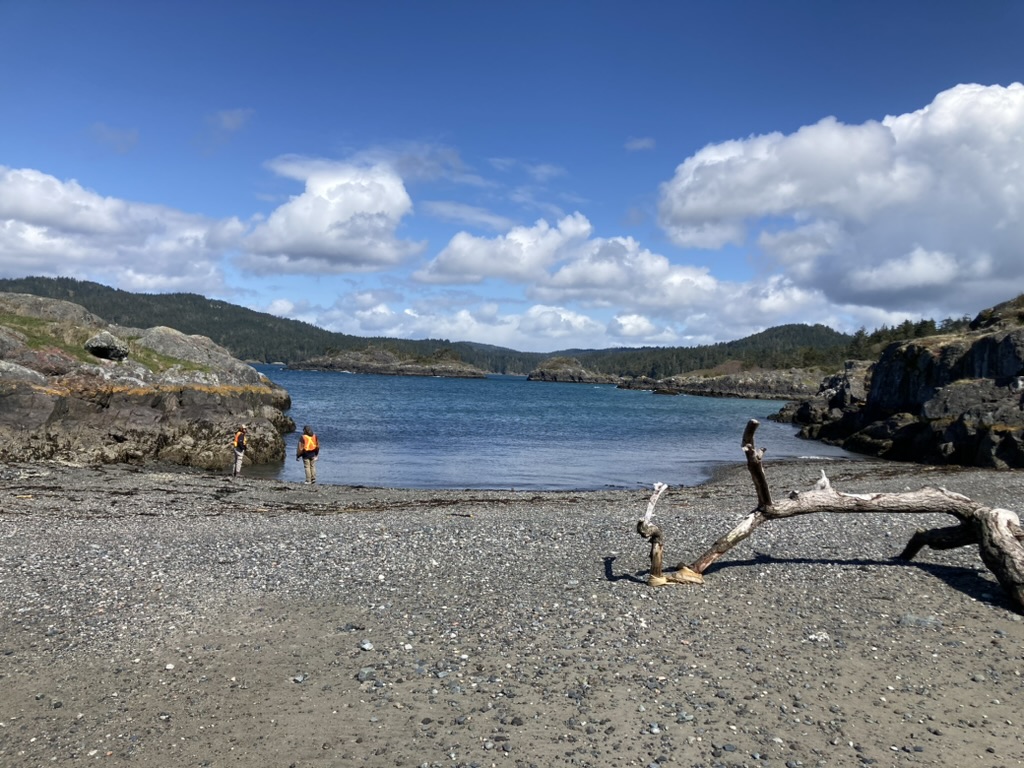
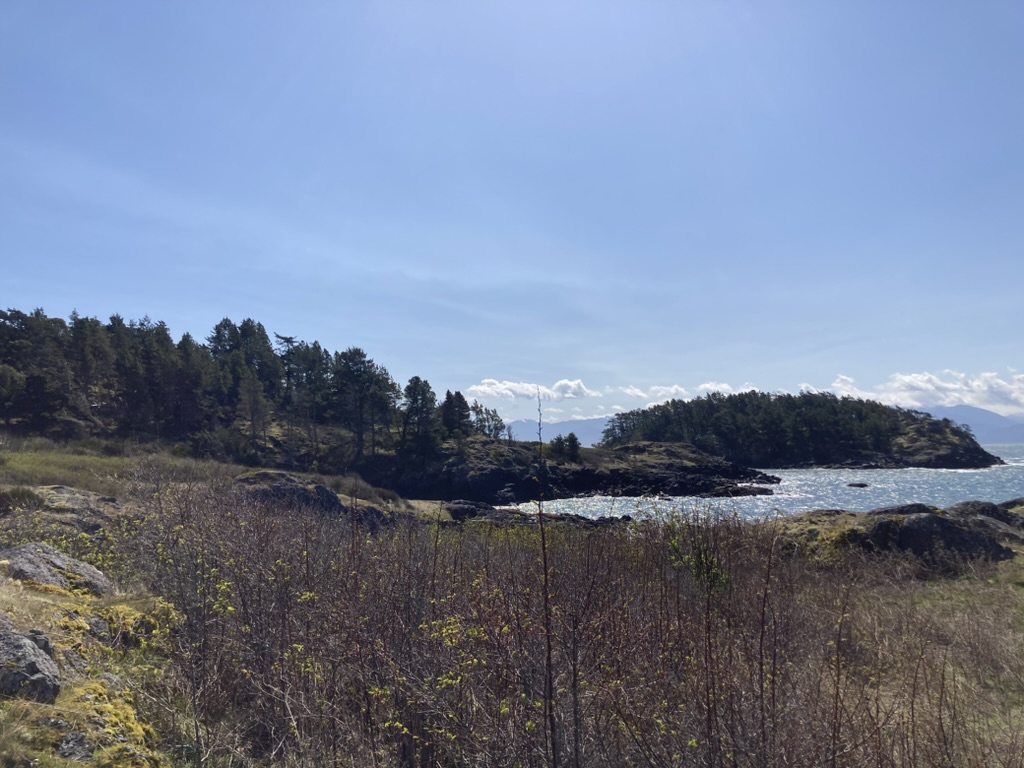
The Sc’ianew nation, located in what is now known as Beecher Bay, BC, shares the peninsula with the Department of National Defense (DND). The reserve, like many in Canada and the US, was given a small portion of land. In the case of the Sc’ianew Nation the DND took the majority of accessible of usable land in the nearby vicinity. In the early 2000s, the Sc’ianew Nation reclaimed a large part of unused DND land. DND claims that it was ‘gifted back’ to the nation but the land always belonged to Sc’ianew and the Nation is proud to of reclaimed it. Not only is it nearly 30 acres directly on the coast with a mix of forest and coastal vegetation, the land is also culturally sensitive and is a burial site to Sc’ianew members dating back hundreds of years. It has become a historical site to the Nation and archeologists now come to study the cairns that can be found along the coastline and tucked within the trees. It is quite frankly an incredible place to step foot in and one can only access it with direct approval from Chief and Council of the Sc’ianew Nation. The IndigeMind program was lucky enough to be given that approval to begin a long term eco-cultural restoration project to remove all invasive species in the area.
On April 11th, myself along with 8 participants of the IndigeMind inaugural cohort and Christina Armstrong of the Sc’ianew Nation headed out to what is now known as ‘Number 2’. In its process of reclamation, the Nation decided to call the land ‘Number 2’ to represent its second reserve. We met with an organization called the Habitat Acquisition Trust. The trust “is a regional land trust that conserves nature on south Vancouver Island…envision[ing] a future where the full array of natural habitats…are healthy and conserved” (hat.bc.ca, n.d.). HAT provided our cohort with equipment and training to begin our project removing scotch broom and Himalayan blackberry from the coastline. This marked the beginning to what will be an ongoing restoration project that the next two IndigeMind cohorts will be involved in.
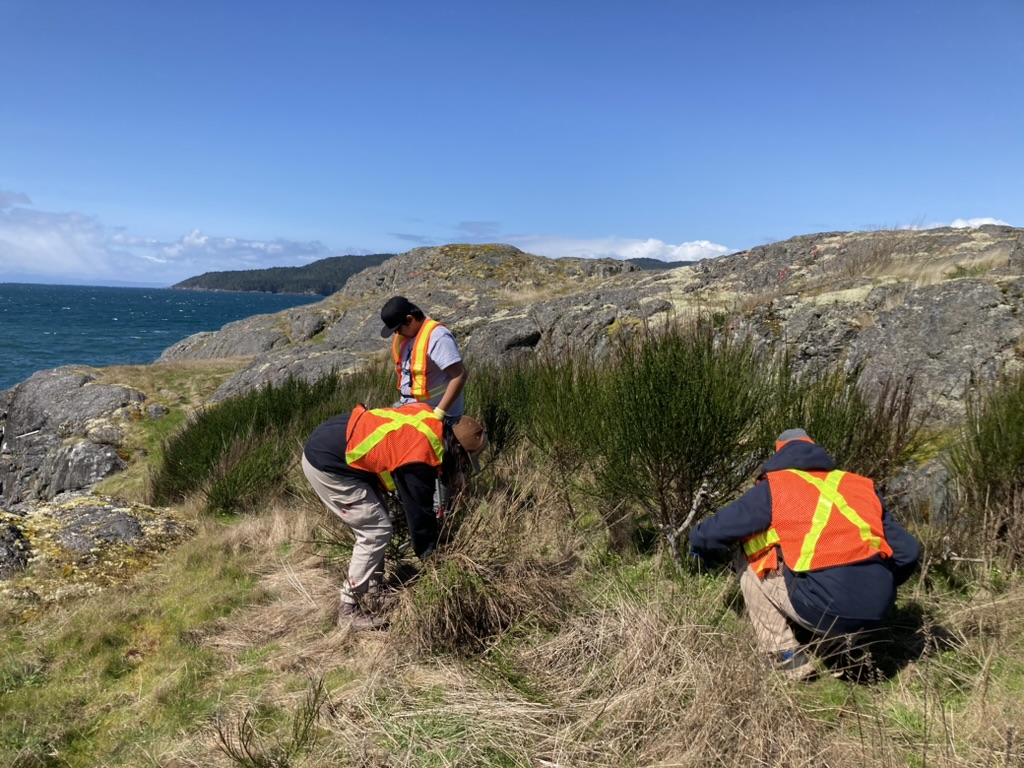
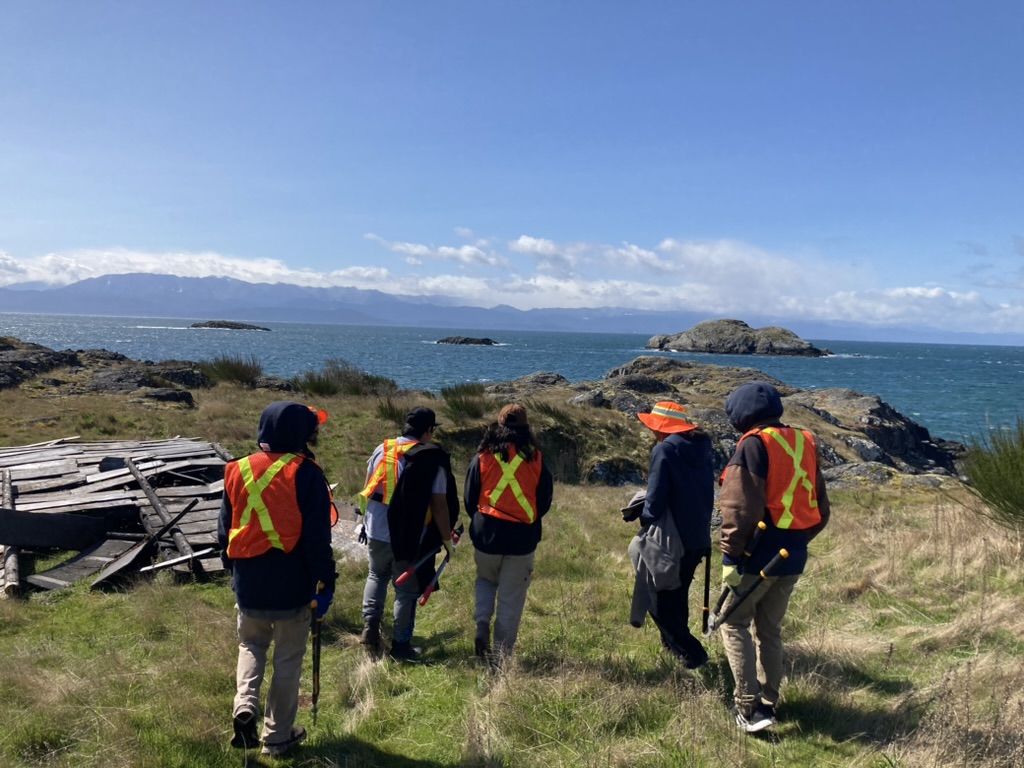
We spent four hours removing broom and piling it in an area where it could easily be removed and burned. During our break, Christina shared stories about how her people harvested off of the land and lived in harmony with the natural environment. The land was spiritual. I could feel it in the air. Christina spoke much of her ancestors and the duty the young ones have to be climate leaders to honor their ancestors in a good way. That resonated with me deeply. That we have an obligation not only for those yet to come but to those who came before us and paved the way. It made me think of climate action in a different way. Being a climate action leader is not only for the present and the future of our planet but it is also for the past. To remember, honor, and uphold the value of treating the land like a member of our family and re-learning to respect her as we hope to be respected ourselves.
References
Nightingale, E., & Richmond, C. (2022). Reclaiming Land, Identity and Mental Wellness in Biigtigong Nishnaabeg Territory. International Journal of Environmental Research and Public Health, 19(12), 7285. https://doi.org/10.3390/ijerph19127285